


Tamil Nadu’s political landscape presents a striking contradiction. As elections approach, temples become attractive destinations for politicians seeking Hindu votes. Leaders offer prayers, apply tilaks and participate in religious ceremonies. Yet, when Hindu traditions, religious practices and the rights of devotees become matters of public administration, the political establishment often appears uncomfortable. From lighting traditional lamps and organising religious processions to protecting temple customs, devotees increasingly find themselves approaching courts to secure their religious rights. This raises an important question: if Hindu votes are politically valuable, why does Hindu faith become an administrative inconvenience?
The controversy surrounding Karthigai Deepam at Thiruparankundram hill in Madurai has brought this contradiction into sharp focus. What should have been a religious observance has developed into a larger confrontation involving religious freedom, administrative authority and constitutional accountability.
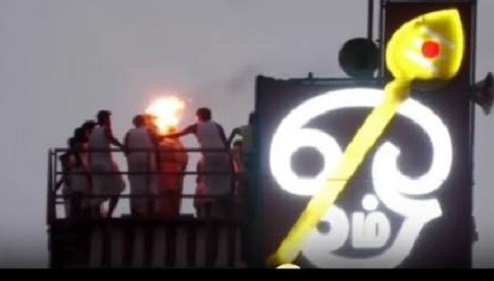
The controversy concerns the traditional lighting of the Karthigai Deepam at a stone pillar known as Deepathoon on Thiruparankundram hill. The hill houses the famous Arulmigu Subramaniaswamy Temple as well as a dargah. Consequently, the administration has a responsibility to protect the religious rights of both communities while maintaining peace.
The Madras High Court had ruled in favour of lighting the lamp at the disputed pillar. Subsequently, on November 20, 2026, the Supreme Court permitted the observance on November 24 as a one-time arrangement, subject to specific safeguards. However, the lamp was not lit at the designated location, prompting further judicial intervention.
On November 27, the Supreme Court took a stronger position. It suspended the temple's Board of Trustees, appointed two former judges as receivers and directed the Central Reserve Police Force to secure the temple and the hill. It also ordered the lighting of the lamp on November 28 under judicial supervision. The Court's observations about administrative non-compliance raised serious questions about the government's respect for judicial authority.
The issue is no longer simply about a religious ceremony. It concerns whether an elected government can disregard judicial directions through administrative restrictions.
Tamil Nadu's Dravidian political tradition, particularly the DMK's ideological emphasis on rationalism and social justice, has historically maintained a complicated relationship with organised religion. However, ideological differences cannot become grounds for restricting constitutional freedoms.
The state's Hindu Religious and Charitable Endowments Department administers thousands of temples. Government oversight may be necessary to ensure financial transparency and prevent mismanagement, but this practice should not be confined to only one religion. Temple administration cannot become an instrument for excessive political or bureaucratic interference.
The Thiruparankundram controversy exposes a larger challenge for Indian secularism. Religious freedom cannot be selectively respected according to political convenience. Neither Hindu devotees nor followers of other faiths should have to approach courts repeatedly to practise legitimate religious traditions.
Political parties have every right to seek votes and leaders are free to visit temples. But electoral symbolism must translate into respect for citizens' constitutional rights.
Ultimately, the credibility of secularism is measured not by political speeches or election-time temple visits, but by the fairness of government action. Hindu traditions deserve the same constitutional protection as every other religious tradition. Faith cannot be reduced to an electoral instrument, and religious freedom cannot become conditional upon political convenience.















Leave Your Comment