



Nilabh Krishna
There was a time when social media was celebrated as one of humanity's greatest technological breakthroughs. It promised to democratize communication, erase geographical barriers, amplify unheard voices, and bring families, friends, and societies closer together. In its infancy, platforms like Facebook, Twitter, Instagram, and later TikTok and countless messaging applications appeared to represent the future of human interaction. Information flowed freely, businesses flourished, social movements found momentum, and ordinary citizens acquired an unprecedented ability to communicate with the world.
Yet barely two decades later, the optimism surrounding social media has steadily given way to concern. What was designed as a tool for connection is increasingly becoming a source of isolation. What promised information often delivers misinformation. What claimed to strengthen communities frequently fragments them into hostile echo chambers. More importantly, the overuse of social media has entered what experts increasingly describe as a high-risk zone—not merely as an issue of individual addiction but as a multidimensional challenge affecting mental health, family structures, social cohesion, public order, and even national security.
The danger no longer lies in social media itself. Technology is inherently neutral. The crisis lies in the excessive, uncontrolled, and often manipulative ecosystem that has evolved around it, where attention has become the world's most valuable commodity and human psychology has become the product being bought and sold.
The first casualty of excessive social media consumption has been human relationships. Ironically, despite being connected to thousands of people online, millions today report feeling lonelier than ever before. Digital interactions have gradually replaced face-to-face conversations. Families often gather around dining tables where each member is engrossed in a different screen. Friends sitting together frequently spend more time photographing the occasion than experiencing it. Conversations have become shorter, attention spans weaker, and emotional engagement increasingly superficial.
Relationships thrive on patience, listening, compromise, and physical presence. Social media encourages precisely the opposite. Instant gratification, rapid responses, constant comparison, and the pursuit of online validation have altered expectations within personal relationships. Couples increasingly measure affection through digital gestures rather than emotional intimacy. Parents struggle to compete with algorithm-driven entertainment for their children's attention. Children, meanwhile, often learn communication through emojis before understanding genuine emotional expression.
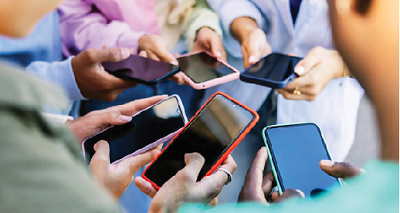
The phenomenon of "phubbing"—snubbing someone in favour of a mobile phone—has become commonplace across societies. Studies across various countries have consistently linked excessive smartphone and social media use with declining relationship satisfaction, reduced empathy, and increased interpersonal conflicts. The family, traditionally considered the first institution of emotional security, now finds itself competing with infinite digital distractions.
This transformation has profound implications for younger generations. Adolescents increasingly construct their identities not through real-life experiences but through curated online personas. Success is measured by followers, likes, shares, and viral visibility. The pressure to maintain an idealized digital image often creates anxiety, insecurity, and chronic dissatisfaction.
Social comparison has existed throughout human history, but social media has industrialized it. Individuals are continuously exposed to carefully edited snapshots of others' lives—luxurious vacations, successful careers, perfect relationships, ideal physiques, and extravagant lifestyles. Rarely do these portray reality in its entirety. Yet the human brain compares these curated highlights with one's ordinary daily life, creating feelings of inadequacy and failure.
Psychologists have increasingly associated prolonged social media exposure with rising levels of anxiety disorders, depression, low self-esteem, and body-image concerns, particularly among teenagers and young adults. The reward mechanisms built into these platforms resemble behavioural addiction. Every notification, like, or comment triggers small releases of dopamine, encouraging users to return repeatedly. Over time, many individuals develop compulsive checking behaviours, finding it difficult to remain disconnected even briefly.
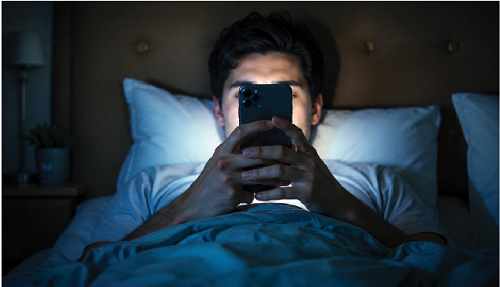
Sleep deprivation has emerged as another silent epidemic. Late-night scrolling disrupts circadian rhythms, while blue light exposure suppresses melatonin production, delaying sleep onset. Chronic sleep loss subsequently contributes to impaired concentration, mood disorders, weakened immunity, reduced academic performance, and decreased workplace productivity.
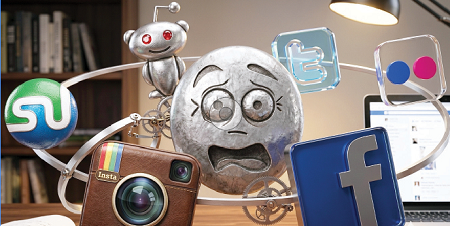
Physical health has not escaped this digital transformation either. Sedentary lifestyles encouraged by prolonged screen time contribute to obesity, cardiovascular diseases, diabetes, poor posture, neck pain, spinal disorders, and vision-related problems. Medical practitioners increasingly report conditions such as "text neck," digital eye strain, repetitive stress injuries, and chronic headaches among younger populations.
The irony is striking. While millions consume online fitness content, they often spend significantly more time watching exercise videos than engaging in physical activity themselves. Technology that could promote healthier lifestyles frequently ends up encouraging prolonged inactivity.
Children represent perhaps the most vulnerable demographic. Early and unrestricted exposure to social media has altered childhood itself. Outdoor play, reading habits, imagination, and direct social interaction are increasingly replaced by algorithm-driven entertainment. Attention spans have shortened considerably as children become accustomed to rapid content consumption. Teachers across educational institutions frequently report declining concentration levels and increasing dependence on instant digital stimulation.
Educational environments are also being transformed. Students often struggle to differentiate between information acquisition and genuine learning. Social media encourages fragmented knowledge rather than sustained intellectual engagement. The ability to read long texts, engage in deep reflection, and critically analyse complex issues gradually diminishes when individuals become accustomed to consuming thirty-second videos and endless scrolling.
Cyberbullying has added another disturbing dimension. Unlike traditional bullying, digital harassment follows victims everywhere. Humiliation no longer ends when school or work concludes; it continues twenty-four hours a day through anonymous messages, manipulated images, abusive comments, and coordinated online campaigns. Numerous studies have linked cyberbullying with increased risks of depression, self-harm, and suicidal ideation among adolescents.
The commercial architecture of social media deserves equal scrutiny. Most platforms operate on an attention economy model where user engagement directly translates into advertising revenue. Algorithms are therefore designed not necessarily to promote truth, well-being, or social harmony but to maximize the amount of time users remain online.
Research consistently demonstrates that emotionally charged content—particularly outrage, fear, anger, and controversy—generates higher engagement than balanced discussion. Consequently, algorithms often amplify divisive content because conflict retains attention. Users gradually become trapped inside ideological echo chambers where they encounter only opinions reinforcing their existing beliefs.
This phenomenon contributes significantly to political polarization across democracies. Constructive dialogue becomes increasingly difficult as opposing viewpoints are portrayed not merely as disagreements but as existential threats. Social trust erodes, consensus weakens, and democratic discourse suffers.
Misinformation has become one of the defining challenges of the digital age. Falsehoods frequently spread faster than verified information because sensational content attracts greater attention. Deepfake technology has further complicated the information landscape by making fabricated videos and manipulated audio increasingly convincing.
During public emergencies—whether pandemics, natural disasters, elections, or communal tensions—misinformation circulating through social media can have immediate and dangerous consequences. False medical advice, fabricated government announcements, manipulated videos, and conspiracy theories undermine public confidence and complicate crisis management.
The implications extend far beyond public health and politics. Social media has increasingly become an instrument in information warfare. Foreign governments, extremist organizations, criminal syndicates, and hostile intelligence agencies exploit digital platforms to influence public opinion, spread propaganda, recruit sympathizers, and manipulate social divisions.
National security experts increasingly describe information as the newest battlefield. Modern conflicts are fought not only with missiles and military hardware but also through narratives, perception management, psychological operations, and digital influence campaigns.
Hostile actors can exploit existing social fault lines based on religion, ethnicity, caste, language, or regional identities. Carefully coordinated disinformation campaigns seek to deepen mistrust, provoke unrest, weaken democratic institutions, and reduce confidence in governmental processes. Unlike traditional warfare, such operations often occur below the threshold of open conflict, making attribution extremely difficult.
Extremist organizations have mastered digital recruitment strategies. Sophisticated propaganda videos, encrypted communication channels, online gaming communities, and targeted messaging enable radical groups to identify vulnerable individuals across borders. Young people experiencing isolation, identity crises, or social alienation become particularly susceptible to online radicalization.
Similarly, organized crime has embraced social media for fraud, human trafficking, narcotics distribution, financial scams, and cybercrime. Romance scams, investment fraud, phishing attacks, identity theft, and cryptocurrency-related deception increasingly begin with seemingly harmless social media interactions.
The rapid spread of rumours through messaging applications has, in several countries, triggered mob violence, communal disturbances, and panic. Fabricated videos taken from unrelated incidents are frequently recirculated with misleading captions designed to inflame emotions. In emotionally charged situations, the speed of digital communication often outpaces official verification, allowing misinformation to shape public behaviour before facts emerge.
Children and adolescents face an additional layer of vulnerability through exposure to harmful online challenges, predatory behaviour, gambling promotions, explicit content, and sophisticated manipulation techniques. Many lack the maturity to distinguish authentic information from algorithmically amplified misinformation.
The emergence of artificial intelligence has introduced another complex dimension. AI-generated text, images, voices, and videos have significantly lowered the cost of producing convincing misinformation. Deepfakes can now imitate political leaders, military officials, journalists, or ordinary citizens with remarkable realism. The potential misuse during elections, diplomatic crises, financial markets, or communal tensions presents unprecedented challenges for governments worldwide.
Social media has also transformed the economics of attention in ways that affect mental resilience. Continuous notifications, endless scrolling, and infinite content feeds fragment concentration. Many individuals find it increasingly difficult to engage in uninterrupted reading, meaningful conversations, or sustained professional work. Productivity suffers while cognitive fatigue rises.
Ironically, despite offering unlimited communication tools, excessive social media use often diminishes genuine communication skills. Nuanced conversation gives way to abbreviated messaging. Emotional intelligence weakens when facial expressions, tone of voice, and physical presence are replaced by digital symbols and reaction buttons.
The culture of constant visibility has created another psychological burden. Individuals increasingly feel compelled to document rather than experience life. Vacations become opportunities for content creation instead of relaxation. Celebrations become performances for online audiences. Even grief and personal tragedies occasionally become public spectacles driven by engagement metrics.
This continuous performance generates emotional exhaustion. The pressure to remain relevant, responsive, and visible creates what psychologists describe as digital fatigue. Ironically, many users continue participating despite recognizing the negative effects because disengagement risks social exclusion.
The corporate responsibility of technology companies therefore deserves critical examination. Platform operators possess extraordinary influence over public discourse through algorithmic design, content moderation policies, and recommendation systems. Greater transparency regarding algorithmic decision-making, stronger child protection mechanisms, improved misinformation detection, and more ethical platform design are increasingly demanded by policymakers and civil society.
Governments, meanwhile, face the delicate challenge of balancing digital freedom with legitimate regulation. Excessive state control risks undermining free expression, while insufficient oversight allows harmful content to flourish unchecked. Democratic societies continue searching for regulatory frameworks that preserve fundamental rights while protecting citizens from manipulation, exploitation, and violence.
Educational institutions have an equally important role. Digital literacy must evolve beyond teaching technical skills. Citizens require the ability to verify sources, recognize misinformation, understand algorithmic bias, identify manipulation techniques, and critically evaluate online content. Media literacy is rapidly becoming as essential as traditional literacy.
Parents also confront unprecedented challenges. Simply restricting screen time is insufficient. Open communication, digital awareness, age-appropriate supervision, and modelling healthy technology habits remain far more effective than punitive approaches. Children often emulate adult behaviour; parents constantly attached to smartphones inadvertently normalize excessive digital dependence.
At the individual level, the solution is not digital abandonment but digital discipline. Social media remains an extraordinary tool for education, entrepreneurship, networking, disaster response, scientific collaboration, and civic engagement when used responsibly. The objective is balance rather than rejection.
Intentional technology use—setting screen-time boundaries, scheduling device-free family interactions, prioritizing face-to-face conversations, verifying information before sharing, engaging in regular physical activity, and protecting sleep routines—can significantly reduce many of the harms associated with excessive social media consumption.
Ultimately, the debate surrounding social media is not about technology but about humanity. Every technological revolution reshapes society, but societies retain the responsibility to shape technology according to human values rather than allowing commercial algorithms to dictate behaviour.
History demonstrates that civilizations are strengthened not merely by innovation but by wisdom in using innovation. Social media possesses immense potential to educate, connect, inspire, and empower. Yet when excessive use transforms connection into isolation, information into manipulation, and communication into polarization, the costs extend far beyond individual well-being.
The challenge before modern society is therefore not whether social media should exist but whether humanity can regain control over it before algorithms increasingly determine how people think, feel, relate, and respond to the world around them. Overuse has undeniably entered a high-risk zone. It threatens the emotional foundations of families, the physical and mental health of individuals, the cohesion of communities, and the resilience of nations.
The screen has become the most influential window through which billions now view reality. The question is whether that window continues to illuminate the world—or gradually becomes a mirror reflecting only our anxieties, divisions, and vulnerabilities. The answer will shape not merely the future of communication but the future of society itself.
(The content of this article reflects the views of writer and contributor, not necessarily those of the publisher and editor. All disputes are subject to the exclusive jurisdiction of competent courts and forums in Delhi/New Delhi only)





















Leave Your Comment