


Sambhaji Raje, the valiant son of Chhatrapati Shivaji Maharaj, played a crucial role in safeguarding Sanatan Dharma and resisting the tyrannical rule of the Mughal Emperor Aurangzeb. His unwavering commitment to dharma, his fierce opposition to religious persecution, and his strategic military acumen make him one of the most formidable warriors in Indian history. Though his reign was short, his impact on the Deccan and the broader struggle for Hindu resistance against Islamic aggression was immense. The Marathas played a pivotal role in dismantling the Mughal Empire, marking a significant chapter in Indian history. Their relentless resistance, strategic warfare, and unwavering determination challenged the might of the once-dominant Mughal rulers. Under the leadership of Chhatrapati Shivaji Maharaj, the foundation of Hindavi Swarajya was laid, instilling a sense of self-rule and defiance against foreign domination. His vision was carried forward by his successors, particularly Sambhaji Raje, Rajaram, and later, Maharani Tarabai, who ensured that the Marathas remained a formidable force against Mughal tyranny.
The Marathas employed guerrilla warfare tactics, utilizing the rugged terrain of the Western Ghats to their advantage. Unlike the Mughals, who relied heavily on large standing armies and conventional warfare, the Marathas operated with agility and precision, launching surprise attacks on enemy camps, disrupting supply lines, and swiftly retreating to their strongholds. This asymmetric warfare gradually exhausted the Mughal forces, who struggled to counter the Maratha resistance. Sambhaji Raje, the valiant son of Shivaji, took the fight to Aurangzeb, launching bold raids and refusing to bow to the emperor's demands. Even after his brutal execution in 1689, his sacrifice only strengthened the resolve of the Marathas to continue their struggle.
With the rise of leaders like Peshwa Balaji Vishwanath, Baji Rao I, and Madhavrao I, the Marathas expanded their influence across India, systematically eroding Mughal authority. Baji Rao I, in particular, is credited with the northward expansion of the Maratha Empire, challenging Mughal dominance in regions like Malwa, Gujarat, and Delhi itself. His military campaigns were marked by swift cavalry movements and deep penetrations into enemy territory, making it difficult for the Mughals to recover from their losses. The Marathas also established strong administrative and revenue systems, ensuring sustainable governance in the regions they conquered.
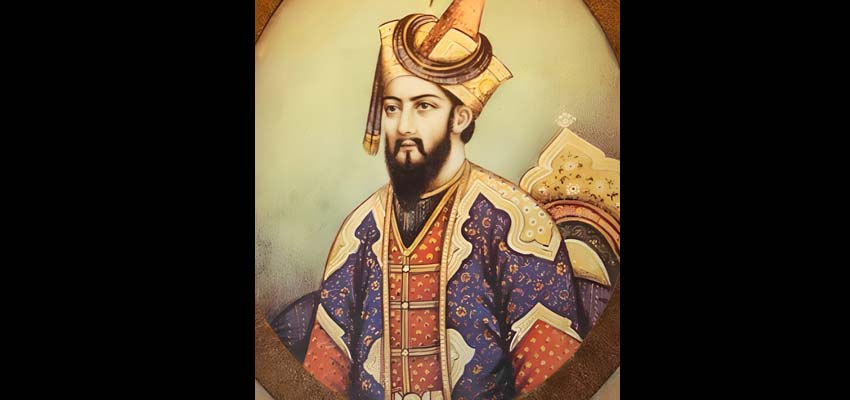
One of the defining moments in the downfall of the Mughal Empire was the Third Battle of Panipat in 1761. Although the Marathas faced a temporary setback against the Afghan ruler Ahmad Shah Abdali, their resilience ensured that the Mughals could never regain their former strength. In the years that followed, the Marathas continued to exert their dominance, becoming the de facto rulers of India. By the late 18th century, the once-mighty Mughal Empire had been reduced to a mere puppet state, surviving only under Maratha patronage until the eventual British intervention.
The Marathas’ contribution to Indian history extends beyond their military achievements. They revived Hindu cultural and religious traditions, protected temples from destruction, and ensured that India did not succumb entirely to foreign rule. Their resistance against the Mughals laid the foundation for future struggles against colonial powers, inspiring generations to fight for India's sovereignty. The legacy of the Marathas is one of valor, perseverance, and an unyielding commitment to the ideals of Swarajya, making them instrumental in shaping the course of Indian history. In recent times, renewed interest in the legacy of the Marathas, particularly Sambhaji Raje, has been sparked by the upcoming Bollywood movie Chhava. This film aims to shed light on the often-overlooked contributions of Sambhaji Raje in resisting Aurangzeb and protecting Sanatan Dharma. Through cinematic storytelling, Chhava seeks to bring to life his sacrifices, bravery, and strategic acumen, ensuring that his contributions to India's history are recognized and remembered by modern audiences. This resurgence of interest underscores the timeless relevance of the Marathas' fight for sovereignty and cultural preservation.
Early Life and Ascendancy to the Throne
Sambhaji Raje was born on May 14, 1657, to the great Maratha warrior and founder of the Hindavi Swarajya, Chhatrapati Shivaji Maharaj, and his first wife, Saibai. From a young age, Sambhaji exhibited intelligence, bravery, and a strong inclination towards statecraft and military affairs. His education included rigorous training in Sanskrit, Persian, and Marathi, along with combat and strategic warfare.
Following the death of Shivaji Maharaj in 1680, Sambhaji was initially sidelined due to internal court politics. However, he soon regained his rightful position and ascended to the throne in 1681, proving his mettle as a ruler and warrior.
Protector of Sanatana Dharma
Sambhaji Raje, the eldest son of Chhatrapati Shivaji Maharaj, played a crucial role in resisting the Mughal Emperor Aurangzeb’s oppression and safeguarding the Maratha Empire. His reign, though brief, was marked by relentless defiance against the Mughal onslaught, ensuring that the dream of Swarajya, as envisioned by Shivaji, did not perish under Aurangzeb’s expansionist ambitions. Despite facing betrayal, internal conspiracies, and the overwhelming strength of the Mughal forces, Sambhaji stood as an unwavering protector of Sanatan Dharma and Maratha sovereignty.
Upon ascending the throne in 1681, Sambhaji inherited a kingdom constantly under threat. Aurangzeb, determined to crush the Marathas, launched a prolonged military campaign in the Deccan. Unlike many rulers who sought peace through submission, Sambhaji chose the path of resistance. He adopted an aggressive strategy, launching bold counterattacks on Mughal strongholds and disrupting their supply chains. His forces effectively utilized guerrilla tactics, striking fear into the hearts of Aurangzeb’s generals and keeping the mighty Mughal army at bay for nearly a decade.
Sambhaji’s military prowess was evident in his campaigns beyond the Deccan as well. He inflicted severe defeats on Mughal governors in Gujarat and Malwa, demonstrating the Marathas’ expanding influence. His naval forces, continuing Shivaji’s legacy, repelled Portuguese advances and maintained Maratha dominance along the Konkan coast. His resistance against the Mughal forces not only prolonged Aurangzeb’s Deccan campaign but also drained the empire’s resources, contributing significantly to its eventual decline.

One of the defining aspects of Sambhaji’s struggle was his staunch defense of Hindu culture and traditions. Aurangzeb’s rule was marked by religious intolerance, destruction of temples, and forced conversions. Sambhaji not only opposed these policies but actively protected temples and supported scholars and saints who were at risk of persecution. His defiance was not limited to the battlefield; he also waged an ideological battle against the Mughal emperor’s oppressive policies. His unwavering commitment to his faith made him a revered figure in the annals of Indian history.
Despite his formidable leadership, Sambhaji’s reign came to a tragic end due to treachery. In 1689, he was betrayed by a group of his own nobles and captured by the Mughals. Aurangzeb, hoping to break his spirit, subjected him to brutal torture, demanding that he convert to Islam. Sambhaji, true to his principles, refused to bow down. His resilience in the face of unimaginable suffering became legendary, and his martyrdom further ignited the Maratha resistance. His execution, rather than breaking the Marathas, strengthened their resolve to continue the fight.
The impact of Sambhaji’s struggle was profound. His sacrifices ensured that Aurangzeb’s dream of completely subjugating the Deccan remained unfulfilled. Following his death, the Marathas, under the leadership of his stepmother Maharani Tarabai and later the Peshwas, intensified their resistance. Within a few decades, they emerged as the dominant power in India, while the Mughal Empire crumbled under its own weight.
Today, Sambhaji Raje’s legacy is witnessing a renewed appreciation, especially with the upcoming Bollywood film Chhava. This cinematic portrayal aims to shed light on his contributions, bringing his story to a wider audience. His indomitable spirit, strategic brilliance, and unwavering dedication to Dharma continue to inspire generations. Sambhaji Raje was not just a warrior king; he was a symbol of resistance against tyranny, a protector of his people, and a true embodiment of the Maratha ethos. His life and sacrifices remain a testament to the unyielding spirit of those who refuse to surrender in the face of oppression.
Military Prowess and Resistance Against the Mughals
Sambhaji Raje’s military campaigns were marked by his strategic genius and unyielding resistance. Some of his notable campaigns include:
1. Defense of Swarajya
Soon after taking charge, Sambhaji faced multiple challenges, including internal betrayal and external threats from the Mughals. Despite this, he successfully defended the Maratha strongholds, ensuring that the spirit of Hindavi Swarajya remained alive.
2. Devastation of Burhanpur (1681)
One of his most remarkable military feats was the plundering of Burhanpur, a key Mughal city and treasury. This audacious attack sent shockwaves through Aurangzeb’s administration, demonstrating Sambhaji’s ability to strike at the heart of the enemy’s territory.
3. Alliances with Rajputs and Other Hindu Rulers
Understanding the importance of unity among Hindu rulers, Sambhaji sought to forge alliances with Rajput and other regional Hindu kings. He aimed to create a unified resistance against Aurangzeb’s tyranny, although many rulers hesitated due to fear of Mughal retaliation.
4. Naval Warfare and the Portuguese Conflict
Sambhaji continued his father’s legacy of developing naval strength. He launched attacks against the Portuguese, who were notorious for their religious conversions and oppression of Hindus along the western coast. By challenging Portuguese dominance, he safeguarded Hindu coastal communities from forced conversions.
Steadfastness in the Face of Religious Persecution
One of Sambhaji Raje’s most defining moments came when he was captured by Aurangzeb in 1689. The Mughal emperor saw this as an opportunity to finally break Maratha resistance and demanded that Sambhaji convert to Islam in exchange for his life and a luxurious existence. However, Sambhaji, embodying the true spirit of Sanatan Dharma, refused to yield.
His defiance enraged Aurangzeb, leading to his brutal torture and execution. The Mughal forces gouged out his eyes, cut off his tongue, and mutilated his body before finally executing him on March 11, 1689. Despite excruciating pain, Sambhaji never uttered a word of surrender. His martyrdom became a symbol of Hindu resistance and inspired future generations to continue the struggle against foreign oppression.
Impact on the Maratha Empire and Sanatan Dharma
Sambhaji’s sacrifice was not in vain. His unrelenting resistance and ultimate martyrdom ignited a fire within the Maratha forces. Under the leadership of his younger brother, Rajaram, and later his wife, Maharani Tarabai, the Marathas regrouped and launched relentless guerrilla warfare against the Mughals.
Aurangzeb, despite his vast army and resources, could never completely subdue the Marathas. The war drained the Mughal empire’s resources and eventually contributed to its decline. Sambhaji’s legacy ensured that the Maratha Empire emerged as a dominant power in India, reclaiming Hindu pride and sovereignty.
Legacy and Inspiration
Sambhaji Raje’s contributions to Sanatan Dharma and India’s history remain unparalleled. His life exemplifies the virtues of bravery, sacrifice, and unwavering devotion to one’s culture and religion. Unlike contemporary rulers who often prioritized personal gains over dharma, Sambhaji upheld the ideals of righteousness and resistance.
His story continues to inspire countless Hindus to stand against oppression and protect their heritage. His martyrdom is commemorated across Maharashtra and India, reminding people of the sacrifices made to preserve Sanatan Dharma.
Conclusion
Sambhaji Raje was not just a warrior but a protector of Sanatan Dharma, a true Chhatrapati who stood against one of the most ruthless rulers in history. His refusal to convert, his military brilliance, and his dedication to dharma make him an eternal symbol of Hindu resilience. While Aurangzeb believed he had crushed the Maratha spirit by executing Sambhaji, history proved him wrong. The Maratha resurgence eventually led to the downfall of the Mughal empire and the re-establishment of Hindu rule in India.
In a world where history often downplays the sacrifices of such great figures, Sambhaji Raje’s life remains a beacon of inspiration for those who value courage, faith, and patriotism.

By NILABH KRISHNA
(The content of this article reflects the views of writers and contributors, not necessarily those of the publisher and editor. All disputes are subject to the exclusive jurisdiction of competent courts and forums in Delhi/New Delhi only)



















Leave Your Comment