


Hindus have experienced religious persecution, systematic violence in the form of forced conversion, massacres, genocide, demolition and desecration of temples as well as destruction of educational centres. Parts of India have been subject to Muslim (all invaders) rule from the period of Muhammad bin Qusim till the fall of Mughal empire. According to William James Durant, an American Historian and philosopher, called the Muslim conquest of India probably the bloodiest story of history. David Neal Lorenzen, scholar of religious studies, asserts that during the Islamic rule period there was state sponsored persecution against Hindus, yet it was sporadic and directed mostly at Hindu religious monuments. According to Andre Wink, an American historian, the mutilation and destruction of Hindu religious idols and temples were an attack on Hindu religious practices, the destruction of religious architecture was a means to eradicate the vestiges of Hindu religious symbols. The Muslim texts of this period justify it based on their contempt and abhorrence for idols and idolaters in Islamic thought. Muslim historian of medieval era viewed the creation and expansion of Islamic sultanates in Hindustan as holy war and a religious conquest, characterizing Muslin forces as the army of Islam and Hindus as infidels. They introduced their education system by setting up madrasas to promote Islam.
The reign of Aurangzeb witnessed one of the strongest campaigns of religious violence in the Mughal Empire’s history. He is a controversial figure in Modern India, often remembered as a ‘vile oppressor of Hindus.’ He expanded the Mughal Empire to southern part of India through long bloody campaign against non-Muslims. He forcibly converted Hindus to Islam and destroyed many Hindu temples. In some cases, mosques were built on the foundations of the temples while using some stones of the demolished temples as alleged in the temples of Kashi and Mathura. Britishers came to India to trade and eventually became rulers. They looted India, promoted conversion to Christianity and English language. They attempted to divide the society based on religion, caste, and ethnicity, culminating in the partition of the country.
There have been three long standing temple-mosque disputes between two communities notably at Ayodhya, Kashi, and Mathura, deeply entwined with Hindu sentiments. In Ayodhya, at the birthplace of Lord Ram, the seventh incarnation of Lord Vishnu, it is believed that Babur demolished a temple and constructed a mosque, deeply hurting the faith of Hindus. After over 500 years of struggle in which thousands of people died and a long legal battle, the Supreme Court of India decided in favour of the temple and five acres of land at a separate location for mosque was allotted to the Muslims. Ayodhya dispute has been resolved to the satisfaction of all and a grand temple constructed at the birth place of Lord Ram, fulfilling the dream of all Indians. Ayodhya city is being developed, with huge world class infrastructure, as a holy place akin to Vatican City and Mecca.
Lord Shiva, also known as Mahadeva is one of the principal deities of Hinduism. He is the supreme being of Shaivism, one of the major traditions within Hinduism. The Shiva temple in Varanasi is popularly known as Kashi Vishwanath temple. This is one of the twelve Jyotirlingas of Lord Shiva. This temple was destroyed by Aurangzeb in 1669 and a mosque named Alamgir was erected in its place, later renamed as Gyan Vapi (well of knowledge) mosque. The construction of the present temple, adjacent to the mosque, was funded by Ahilyabai Holkar in 1770. In 1991, a petition was filed in the Varanasi Court on behalf of Lord Shiva and others demanding the restoration of Gyanvapi land to the adjacent Kashi Vishwanath temple. Several other pleas were also filed in this matter. The Anjuman Intezamia Masjid Committee, which manages the mosque, is of the view that the proceedings are an attempt to change the religious character of the mosque and a violation of Places of Worship Act 1991. After a long litigation, the court ordered the inspection of the site with videography. The Hindu side claimed that a Shivling has been found, however, the Muslim side dismissed this claim and called it a fountain. On the order of the court the ASI (Archaeological Survey of India) conducted the scientific survey of the mosque indicating the existence of a pre-Hindu temple at Gyanvapi mosque. Recently, the Varanasi court allowed the worship of Shringar Gauri and other Hindu deities in the southern cellar of Gyanvapi Masjid by a family of priests who used to perform the rituals there before 1993.
Lord Krishna is a major deity in Hinduism and worshiped as the eighth avatar of Lord Vishnu and as the supreme god. He is known as the god of protection, compassion, tenderness, and love. The worship of Krishna has spread to the other parts of the world largely due to the work of International Society for Krishna Consciousness (ISKON). Through Krishna only, the world has got the message of Bhagavat Geeta. He was born to Devaki and Vasudeva in Mathura and was brought up by Yashoda and Nand baba in Nand gaon.
On the basis of the historical evidence, Aurangzeb issued a decree in 1670 to demolish the temple at the site of Shri Krishna Janmabhoomi in Mathura. Following the demolition, the Shahi Idgah Mosque was built there. This has been a long conflict between the two sides, the litigation is going on in various courts. Recently, the Allahabad High Court has ordered the scientific survey of the mosque, similar to the one conducted at the Gyanvapi in Varanasi. The survey will be carried out as part of ongoing Shri Krishna Janmabhoomi case. The order has been stayed by the Supreme Court.
The construction of the temple in Ayodhya will inspire all of us to learn from the great ideals of Lord Ram. He does not belong to any caste or religion, he is for all of us and this may be the beginning of awakening of spiritual consciousness and the Ram Rajya in the country. The disputes of Kashi and Mathura, for which the Indian Muslims are not responsible, should be resolved peacefully either by mutual consent or through the court. It is believed that after the settlement of these two disputes, honouring the sentiments of the majority community, there will be no mandir masjid issue in the country and harmony with prosperity will prevail.
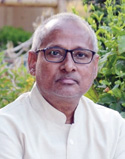
By Manoj Dubey
Principal (Retd.)
Delhi Public Schools
(The content of this article reflects the views of writers and contributors, not necessarily those of the publisher and editor. All disputes are subject to the exclusive jurisdiction of competent courts and forums in Delhi/New Delhi only)














Comments (4)
Very nice
B
Pranam ! Very nice article.Like different references of foreign historians n it shows your hard work Sir. Regards ????????????
S
The article is very knowledgeable, tell us how hindus were suppressed, and how everything is coming up
N
Well written Mr. Dubey. I agree to the last word. Narratives have been built over the time regarding the status of the disputed sites needlessly. The structure at Kashi indicates loud and clear about presence of a grand Hindu Temple. The narrative that Mosques will be demolished is totally out of place. The fact is, Hindus are reclaiming their usurped property. In the case of Ayodhya, I fail to understand as to why 5 acres of land was allotted as compensation? I respect the court's order. By resisting, the other community is opening a floodgate of claims. By agreeing to hand over the three major disputed sites, the tussle can be put to rest. Let's hope good sense will prevail. But again, will the vested interests and politicians allow this to happen? This is the million dollar question. Let's hope for the best.