


Inside India’s Most Demanding Pilgrimage
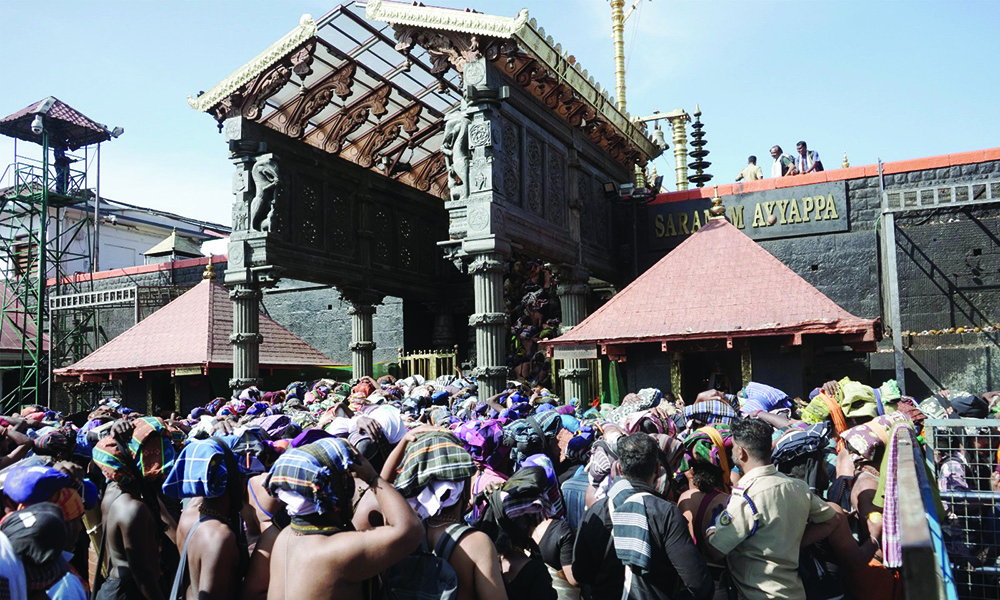
Before dawn breaks over the Western Ghats, barefoot pilgrims dressed in black begin their silent ascent through the forests of Kerala. There are no slogans of identity, no markers of rank—only a single call that binds them all: Swamiye Saranam Ayyappa. Few pilgrimages anywhere in the world embody such a powerful blend of discipline, devotion, austerity, and unity as the Sabarimala yatra. Nestled deep within the Periyar Tiger Reserve, the hill shrine of Lord Ayyappa draws millions each year, cutting across caste, creed, language, and social status. Yet what unfolds here is far more than a physical journey through rugged terrain; it is an inward passage of self-purification and surrender, guided by the timeless Upanishadic truth of Tat Tvam Asi— “You are That,” the awakening to the divine presence within.
The Significance of Sabarimala Pilgrimage
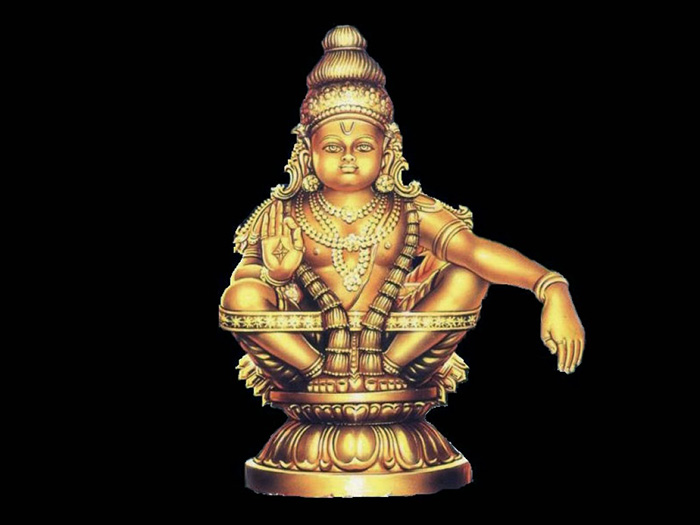
The pilgrimage to Sabarimala is unlike any other in the country. Devotees worship Lord Ayyappa, the celibate yogi born from the union of Shiva and Vishnu’s Mohini form. Sabarimala represents Dharma rooted in simplicity and spiritual equality—every pilgrim is addressed as Swami, symbolising that divinity resides in everyone.
The journey is meant to burn away impurities of mind and ego. In Sabarimala: Its Timeless Message, eminent thinker the late Srikant wrote that this yatra is a symbolic ascent from lower human instincts to supreme consciousness. Sabarimala, he argued, is an “inner pilgrimage” that takes the devotee from the confines of the limited self to the vast freedom of the Universal Self.
The Heart of the
Pilgrimage
Entry to Sabarimala is not simply a physical act; it is preceded by a period of intense spiritual discipline known as the 41-day vratham (penance). This sacred period begins with the mala (sacred beads) being sanctified in a temple and worn around the neck—crafted from tulasi, rudraksha, sandalwood or other sacred beads, marks the pilgrim’s purification in thought, word, and deed.
During the vratham, the devotee adopts a life of austerity and simplicity. He wears plain black or blue clothing, symbolising detachment, and abstains from meat, liquor, and all forms of sensory indulgence. Celibacy is strictly observed, and he sleeps on the floor to cultivate humility and self-discipline. The pilgrim practices ahimsa, compassion, and restraint in thought, word, and action. Daily bhajans, prayers, and visits to nearby temples become an integral part of his routine, allowing the mind to gradually turn inward and remain focused on Lord Ayyappa throughout these days. The vratham is the crucible in which the pilgrim’s inner impurities are burnt away, preparing him for the darshan of the Lord.
The Sacred Bundle
No pilgrim may climb the 18 sacred steps at Sabarimala without carrying the Irumudi Kettu, the twin-compartment cloth bundle that symbolises both the pilgrim’s offerings and his inner journey. Prepared under the guidance of a Guruswamy, the Irumudi (two pouches) contains in its front compartment—called the munmudi(the front portion) —the ghee-filled coconut which is the most important offering to Lord Ayyappa. Along with this are placed items meant for worship, such as camphor, incense, oil, and various kanikkai or personal offerings to the deity. The rear compartment, known as the pinmudi, carries the devotee’s provisions for the journey, including rice and other essentials, and sometimes simple snacks that may be shared with co-pilgrims.
The Irumudi is not a mere cloth bag but a profound spiritual symbol. The ghee-filled coconut represents the devotee’s ego and accumulated impurities. When this coconut is finally broken at Sannidhanam and the ghee is offered for abhishekam on the Lord, it signifies the surrender of one’s inner burdens and the offering of the purified self at His feet. Carrying the Irumudi on the head throughout the ascent serves as a constant reminder of humility, discipline, and the sacredness of the pilgrimage.
Appam and Aravana
One of the most cherished aspects of the Sabarimala pilgrimage is receiving the sacred prasadam of the Lord—especially Aravana and Appam. These offerings are not merely food items; they symbolise divine grace and the blessings of Lord Ayyappa.
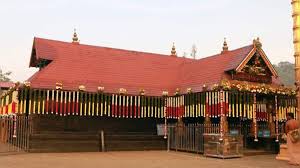
Aravana, a sweet preparation made of jaggery, rice, and ghee, represents the sweetness of devotion and the fulfilment of vows. Appam, deep-fried in ghee, embodies abundance, auspiciousness, and the joy of completing the arduous pilgrimage. Devotees stand in long queues with unmatched enthusiasm just to obtain these prasadam packets, often carrying them home for family, friends, and neighbours. For many, receiving Aravana and Appam marks the emotional completion of the entire yatra.
The Guide, Mentor, and Torchbearer
The role of the Guruswamy is pivotal in the Sabarimala tradition. A senior pilgrim who has undertaken the yatra many times, he mentors the newcomers, initiates the vratham, leads the group, ensures discipline, and guides them through every ritual—from Kettunira to the final darshan. The Guruswamy represents Guru Tattva—the guiding force that steers the aspirant through the journey within and without.
The Soul of Sabarimala
Every ritual, every chant, every austerity of Sabarimala points to one central message: Tattwamasi: That Thou Art. The deity in Sabarimala sits in the yogic posture of eternal stillness, reminding the pilgrim that God is not outside, but within. Climbing the 18 holy steps is symbolic of transcending the 18 impurities of human life and attaining union with the Supreme.
Why women (10-50) are traditionally
not allowed?
One of the most debated aspects of Sabarimala is the restriction on women between the ages of 10 and 50, which is often misunderstood as gender discrimination. In reality, as several Hindu scholars have explained, the custom is connected to the unique energy field (deva-prabhava) of Lord Ayyappa and its direct impact on the menstrual cycle of women. Sabarimala is a powerful yogic kshetra where the deity is consecrated in a form that radiates intense energy. According to traditional practitioners, vaidikas, and the insights recorded by researchers after studying thousands of women, prolonged exposure to this specific energy field—combined with the physical strain of the 41-day vratham and the arduous trek—can influence a woman’s hormonal rhythms and disrupt the natural menstrual cycle, causing irregularities or sudden onset. The restriction, therefore, historically evolved as a form of protection, not exclusion—acknowledging the delicate synchronicity of the female reproductive system. It is also important to note that Hindu temples follow deity-specific rules everywhere: some temples restrict men, some allow only women on certain days, and some prohibit pregnant women or newly married couples. Sabarimala’s tradition thus arises from respect for the nature of the consecration and the wellbeing of women, not from gender inequality. This is why lakhs of women devotees themselves voluntarily uphold the custom out of devotion and understanding, not compulsion.
The Divine Beacon
The climax of the annual pilgrimage season is the Makaravilakku on the Makara Sankranti day in January. The Thiruvabharanam (sacred ornaments of Lord Ayyappa), carried in a majestic procession from Pandalam Palace, reaches Sabarimala on this day.
As the ornaments are placed on Lord Ayyappa, a celestial light—Makarajyothi—is lighted on the Ponnambalamedu hill. The appearance of the light, accompanied by the presence of eagles that mysteriously circle the procession year after year, inspires awe in millions of devotees.
The Thiruvabharana procession itself is an extraordinary sight. The sacred caskets are carried by selected bearers, while villages along the route celebrate the occasion with lights, bhajans, and offerings. Devotees also believe that divine eagles—seen frequently during the journey and regarded as Garuda—follow the procession until it reaches the hills. This sacred journey unites thousands in devotion, signalling the arrival of the most sanctified moment of the Sabarimala season..
The Forest Path: A Test of Faith
For centuries, pilgrims walked through forests, streams, and hills to reach Sabarimala. Even today, thousands continue this tradition—walking 50 km, 200 km, or even more.
The sight is deeply moving: villagers offering kanji, chukku vellam, fruits, and shelter; temples opening their halls for night rest; and Hindu organisations arranging annadanam and medical camps. Every step of this walk reinforces a single message—the yatra is not solitary, but collective, compassionate, and firmly rooted in dharma.
Traditionalists still prefer the original Erumaeli–Azhutha–Kallidamkunnu–Pampa forest route. This path represents endurance, courage, and communion with nature. Crossing Azhutha river, trekking long stretches of forest, and ascending the hills remind the pilgrim of the difficult journey of life itself. The forest path is a humbling experience—reminding the pilgrim of the fragility of human life and the omnipresent grace of the Lord.
Sabarimala Today
Despite modern facilities, technological systems, and increasing crowds, the core essence of Sabarimala remains pure and untouched. The pilgrimage continues to be defined by values such as austerity, equality, unity beyond caste and religion, humility before nature, and devotion without any display or ostentation. When lakhs of men chant “Swamiye Saranam Ayyappa” in unison, a powerful vibration arises that transcends all societal divisions. It becomes a living reminder that in India’s civilisational consciousness, God is not exclusive but inclusive, not distant but deeply present within.
Administrative
Challenges
In recent times, discussions and allegations regarding a possible ‘gold discrepancy’ involving the temple’s ornaments have surfaced in the public domain. While such claims naturally create concern among devotees, it is important to note that official clarifications have been issued and legal inquiries are underway. Devotees expect the administration of major pilgrimage centres in Kerala to uphold the highest standards of transparency and accountability. ThereWfore, any such issues must be investigated swiftly and thoroughly, ensuring that the faith and trust of millions of devotees remain intact and unshaken.
The Eternal Message
Sabarimala stands not merely as a temple but as a spiritual university—teaching discipline, devotion, humility, and universal brotherhood. Its rituals are not mechanical; they are metaphors for the journey from the outer world to the inner self. Sabarimala is a reminder that one must shed ego, desire, and ignorance to realise the divine core of existence.
Every pilgrim who climbs the 18 steps becomes a seeker walking towards the truth of Tatwamasi. And as long as that message endures, the sacred flame of Sabarimala will continue to illuminate hearts across generations.
Ultimately, Sabarimala is not sustained by rituals alone—it is sustained by culture and collective resolve. What returns every Mandala season is not merely a crowd, but a centuries-old civilisation, still shining in Bharat despite relentless onslaughts mounted against it from different quarters, year after year. No administrative or judicial order, ideological experiment, or transient controversy has managed to dilute this unique sacred journey, because Sabarimala derives its authority from Sanatana Dharma—a living tradition where discipline is freedom, effort is prayer, and the path itself becomes the proof of faith. In an age restless for instant gratification, Sabarimala endures as an uncompromising reminder that some truths can only be reached on foot, in silence, and through surrender.

Pradeep Krishnan
(The content of this article reflects the views of writer and contributor, not necessarily those of the publisher and editor. All disputes are subject to the exclusive jurisdiction of competent courts and forums in Delhi/New Delhi only)
















Comments (3)
G
Good information and inspiring
J
Excellent, covering all aspects of the pilgrimage.
s
Super write up. You have impressed the readers with your unique style of writing. Highly informative. Keep going. Wish you all the best ????