


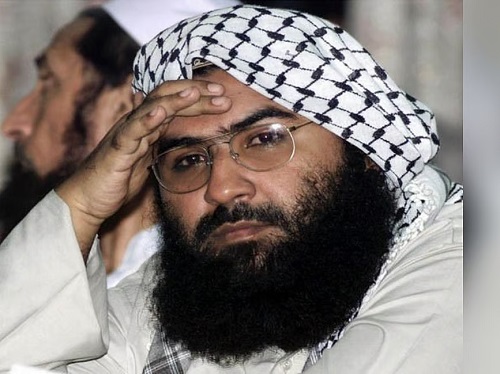
Pakistan has once again put Jaish-e-Mohammed chief Masood Azhar in the spotlight by increasing the reward for information leading to his arrest and placing his name in the Federal Investigation Agency’s Red Book of most-wanted terrorists. The move, coming weeks before the Financial Action Task Force’s October plenary, is being viewed as an attempt by Islamabad to showcase action against terrorism, even as questions remain over Azhar’s actual whereabouts and Pakistan’s record of pursuing wanted extremists.
Pakistan has announced a Rs 70 lakh reward for information leading to the capture of Masood Azhar, the chief of the Jaish-e-Mohammed (JeM), by including his name in the latest edition of the FIA’s Red Book. The development comes at a politically sensitive time, with the FATF plenary scheduled for October.
The timing has triggered questions over whether Pakistan’s latest move represents a substantive counter-terrorism effort or primarily an attempt to demonstrate compliance with international expectations. Islamabad has previously maintained that Azhar is not present in Pakistan and has claimed that he is hiding in Afghanistan.
The FIA had announced a Rs 50 lakh reward for information about Azhar in 2021. Five years later, the amount has been increased by Rs 20 lakh, taking the total bounty to Rs 70 lakh.
Masood Azhar has long remained one of the most prominent names associated with Pakistan-based terrorism targeting India. Pakistan’s official position since 2021 has been that he left the country and is located in Afghanistan.
Indian intelligence sources, however, have presented a different assessment. According to them, technical analysis conducted during the past six months indicates that Azhar could be hiding in Nawabshah in Pakistan’s Sindh province.
The conflicting claims have added another layer of scrutiny to Pakistan’s decision to include Azhar in its most-wanted list. Rather than simply the size of the reward, the key question is whether Islamabad is prepared to actively trace, arrest and prosecute him.
The latest FIA Red Book has also brought renewed attention to the unresolved investigation into individuals accused of supporting the perpetrators of the 2008 Mumbai terror attacks.
The updated list reportedly contains 19 individuals accused of assisting the 26/11 attackers, including people allegedly involved in providing financial support and facilitating the movement of the attackers by sea.
Details and photographs of 17 of these suspects have reportedly been retained in the FIA database. However, changes have been made in the entries of two individuals compared with the 2021 version.
Mohammed Khan of Turbat, who has been accused of providing the Al-Husseini boat used in the attackers’ journey towards Mumbai, remains listed. However, his photograph, alleged links with Lashkar-e-Taiba and details concerning his alleged role have reportedly been removed.
Similarly, the updated entry for Abdul Rehman of Bahawalnagar no longer carries his photograph and alleged LeT links, according to the details of the revised list.
The FIA list names 11 alleged LeT operatives accused of involvement in the maritime operation that helped transport the 26/11 attackers.
Among those named are Muhammad Amjad Khan of Multan, Shahid Ghafoor of Bahawalpur, Muhammad Usman of Sahiwal, Atiq-ur-Rehman of Lahore, Riaz Ahmed of Hafizabad, Muhammad Mushtaq of Gujranwala, Muhammad Naeem of Dera Ghazi Khan, Abdul Shakoor of Karachi, Muhammad Sabir Salfi of Multan, Muhammad Usman of Lodhran and Shakeel Ahmed of Rahim Yar Khan.
Their inclusion highlights the extensive logistical network alleged to have supported the Mumbai attack, which claimed numerous civilian lives and exposed the international reach of the Lashkar-e-Taiba network.
The FIA list also identifies six individuals accused of providing financial assistance for the operation.
Among those named is Muhammad Iftikhar Ali of Faisalabad, who was allegedly involved in arranging a VoIP connection at a cost of Rs 70,000 Pakistani currency. The communication system was allegedly used by the attackers and their handlers.
Other suspects include Muhammad Zia of Rawalpindi, accused of providing Rs 80,000; Muhammad Abbas Nasir of Khanewal, accused of providing Rs 2.53 lakh; Javed Iqbal of Kasur, accused of contributing Rs 1,86,430; Mukhtar Ahmed of Mandi Bahauddin, accused of providing Rs 2,98,047; and Ahmed Saeed of Battagram, accused of contributing Rs 21 lakh.
According to the FIA, the 17 individuals connected with the 26/11 case have remained absconders for 18 years.
Indian intelligence sources, however, have alleged that the suspects continue to remain in Pakistan and questioned whether merely placing their names on a most-wanted list amounts to meaningful action.



















Leave Your Comment