


Unveiling the Economic, Historical, and Cultural Significance of the Ram Temple
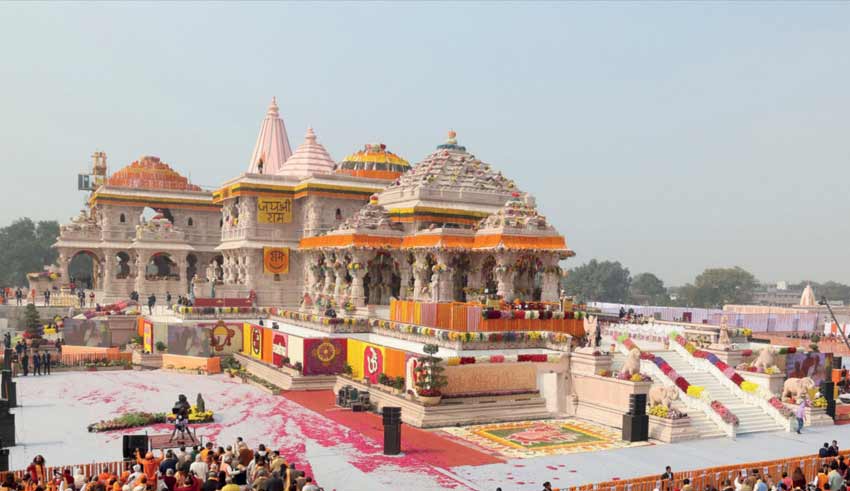
Ayodhya, a historically significant city with a rich religious and cultural heritage, has unexpectedly become the focus of attention on a national and worldwide scale following Lord Ram Lalla's grandiose 'Pran Pratishtha' ceremony and the public opening of the Ram Temple. This historic day not only signifies the accomplishment of a lifelong desire to build the temple, but it also prepares Ayodhya for a voyage of profound change that will have a lasting impact on its history, economics, and culture. It is anticipated that the Ram Temple's building would increase Ayodhya's tourism by attracting millions of tourists and history buffs from all over the world. This visitor inflow would not only improve the local economy monetarily, but it would also generate employment opportunities for residents. Furthermore, the building of the temple maintains Ayodhya's standing as a symbol of religious unity and variety and marks an important turning point in Indian cultural history. India is the land of innumerable temples, shrines, and holy cities dedicated to worshipping different gods. Borne of Lord Rama, Ayodhya is one of the holiest and most adored places in India. Ayodhya, or Saket, as it was formerly called, was the capital of the former Kosala Kingdom. The Sompura family, who are renowned for building more than 100 temples worldwide, used holy dirt from 2587 locations to construct the Temple of Rama. For those who practice Hinduism in particular, the temple is a centre of religious fervour and has great spiritual value. The Ayodhya Ram temple in India is a symbol of religious identity, fairness, and plurality. The temple was granted to the god Shri Ram Virajman in 2019 by the Indian Supreme Court in an effort to resolve competing religious claims. The nation's many religious views are reflected in the hallowed soil found at 2587 different sites, and the Ram Mandir symbolises the aspirations of millions of followers towards spirituality. Renowned temple architects, the Sompura family, helped with the building, guaranteeing the temple's structural integrity and stability. Their expertise, which they gained from building other temples like Varanasi's Somnath Temple, contributed to the temple's greater significance. Varanasi, also known as Kashi or the "City of Light," is a centre of spirituality and the residence of Lord Shiva, a symbol of spiritual liberation and enlightenment. Devotees seek spiritual comfort and heavenly blessings there. India's enduring faith and rich cultural heritage are symbolised by the Ram Mandir in Ayodhya, which reaffirms the values of harmony, tolerance, and spiritual devotion.
Economic Impact
In addition to inspiring a sense of spiritual fervour, Larsen & Toubro's creation of the Ram Temple holds great economic possibilities. The temple is expected to last for the next 1,000 years due to its high level of building and engineering. Such longevity is encouraging for Ayodhya's economic stability since it draws pilgrims and visitors from all over the world. Increased expenditure on lodging, transportation, and local businesses, as well as a boom in job prospects, are anticipated as a result of the inflow of visitors and devotees. In addition, Ayodhya's infrastructure has improved as a result of the building project, with new roads, transit hubs, and other amenities built to accommodate the city's expanding population.
Ayodhya has the potential to become a major tourism destination, according to reports by SBI Research and the international stock market research firm Jefferies. Ayodhya is set to surpass Mecca and Vatican City as the most visited holy locations in terms of foot traffic, with an estimated 5 crore pilgrims per year. Together with infrastructural improvements like a new international airport and a renovated railway station, this tourism boom is expected to boost Uttar Pradesh's tax income by Rs 25,000 crore and make a substantial contribution to India's GDP objective of USD 1 trillion.
In addition, it is anticipated that the flood of pilgrims and visitors will generate jobs in a number of industries, including hospitality, transportation, and local handicrafts. The economic revolution of Ayodhya is not limited to its borders; nearby places like Varanasi and Mathura are also poised to benefit from increased religious tourism, thereby amplifying the overall economic impact of the region.
Historical Significance
The history of India is intricately entwined with the tale of Ayodhya, which spans thousands of years. Since ancient times, Hindu tradition has revered the city because of its link with Lord Ram, as portrayed in the epic Ramayana. Ayodhya has endured centuries of unrest and foreign invasions, yet for Hindus everywhere, it continues to be a symbol of tenacity and faith. For the Hindu community, the Ayodhya controversy—which began with the destruction of the Ram Temple in 1528 and continued with legal disputes—represents a period of hardship and tenacity. The erection of the Ram Temple, which marked the end of this lengthy debate, represents a moral and cultural victory for Hindus in addition to a legal one, solidifying Ayodhya's claim as the birthplace of Lord Ram.
Cultural Implications
The consecration of the Ram Temple in Ayodhya, which appeals to individuals of all origins and beliefs, dissolves barriers based on religion. Farooq Abdullah, the Chief of the National Conference, said it nicely when he stated, "Shri Ram belongs to all." The inauguration of the temple was attended by notable individuals from several fields, indicating a collective commemoration of India's cultural heritage.
The religious zeal and customs of the event served as a reminder of Lord Ram's ongoing impact as well as India's diverse cultural tapestry. Beyond its religious importance, the Ram Temple emphasises the common principles of fairness, diversity, and empathy that characterise India's identity and serves as a beacon of peace and harmony.
In conclusion, the construction of the Ram Temple in Ayodhya heralds a new chapter in the history of the ancient city, one that promises prosperity in the economy, preservation of the historical legacy, and celebration of cultural variety. As Ayodhya sets out on a path of change, it serves as a monument to the energy and tenacity of India, a country where religion knows no bounds and tradition coexists peacefully with modernity.
An important turning point in India's religious, economic, and cultural history has been reached with the construction of the Ram Temple at Ayodhya. Ayodhya is set to embark on a revolutionary journey that will combine its rich historical history with its economic potential, all while promoting cultural peace and togetherness with the magnificent 'Pran Pratishtha' ceremony and the temple's opening. The Ram Temple is a beacon of potential for the economy, drawing millions of tourists and devotees from all over the world. Constructed to endure for centuries, the temple promises to generate a consistent flow of income for Ayodhya, supporting the city's economy and generating jobs across a range of industries. According to credible sources, Ayodhya is capable of competing with famous locations like Mecca and Vatican City for the title of one of India's top tourist attractions. It is anticipated that this surge in tourism, together with infrastructure improvements, would make a major contribution to both Uttar Pradesh's tax income and India's overall GDP objective.
Ayodhya's historic tradition has been reaffirmed, and a centuries-old controversy has come to an end with the construction of the Ram Temple. The city has endured many hardships and is still a symbol of resiliency and faith while being intricately entwined with Hindu history and mythology. The erection of the temple confirms Ayodhya's identity as the birthplace of Lord Ram and signifies for Hindus not just a legal success but also a moral and cultural triumph.
The Ram Temple crosses religious barriers in terms of culture, representing harmony and inclusiveness. Prominent people from a variety of backgrounds attended its opening, highlighting India's rich cultural diversity. The temple reminds people of India's common principles of justice, diversity, and empathy, rather than causing conflict. It captures the essence of a multicultural, tolerant culture where modernism and tradition live together.
Essentially, the Ayodhya Ram Temple is more than simply a religious structure; it is a symbol of optimism, prosperity, and a cultural legacy. Ayodhya is starting a new chapter in its history with the hopes of preserving its past, promoting cultural variety, and experiencing economic progress. The Ram Temple is a brilliant symbol of the nation's resilience and a testimony to its rich cultural legacy.
By Deepshikha Panday
(The content of this article reflects the views of writers and contributors, not necessarily those of the publisher and editor. All disputes are subject to the exclusive jurisdiction of competent courts and forums in Delhi/New Delhi only)





















Comments (3)
R
The writer express the facts in best way, & truth comes in existence, salute her.......????????
D
Ayodhya ji is already world famous, this kind of writing will make it more famous and will promote tourism even more. This is a very good article. You have highlighted all the aspects. Best wishes Dip shikha pandey ❤️
D
Ayodhya ji is already world famous, this kind of writing will make it more famous and will promote tourism even more. This is a very good article. You have highlighted all the aspects. Best wishes Dip shikha pandey ❤️