


I belong to that generation that has truly felt hunger — not as an abstract idea, but as an everyday reality. I have eaten husk mixed with grain, celebrated the ripening of wheat as though it were a festival, and known the worth of every single grain that made its way to our kitchen.
When people today talk about “American wheat,” my mind travels back to the days of the PL 480 scheme. America, in those years, dumped surplus wheat into the sea, and what reached us was packaged as “aid.” I can testify from my own experience — the wheat we received wasn’t even American; it was of the Mexican variety. But in my village, people called it “Nirma”. Why? I still do not know. Perhaps it was the strange quality of its flour — it was so elastic, and the husk content was so high, that it could probably be used to scrub clothes.
In those days, wheat was more than food — it was a measure of dignity. A household that consumed “Kel 480” wheat was seen as poor, while those eating “Arar 21” or “Kel 68” were considered well-off. Grain wasn’t just nutrition; it was prestige, pride, and position.
Some elders fondly say that “rivers of milk” flowed in villages back then. My truth was different. I grew up with five brothers. We had a system — each of us got milk one day a week. My turn came once every seven days. In a land full of cows, there was hardly enough pasture. Our fields were often barren; 80% of the land in districts like Etah, Etawah, Mainpuri, and Hardoi lay fallow most of the year.
When the first rains arrived, the barren earth bloomed so beautifully that it reminded me of snow-covered Kashmir. But the farmer’s dream was never just beauty — it was fertility. Words like soil conservation, land improvement, and rural development floated around in official talks, but in reality, it was the farmer’s sweat and aching back that made land fertile.
There was a time when bullocks were the very soul of farming. We had one bullock; our neighbor had another. Together, they made a pair for ploughing. Sometimes, necessity forced us to use a buffalo for ploughing, as it cost half as much as a bullock.

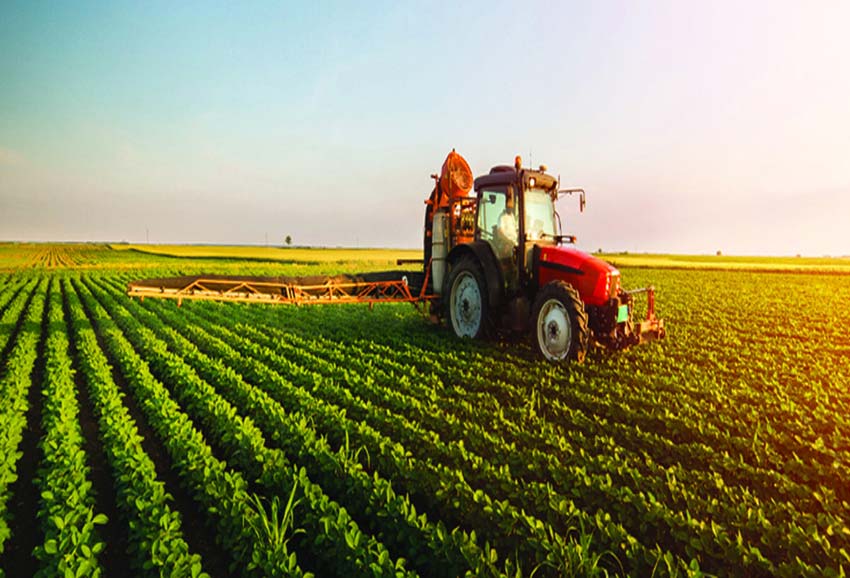
Back then, if a calf was born, people celebrated. Today, no one distributes sweets — because a male calf is “useless” in the age of tractors and mechanized farming. The arrival of threshers, tractors, and motorized carts changed everything. Slowly, the bullock plough became history.
Modern technology has altered the very DNA of farming. Now, sex-sorted semen and artificial insemination are used to ensure more female calves are born — because a cow that gives milk is a profitable asset, while “Nandi Maharaj” is seen as a stray menace on the roads.
The Prime Minister dreams of doubling farmers’ incomes. My life’s experience tells me this can’t be achieved through traditional crop farming alone. If it were possible, India would have been a wealthy nation decades ago. The answer lies in integrated farming — combining crops with animal husbandry, fish farming, beekeeping, floriculture, and medicinal plant cultivation.
I remember when people mocked the idea of flower farming in my village. Today, those same people have seen how one hectare of marigolds or roses can earn lakhs of rupees a year. This is the power of diversification.
But there’s a bitter truth hidden beneath the glitter of “high yield” farming. The rise in cancer cases across rural India is not only due to pollution from factories — it’s also the result of the blind use of fertilizers and pesticides.
Today, ladyfingers don’t get infested with pests, and bottle gourds grow unnaturally straight and shiny. Why? Because they’re chemically engineered. If these chemicals can kill pests instantly, do we really believe they leave the human body unharmed?
Many say that the old saying — “Optimal farming, medium commerce, inferior labor” — no longer applies in the modern world. I disagree. This saying is more relevant now than ever before. But to make it work, we must combine traditional wisdom with scientific innovation.
Optimal farming today means:
This is not just an agricultural crisis — it is a national warning.
I am not just a farmer’s son. I am the son of that soil where husk was once a treasure, where a handful of wheat was enough to bind communities together. And even today, if anything can truly change India’s destiny, it is the field and the farmer.
The relevance of optimal farming practices is not a matter of nostalgia — it is the key to survival. Our future food security, our health, and our rural economy all depend on how wisely we farm today.

By SP Singh Baghel
Union Minister of state for fisheries,
Animal Husbandry and Dairying
(The article is based on the speech delivered by the writer at Virgin Land Security Summit 2025, held in New Delhi.)














Leave Your Comment