


Writing for betterment of Delhi is natural as I have lived here and have seen it degenerating fast. My love for Delhi enhanced many folds when I visited other capital cities of the world. Delhi was thriving with the gardens, the monuments, the museums, libraries, the diversity and the capacity to accommodate aspiration of people coming from all parts of India and even infiltrators from Bangladesh and Myanmar.
Carl Edward Sagan, an American astronomer, planetary scientist and science communicator said, “In every government on earth is some trace of human weakness, some germ of corruption and degeneracy, which cunning will discover and wickedness insensibly open, cultivate and improve”.
Unfortunately, Delhi had suffered for a decade in the hands of a chief minister who never owned it. I have lost few of my friends on account of non-availability of oxygen during COVID. And the sad part is the leader was praising his world class health services being delivered from Mohalla clinics. Today the infrastructure is dilapidated, air and water are polluted, transport facilities are poor and non-supportive to the metro network as a result Delhiites are still dependent on private vehicles which further adds to pollution and traffic jams. Finances may not be what is being projected, CAG reports are indicative of mismanagement and corruption. We have heard enough of these issue during election debates on electronic media. The real issue is how to move forward?
Improving THE GLOBAL LIVEABILITY INDEX ranking of 141 among 173 cities, to join the world’s most liveable cities.
Taking Delhi to “new heights” will demand more — as the above index takes a holistic view on 5 parameters i.e Stability, Healthcare, Culture & Environment, Education and Infrastructure.
it will require an understanding of the capital’s demographic diversity and its civic issues. Delhi does not merely comprise the middle class or the people living in jhuggis — as electoral campaigns of the dominant parties made it out to be.
the capital is a destination for people from different regions of the country who come together to create new spaces, often transcending old divides. Reckless construction or creating Aadhar card without due diligence may provide easy votes but will destroy the city.
The first thing first: listening to people and working with them.
The best resource Delhi has is its people. The last decade has damaged the high morale of Delhiites. These are the people who accepted refugees from west Pakistan and migrants from elsewhere with open arms. Unlike Mumbai, Chennai or Kolkata, there is no son of soil vs outsider conflict in Delhi. To the contrary it is so open that Bangladeshi and Rohingyas have found it easy to go unnoticed. This low morale of citizen has allowed criminals, corrupts and anti-social elements to take the city on ransom. Murders or rape in broad daylight/night have gone unchallenged. A political leader work through people and if the new chief minister is able to engage public in her mission to revive Delhi things will be much easier and faster.
As Every government degenerate when entrusted to the rulers of the people alone. The people themselves therefore are its only safe depositories. To safeguard democracy their minds must be improved. During Sheila dixit regime Baghidari scheme did well. Each MLA should engage with people who want to participate in governance. In good old days MP and MLA s used to have meetings in different colonies on regular basis. Let the trend of approaching voters only in election time should change for better. If executed well, public will take care of many political and social issues.

The fight initiated with centre had put the bureaucracy in a fix. They work for Delhi government and their cadre’s supervision and progress are in the hands of centre. Tinkering with rules and processes has led to confrontation and alleged manhandling has resulted in policy paralysis. From metro projects to regularisation of unauthorised colonies, everything suffered.
Establishing effective coordination with administration and managing relationships within the different faction in the party will ensure smooth governance.
Political engagement
Delhi has been made a place for chaos, infiltration and radicalisation. The way metro station was messed up recently, Shaheen bagh was chosen to protest ignoring Jantar Mantar and Ram Lila maidan, the sole aim was to harass public. The way Farmer Agitation was hijacked to bring lime light to the cause of Khalistan. Attempting to remove tricolour and unfurl their flag at Red Fort, is proof enough. This cannot be dealt by police alone. While corrupt may face the long hand of law other political rivals should be engaged in the state assembly as well as outside also. AAP experiment has proved the futility of confrontation on every issue. Listening and responding is a time-tested strategy.
Involving business houses.
Business houses have huge CSR fund with them. BCCI has engaged them well in IPL. Metro has generated huge revenue by prefixing their name to the name of the stations. Yamuna cleaning and many other projects can benefit with their participation. Different section of the huge river front can have the names of the participating business houses. Education as well as health care are other areas where business houses can join hands.
Coordination and cooperation with neighbouring states under the guidance of the centre.
Delhi takes Yamuna water from Haryana and gives it back to UP and Haryana through Okhla barrage. Till now it has accused Haryana and centre for giving less water but it has never bothered about quantity and quality of what it gives in return. Both the states are not very comfortable on account of surplus water. Sutlej water has not reached Haryana and UP is under huge pressure of population explosion. Therefore, Delhi should work on preserving rain water. When New Delhi was built, boat club canals were created along with Kartavya path.
Better coordination with neighbouring state can help in controlling crime as well.
Handling Air Pollution: Delhi's air pollution crisis will need to focus on long-term solutions such as expanding green cover, promoting electric vehicles, connecting last mile linkage with metro station in such a way that old citizen, women and people with luggage can reach home safely without being harassed by auto or e-rickshaw. Charging as per meter has become a dream. OLA, UBER services also need improvement. Delhi should stop taking pride in the number of cars it has! The smart city is one where less people use personal vehicle. New York rate very high on this scale with 54 percent people own a vehicle while normal American house hold have three times more vehicle. More over only 22 percent use their vehicle for going to work place. Land mafia and illegal construction is to be checked and waste management needs to improve. Mumbai has worked on segregating green and other waste but no such initiative is visible in Delhi. Cooperative housing societies can be encouraged to attempt zero waste policy along with water harvesting.
Cleaning the Yamuna River: One of the critical environmental challenges is cleaning the heavily polluted Yamuna River. The government has launched an ambitious plan to restore the river within three years, which will require significant effort and coordination moreover it has to be made sustainable and revenue generating. . Yamuna water ways project can take few lessons from Delhi Metro. They can contribute by implementing water harvesting in their business premises. School colleges and other institutions can be encouraged to join.
Water harvesting: Delhi should revive its water bodies and create access to rainwater. Off late land mafia as well as DDA has filled many low-lying areas which used to hold rain water. From Shahdara to Yamuna River both side of the railway track were having water bodies which now house colonies, many rain water drains are poorly maintained if cleaned and maintained well these can harvest water and create beautiful water bodies. Osho and his disciples created a NALA Tirath by transforming a dying rainwater drain three decades ago. The full story is available with title:
“Osho Teerth Park – Designing Paradise”. Osho news, Aug. 21 2021.
Similar feat was achieved by Baba Balbir Singh Seechewal, who revived "Kali Bein River in Punjab.
Delhi gets good amount of rainfall, which leads to water clogging and chaos. School, colleges, hospitals, parks public sector and private sector institutions should be encouraged to harvest water as well as treating the sewage water either in house or join it through community programme. Treated water should be used for gardening and other non-drinking uses. It will reduce load on Yamuna and save the cost of bringing water from far flung sources A management development centre in Mumbai, used to buy water from tankers and soil for garden. When the professional agencies for recycling of the waste water were approached, water harvesting was suggested. Implementing it led to improvement in ground water levels and reduction in soil erosion.
Delhi should have zero water wastage policy. Quality of Yamuna water at Okhla barrage should be better than the quality of water received at Wazirpur.
Eliminating criminals and controlling crime.
Law and order are not under Delhi government but educating and empowering public to fight crime and support law enforcing agencies is what can be done to remove the tag of rape capital or crime city. This is not my view but that of general public which think Mumbai is safer for women. Delhi has landed in this mess because of AAP policy of supporting Rohingyas, infiltrators, supporting encroachment, unauthorised construction, demoralising Delhi police by confronting and accusing.
“Batla House encounter was fake, will demand probe, says AAP leader Amanatullah Khan” Oneindia.com February 11, 2015.
Engaging public using provisions of Special Police officer scheme can help in policing better.
Other major challenges:
1. Implementing Election Promises: The BJP made several big-ticket promises during the campaign. Ensuring the timely and effective implementation of these promises will be a major challenge. A good beginning has been made by implementing Ayushman Bharat health scheme.
2. Better infrastructure needs support from public. Railways, transport and defence experiments had made people understand that improvements come at a price. Freebies can not last! One should not forget that public has to be educated to voluntarily surrender freebies emulating cooking gas subsidy model.
3. Fiscal Stability: Balancing welfare schemes with fiscal prudence is essential to maintain Delhi's financial stability. The new administration must strike a delicate balance between fulfilling social welfare commitments and ensuring fiscal responsibility.
4. Water and Electricity Supply: Addressing the long-standing issues of water shortage and erratic electricity supply in Delhi is crucial. Ensuring availability with quality, will be much easier once the leakages are plugged.
5. Navigating Political Dynamics: BJP in Delhi was divided in factions; central leadership has elected CM and the ministers with balancing their aspirations. Participative decision making and effective implementation can build a strong team to create a positive impact on Delhi.
Everything needs to be done adhering to Deadlines!
In 2 years and 9 months municipal election will take place in. General election will be there in 2029. Failing to perform in time will hurt future aspiration of the present leadership.
Providing clean air, clean water, sewage systems that work, pothole-free roads and social security, besides continuing its predecessor AAP’s schemes after eliminating leakages will do wonders.
Conclusion: Present challenge can be converted into an opportunity.
The present chief minister has the advantage of not required to fund other state elections and no liability to pay huge legal fees for unwarranted cases as done by AAP. It does not require to induct its cadre as ad-hoc workers in the government. Reckless media spending in other state is not required anymore. Efficient use of these savings, can help to fund major infrastructure projects and will hwlp in borrowing.
Both state and centre are now being ruled by BJP. This harmony can fast track completion of pending project and starting the new ones.
Can Delhi move forward to become a financial hub and centre for holding international conferences?
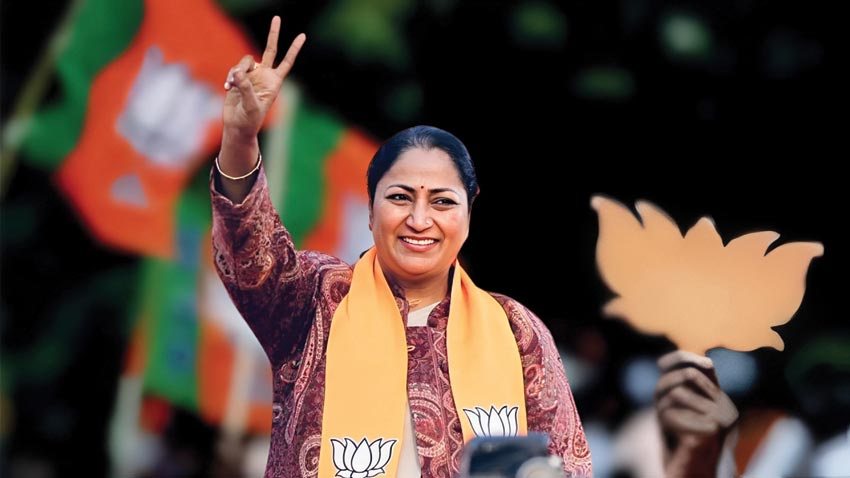
Rekha Gupta has got the opportunity to replicate what Modi has done to Gujarat. The world is watching with keen interest.
By Rakesh kumar
(The content of this article reflects the views of writers and contributors, not necessarily those of the publisher and editor. All disputes are subject to the exclusive jurisdiction of competent courts and forums in Delhi/New Delhi only)














Comments (1)
R
Very impactful article.Writer has raised very important issues for the betterment of Delhi.