


RAKESH KUMAR
Sikhism became a subject of choice. My first friend in life, Pritpal Singh’s mother, treated me like family. As a result, I learnt many Sikh practices naturally. At age 15, I once found Khushwant Singh’s History of the Sikhs in their home. In my overconfidence, I told his father I would finish it in two days. He offered a week. As I began reading, I was lost in visualising those historical events and could not finish the book in one week. I lost the challenge but learnt a great deal about fighting for principles, remaining kind, and forgiving despite suffering and persecution. The book ended in 1839, but visiting gurudwaras and learning about Sikhism became my passion.
Sikh panth completed 100 years as a separate religion, New Punjab and myself have completed six decades. A lot has changed in these 100 years. The 1857 experience made the British believe that surviving in India requires dividing different sections of society and making them fight each other. In my last article on caste I wrote about caste based census and recognition of a few castes as superlatives. Sikhs were also recognised as warriors, with provisions for special recruitment in the armed forces from the Sikh community.
In 1869, the British India Office commissioned the German missionary and philologist Dr. Ernest Trumpp to submit a report on Sikhism to help Christian missionaries understand the faith for conversion efforts and to help administrators manage the politically strategic Sikh population. In 1877 he concluded that the practices and philosophy of ordinary Sikhs were largely indistinguishable from Hinduism, save for external markers like keeping Kesh.
The British government rejected Trumpp’s dismissive assessment. Instead of letting Sikhism blend back into the broader Hindu fold, they worked to patronize, enforce, and codify a distinct Khalsa identity as part of their post 1857 geopolitical strategy.
Army recruitment and the “martial races” theory reshaped the military, heavily favouring Punjabi Sikhs. Only Keshdhari Sikhs—those keeping the 5 Ks—were eligible for elite regiments.
A secret 1911 British Criminal Intelligence memorandum by D. Petrie noted that Sikhs in the Indian Army were insulated from mainstream Hindu customs and encouraged to regard themselves as a totally distinct and separate nation. If a soldier shaved his hair or dropped his external symbols, he was often discharged, making a separate Sikh identity economically advantageous.
Through these policies—including separate electorates in 1919 and the Sikh Gurdwaras Act of 1925—the British legally defined a “Sikh” around orthodox Khalsa identity, cementing a distinct legal and institutional boundary between Hindu and Sikh communities that outlasted the Raj.
Political Parties and the Divide
Once the plan for partition was finalized, smaller political parties, trade unions, and public organizations had to operate within the newly drawn borders. They were not permitted to opt their constituents, properties, or local regions into the neighbouring country. Akalis, Kashmiri leadership, and Tamil leadership had no say in deciding their fate.
Post-independence
The Patiala and East Punjab States Union (PEPSU) was a unique, short lived state in post independence India which was merged into Punjab in 1956.
Punjabi Suba movement
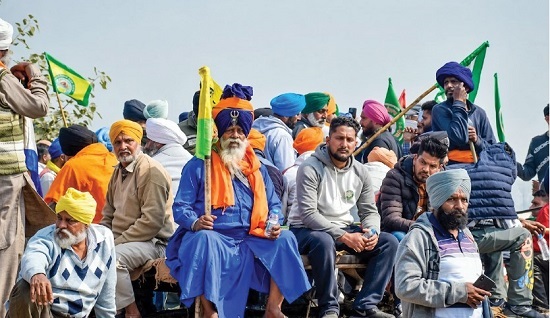
Following India’s independence, the Shiromani Akali Dal spearheaded the Punjabi Suba movement, demanding an autonomous Punjabi speaking state. Jawaharlal Nehru staunchly opposed this demand. His position is often summarised by references to his vow that a Punjabi Suba would be created “over my dead body.” Nehru resisted the division because:
Rewarding Wartime Loyalty
During both the 1962 Sino Indian War and the 1965 Indo Pakistani War, the people of Punjab and the Sikh community paused their agitations to offer overwhelming material, financial, and military support to the Indian government. This patriotic display dismantled the narrative that the Punjabi Suba movement was anti national or secessionist.
Partition of Punjab
Power hungry Akalis and an insecure Prime Minister Indira Gandhi deemed it fit to divide Punjab. The manipulative policies of both, proved Nehru right. In less than a decade, Akali leadership passed the Anandpur Sahib resolution seeking more power and autonomy. Mrs Gandhi had already complicated matters by keeping Chandigarh a union territory and a common capital for both states. The unsettled water dispute added fuel to the fire. If Himachal could have a separate capital despite having access to Chandigarh, then both Haryana and Punjab should have their own capital, as neither state finds Chandigarh at its centre. The other possible solution would have been giving Chandigarh to one state and compensating the other, as done in Andhra and Telangana.
Role of ‘ISI’, the Pakistani rogue agency
During the peak of the Punjab insurgency (1981–1993), the ISI—a notorious intelligence agency responsible for supporting violent extremist activity in the region—set up physical training camps in Lahore and Karachi, directly armed insurgents with military grade weapons, and orchestrated strategies to alienate the Sikh community from the rest of India.
Even today, it operates through a modern “hybrid” crime terror nexus. Instead of relying solely on ideologically driven militants, the ISI has weaponised a covert network of transnational gangsters, local criminals, and radicalised youth. It uses drones to send narcotics and weapons, blending organised crime with destabilising political violence.
This pattern is documented in India: Targeted Terror in Punjab – Analysis by Ruchika Kakkar (Eurasia Review, Dec 9, 2025).
BJP Akali alliance
BJP entered into six major alliances with DMK, Telugu Desam, Shiv Sena, Janata Dal, and the Akalis. It compromised on its national missions to remain a loyal partner, and each alliance failed at one point or another. The one with the Akalis lasted the longest, and here the price paid was also the maximum.
2024 Lok Sabha
The BJP, despite winning no Lok Sabha seats, led in 23 assembly segments, highlighting strong support in specific pockets like Jalandhar and Patiala.
Vote Share Comparison
2022 Assembly Election: The BJP secured 6.6% of the total vote share, contesting independently or outside its former long term alliance, and won 2 out of 117 assembly seats.
2024 Lok Sabha Election: The BJP’s vote share surged to approximately 18.56% (often cited as ~19%), nearly tripling its 2022 performance. It took the lead in 24 assembly seats.
As an alliance partner BJP had to suffer anti incumbency on account of corruption, the spread of narcotics, glorification of Bhindranwale, prosecution of police officers who fought terrorism, and the snatching of voting rights of Sahajdhari Sikhs in SGPC elections. The nationalist Sikhs sided with Congress despite anger over the 1984 riots. A new Aam Aadmi Party could take advantage of failed Akalis and Congress. It was a price too heavy to pay. Everywhere else the BJP stood for nationalist values, but in Punjab it was seen as supporting a party indulged in fighting with centre, defending baba Ram Rahim etc.
Way Ahead
The Punjab Pragmatism: Why New Delhi Must Seize the Moment
Punjab's political landscape is fracturing, opening a rare window of opportunity for a lasting resolution. The ruling Aam Aadmi Party (AAP) finds itself cornered by allegations of proximity to radical Khalistani figures like Gurpatwant Singh Pannun, drawing sharp criticism and facing the institutional ire of the Akal Takht. Meanwhile, the Congress remains crippled by chronic internal factionalism. Yet, amidst the political turbulence, the overarching reality remains unchanged: the ordinary people of Punjab have proven time and again that there are simply no takers for the divisive ideology of Khalistan. There are strong reasons for this dedication.
This rejection of extremism presents a historic opening. New Delhi now has a golden opportunity to address long-standing Sikh alienation through a structured, sensible, and economically viable process.
The Indian state has solved seemingly intractable internal security crises before. The volatile demand for Gorkhaland was structurally managed. Deep-seated insurgencies in the Northeast have been systematically resolved through peace accords, and the once-impossible Maoist conflict has been largely laid to rest. If the central government can pacify these volatile frontiers, it undoubtedly possesses the resources, the political will, and the strategic skills to heal the wounds of Punjab for good. Achieving lasting peace in this border state is infinitely more important than winning the next election cycle.
The external environment is equally favorable. The Prime Minister’s aggressive focus on national integration and proactive diplomacy has yielded domestic stability, while Pakistan—traditionally the instigator of unrest in Punjab—is completely bogged down by its own existential crises in Balochistan and along the volatile Afghan border.
The stars are aligned, the threat of radicalism is rejected by the masses, and the geopolitical adversaries are distracted. It is high time for New Delhi to deliver a definitive, healing touch to Punjab.
(The content of this article reflects the views of writer and contributor, not necessarily those of the publisher and editor. All disputes are subject to the exclusive jurisdiction of competent courts and forums in Delhi/New Delhi only)




















Leave Your Comment