


In a significant turn of events, India has reclaimed over 100 tonnes of its gold reserves from the United Kingdom. This marks a dramatic shift from the days of economic liberalization in 1991, when the country had to ship out its gold to avert a financial crisis. Sanjeev Sanyal, a noted economist and a member of the Economic Advisory Council to the Prime Minister of India, recently highlighted this development, emphasizing the nation's progress since those challenging times. This article delves into the implications of this move, the historical context, and the current state of India's gold reserves.
The 1991 Economic Crisis: A Historical Overview
In 1991, India faced a severe balance of payments crisis. The country's foreign exchange reserves had dwindled to a level that could only cover a few weeks of imports. With foreign debt standing at about $72 billion and reserves plummeting to $5.8 billion, the nation was on the brink of defaulting on its sovereign debt.
To manage this crisis, the Reserve Bank of India (RBI) and the government took the drastic step of pledging gold reserves. In January 1991, the State Bank of India leased some gold to raise foreign exchange. This was followed by the shipment of 20 tonnes of confiscated gold to secure $234 million, and later, an additional 47 tonnes were sent abroad in various tranches, raising approximately $400 million. These measures, coupled with economic liberalization policies introduced later that year, helped stabilize the economy and set India on a path of growth.
The Current Scenario: Gold Repatriation
Fast forward to the present, India has made significant strides in economic stability and growth. Sanjeev Sanyal's recent announcement on X (formerly Twitter) about the RBI shifting 100 tonnes of gold back to India from the UK underscores this progress. "While no one was watching, RBI has shifted 100 tonnes of its gold reserves back to India from the UK," Sanyal wrote, highlighting the country's strengthened financial position.
India's Gold Reserves: A Detailed Look
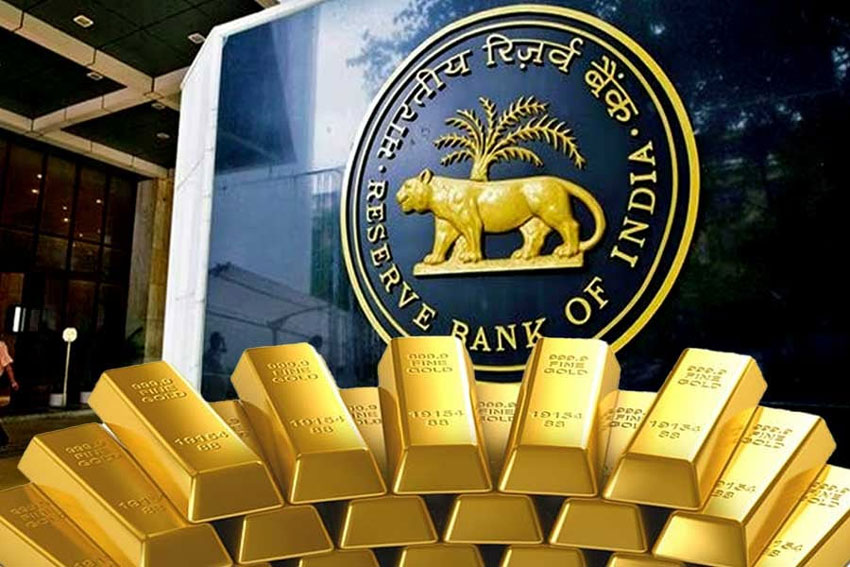
As of March 31, 2024, the RBI's total gold reserves stood at 822.10 metric tonnes, up from 794.63 metric tonnes the previous year. This increase of 27.47 metric tonnes is attributed to the addition of gold, a rise in gold prices, and the depreciation of the Rupee against the US dollar. The value of these gold reserves also saw a substantial increase, rising by 19.06% from ₹2,30,733.95 crore in March 2023 to ₹2,74,714.27 crore in March 2024.
Why Gold Matters

Gold holds a unique position in the global financial system. It is seen as a safe-haven asset, particularly during times of economic uncertainty and geopolitical tensions. The demand for gold has been consistently high, with prices often hitting record highs. Factors such as prolonged geopolitical conflicts in West Asia, central bank purchases (including by the RBI), and robust physical demand have all contributed to the upward trend in gold prices.
Strategic Move: Holding Gold Domestically
Most countries store their gold reserves in international vaults like those of the Bank of England, paying fees for the privilege. India's decision to repatriate a significant portion of its gold reserves signifies a strategic move towards greater economic sovereignty and security. By holding gold domestically, India reduces its reliance on foreign vaults and minimizes associated costs.
Sanyal emphasized this shift, stating, "India will now hold most of its gold in its own vaults. We have come a long way since we had to ship out gold overnight in 1991 in the midst of a crisis." India's gold is typically stored in the RBI's old office building on Mumbai's Mint Road and in Nagpur, ensuring that the nation's wealth is secured within its borders.
The Road Ahead: India's Economic Resilience
India's economic journey from the brink of collapse in 1991 to its current position of strength is remarkable. Today, the country boasts substantial foreign exchange reserves, capable of covering about 11 months of imports. This financial resilience is a testament to the effective economic policies and reforms implemented over the years.
The repatriation of gold reserves is not just a symbolic gesture but a strategic decision that underscores India's confidence in its economic stability. It reflects the nation's commitment to safeguarding its assets and ensuring long-term financial security.
Conclusion
India's journey from the economic liberalization days of 1991 to the present is a story of resilience and growth. The repatriation of over 100 tonnes of gold from the UK marks a significant milestone in this journey, highlighting the country's improved financial health and strategic foresight. As India continues to bolster its gold reserves and foreign exchange holdings, it stands well-prepared to navigate future economic challenges and opportunities. This move not only reinforces India's economic sovereignty but also showcases its evolution from a crisis-ridden economy to a robust and confident nation.
Uday India Bureau





















Leave Your Comment