


Since 1975, thanks to my late father’s deep interest in politics, I have been closely watching the political developments in India. Over these decades, I have witnessed towering personalities rise and fall — from Indira Gandhi and Atal Bihari Vajpayee to P. V. Narasimha Rao and Narendra Modi. Yet, in all these years, I have never seen any Leader of the Opposition stoop to the level of Rahul Gandhi. Day in and day out, he goes abroad and makes statements that demean India’s democracy before foreign audiences. His recent “bombs” — purportedly exposing the Constitutional authority of the Election Commission of India — ended up as damp squibs. He failed even to approach the legal system to substantiate his claims, which itself revealed the fragility of his credibility as a national leader.
The Turning Point: 2014 and the Collapse of the Congress Edifice
The 2014 general election was a watershed in Indian politics — not just because Narendra Modi’s BJP swept to power with a full majority, but because it marked the dramatic decline of the Congress Party, which had ruled India for much of its post-independence history. Rahul Gandhi, who had been projected as the face of the Congress campaign, found himself unable to connect with the electorate. His campaign lacked clarity, consistency, and conviction.
The contrast between Modi’s narrative of development and Gandhi’s incoherent critique of “crony capitalism” could not have been starker. The Congress, already weakened by corruption scandals like 2G and Coalgate, failed to present a fresh vision. After the crushing defeat — Congress winning just 44 seats — Rahul Gandhi quietly left the country for a brief sabbatical, leaving party workers demoralized and directionless.
Political observers noted that instead of introspection, there was avoidance. The Congress scion returned months later with few lessons learned, his communication still rooted in slogans rather than strategy.
Between Ideology and Identity: The Search for a Political Persona
Between 2014 and 2019, Rahul Gandhi attempted to reinvent himself multiple times. One day he would attack big corporate houses; another day he would speak about love and compassion as antidotes to hate politics. He visited temples in Gujarat, donned the image of a ‘Shiv bhakt,’ and proclaimed his sacred-thread-wearing Hindu identity. Yet, these efforts appeared choreographed rather than organic — more like tactical optics to counter the BJP’s charge that Congress indulged in “appeasement politics.”
His ideological compass seemed to oscillate between soft Hindutva and Left-liberal populism. The lack of coherence alienated both traditional Congress loyalists and new-age voters. The leadership vacuum within the party became painfully evident. Veteran leaders like Himanta Biswa Sarma and Jyotiraditya Scindia — once seen as his close allies — quit the party, citing frustration with indecision and lack of accountability at the top.
The 2019 Elections: Defeat, Denial, and Departure
Rahul Gandhi’s leadership in the 2019 general election was marked by aggressive anti-Modi rhetoric centered on the slogan “Chowkidar Chor Hai.” The campaign, however, backfired. Many voters perceived it as a personal attack rather than a policy critique. When the results came, the Congress barely improved its tally. Rahul himself lost the traditional family seat of Amethi — a symbolic and historic blow — though he later won from Wayanad in Kerala.
His decision to resign as Congress president after the loss, while taking moral responsibility, was followed by months of uncertainty. The party drifted leaderless, with Sonia Gandhi returning as interim president — an arrangement that only deepened the sense of stagnation. Critics inside and outside the party described Rahul as a “reluctant politician,” a man caught between privilege and purpose, unable to inspire confidence even among his cadre.
Global Remarks and Domestic Repercussions
Rahul Gandhi’s repeated remarks abroad have been among his most controversial actions. Whether in London, Cambridge, or Washington, he has frequently questioned the state of India’s democracy, media freedom, and institutional independence. While every Opposition leader has the right to critique the government, airing such grievances on foreign soil has drawn sharp criticism from across the political spectrum.
In March 2023, during a lecture at Cambridge University, he described Indian democracy as “under attack” and accused the government of “silencing dissent.” These comments were seized upon by the BJP, which accused him of tarnishing India’s image internationally. Even some neutral observers felt that such rhetoric played into the hands of those who seek to portray India in a negative light globally.
No other Leader of the Opposition in recent memory — not Vajpayee, Advani, or Sonia Gandhi — had gone abroad to make such sweeping allegations. Rahul’s defenders claim he was speaking truth to power; his critics see it as reckless disregard for national reputation.
The Defamation Cases and Apologies: A Credibility Crisis
Rahul Gandhi’s sharp tongue has repeatedly landed him in legal trouble. His remarks during election campaigns — from linking the “Modi surname” to corruption to insinuations against political opponents — have led to multiple defamation cases across the country. In 2023, one such case resulted in a conviction by a Surat court, leading to his disqualification from the Lok Sabha (later stayed by the Supreme Court).
Equally notable were his public apologies in unrelated defamation matters. In 2018 and 2019, Rahul Gandhi tendered apologies before the Supreme Court — first for misquoting the Court’s observations in the Rafale case, and later for statements made against the RSS. These episodes, while closing legal chapters, eroded his image as a responsible leader. They underscored a recurring pattern: fiery accusations made without sufficient substantiation, followed by retreats under judicial pressure.
For an Opposition leader aspiring to be Prime Minister, such missteps reinforce doubts about judgment and seriousness.

Bharat Jodo Yatra: Symbolism without Strategy
In 2022–23, Rahul Gandhi launched the Bharat Jodo Yatra — a 4,000-kilometre march from Kanyakumari to Kashmir — positioned as an attempt to “unite India” against hate and division. The yatra, rich in symbolism and visual appeal, did succeed in boosting his personal visibility. Crowds turned up, and his image as a physically resilient and empathetic leader gained traction.
However, the yatra failed to translate into electoral dividends. Subsequent assembly elections in Gujarat, Karnataka, and Madhya Pradesh showed only limited gains for Congress. Critics within the party lamented that while the march touched hearts, it lacked a coherent political message or strategy for revival. The Congress’s structural issues — weak organization, infighting, and dependence on the Gandhi family — remained unaddressed.
The 2024 Election and Beyond: Same Script, Different Year
The 2024 general election again saw Rahul Gandhi as the Congress’s face, despite earlier claims of collective leadership. The party improved its seat tally but failed to challenge the BJP’s dominance. His twin-seat contest — once again including Wayanad — reaffirmed the perception that he preferred safe constituencies over national responsibility.
Even after becoming the Leader of Opposition in 2024, his rhetoric has continued to revolve around abstract charges of “institutional capture” and “threats to democracy.” His recent comments suggesting that the Election Commission of India had lost credibility were touted as “exposés” but soon fizzled out. When challenged to present evidence or take the matter to court, there was silence. His failure to use constitutional and legal avenues to substantiate such grave allegations highlighted a lack of procedural seriousness.
A Leader of Opposition is expected to uphold institutions even while questioning them — Rahul’s approach often seems to erode public trust rather than strengthen accountability.
Leadership Within the Congress: A Party in Perpetual Transition
The Congress under Rahul Gandhi has oscillated between attempts at revival and episodes of paralysis. Senior leaders like Ghulam Nabi Azad, Kapil Sibal, and others of the “G-23” faction have publicly voiced frustration with the lack of internal democracy. Rahul’s decision-making style — often described as centralized yet indecisive — has alienated many.
The 2022 Congress presidential election that brought Mallikarjun Kharge to the helm was supposed to signal change, but few doubt that the Gandhi family retains the final say in party affairs. Rahul’s refusal to hold organizational elections for key posts, or to delegate leadership to regional heavyweights, has limited the party’s renewal.
His tendency to step back after every defeat — contrasted with Modi’s tireless campaign energy — has cemented an image of detachment. Party loyalists defend him as sincere but misunderstood; detractors see him as insulated from political reality.
One of the most damaging factors behind the Congress party’s decline has been its dependence on dynastic succession. Over the decades, leadership has become confined within a single family, effectively silencing internal democracy and discouraging the rise of competent, independent-minded leaders. What once was a broad-based national movement representing diverse voices has gradually turned into a tightly controlled family enterprise. This hereditary model has alienated the grassroots workers who once formed the backbone of the organisation and has made the party appear disconnected from the aspirations of a new, merit-driven India. The tragedy is that even well-meaning leaders like Rahul Gandhi are trapped within this legacy, unable to break free from the very structure that has weakened the party beyond repair.
The Communication Problem: From Slogan to Substance
Rahul Gandhi’s communication strategy remains one of his biggest weaknesses. His speeches often mix genuine concerns — inequality, unemployment, farmers’ distress — with confusing analogies and inconsistent framing. In an age of sharp political messaging, his tendency to oscillate between emotional appeals and academic commentary dilutes impact.
Social media, which could have been a platform for direct connect, is underutilized or poorly coordinated. His occasional interviews, though articulate, often veer into philosophical generalities. For a leader confronting a dominant ruling party, clarity of message is paramount — something Rahul’s style rarely achieves.
The Question of Credibility
Politics ultimately runs on credibility — the faith that a leader means what he says and can deliver on promises. Rahul Gandhi’s decade-long record raises doubts on both counts. His critics argue that he oscillates between aggression and withdrawal, bold rhetoric and apologetic retreats. His apologies before courts, his tendency to raise allegations without follow-through, and his repeated criticisms of national institutions from foreign platforms all contribute to a credibility deficit.
For someone carrying the legacy of India’s most storied political family, this credibility gap is particularly damaging. Congress’s decline in state after state — from Uttar Pradesh to Madhya Pradesh — mirrors the erosion of trust in its leadership core.
Conclusion: The Challenge Ahead
Rahul Gandhi today stands at a crossroads. As Leader of Opposition, he occupies a constitutionally significant role, yet his behavior and statements often resemble that of a perpetual campaigner rather than a statesman. India’s democracy thrives on a robust Opposition — but that Opposition must act with seriousness, responsibility, and respect for institutions.
If Rahul Gandhi continues to substitute rhetoric for strategy, symbolism for substance, and foreign lectures for domestic engagement, he risks not just his own credibility but the relevance of the Congress Party itself. The past decade has shown flashes of sincerity but also an unmistakable pattern of drift — a man at odds with both his privilege and the people he seeks to lead.
India deserves an Opposition that challenges power constructively. Whether Rahul Gandhi can rise to that expectation remains, even after a decade of political apprenticeship, an open question.
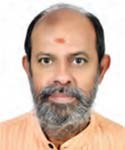
By Pradeep Krishnan
(The content of this article reflects the views of writer and contributor, not necessarily those of the publisher and editor. All disputes are subject to the exclusive jurisdiction of competent courts and forums in Delhi/New Delhi only)














Leave Your Comment