


RAKESH KUMAR
When Geoffrey Boycott the English batsman became the highest run-scorer Indian batsman Gavaskar congratulated him saying,
"Enjoy it for two years."
Gavaskar's remark was a mixture of confidence, humor, and competitive spirit. Less than two years later, in November 1983, he surpassed Boycott's record of 8114 runs.
Indian politicians miss this sportsman spirit. They try to belittle the performer. The performance of Narendra Modi is no exception. Third consecutive win and becoming PM equaled the record made by Nehru in 1962, and surpassing it was a matter of time only.
Why Celebration?
Indian democracy is fiercely competitive. It does not always provide a level playing field, forcing political parties to constantly communicate with the people and present their scorecards.
Atal Bihari Vajpayee lost power despite “India Shining” on many parameters, because his government assumed voters would understand everything without being told. That assumption cost dearly.
Contrast that with 1962. India lost 60,000 square kilometers of land to China, suffered a humiliating defeat, and yet Nehru remained the most popular prime minister of all time. Why? Because the narrative was controlled, the failures were hidden.
Our generation grew up chanting “Chacha Nehru Amar Rahe” during morning Prabhat Pheris on Children’s Day, November 14. We studied his books — Discovery of India, Letters from a Father to His Daughter. We memorized his speeches — Tryst with Destiny (1947), The Light Has Gone Out (1948). For civil services aspirants, Gandhi, Nehru, and Tagore were unavoidable. Breaking Nehru’s record seemed unthinkable.
History moved on
Coalition governments weakened governance. Maoist, extremism, corruption, regionalism, defections — all became the norm. A single-party majority looked impossible.
And yet, a leader and his party broke those shackles. They restored stability, overcame the coalition era, and redefined what was possible in Indian politics.
That is why celebration is not just justified — it is necessary. Because when a system long thought broken is revived, when governance is reclaimed from chaos, and when the impossible becomes reality, it deserves recognition.
Rise of Modi
As a student of management I am amazed at the vision, persistence and never say die spirit being displayed by Modi. He earned the trust of the Indian public and became the choice candidate of BJP despite being junior to many stalwarts. For Modi there was no Gandhi to promote him. Modi changed the rules of the game!
"Gujarat is not competing with any Indian state. Gujarat is competing with the countries of Europe."
Modi began popularising this sentiment, the voters outside Gujarat started dreaming of Modi to lead the nation as the prime minister. Narendra Modi created history by becoming the Prime Minister in 2014 despite it being his first time serving as a Member of Parliament (MP).
A Record Few Imagined
Jawaharlal Nehru’s time in public office spanned several roles.
Taken together, Nehru held public office for about 19 years and 8 months.
Now consider Narendra Modi. His journey in elected executive office has been continuous since October 7, 2001:
Together, that adds up to 24 years and 8 months in executive office — already surpassing Nehru’s tenure.
Trials Without Jail, Strength Without Stain.
Critics love to say: “Jawaharlal Nehru has a record Modi can never break.”
And then, with a smirk, they add: “Modi has never been imprisoned.”
But think about it — what kind of argument is that? In independent India no one can sentence himself. It is not a badge of honor to be jailed; it is a reflection of the system that jails you.
And Congress has a long record of jailing patriots:
Look at Nambi Narayanan — arrested in a false espionage case in 1994, humiliated, only to be cleared years later, with the Supreme Court awarding him compensation.
Look at Lt. Col. Purohit — dragged through the Malegaon blast case, spending years behind bars, until acquitted in 2025 when the court said the prosecution had no evidence.
Despite using every draconian law inherited from the British, Congress tried to prosecute.
Modi faced interrogation, humiliation, and relentless accusations after the 2002 Gujarat riots. The CBI chased encounter cases — Sohrabuddin Sheikh, Tulsiram Prajapati, Ishrat Jahan — dragging Modi’s name into every allegation led to Supreme Court-appointing SIT.
Years of investigation, yet — insufficient evidence. No case to prosecute.
Perhaps that is why Modi understood the need to reform the Indian Penal Code — to strip away the colonial chains, to end the misuse of draconian laws, and to ensure that no patriot is ever wrongfully imprisoned again.
Beyond Records: The Spirit of Transformation.
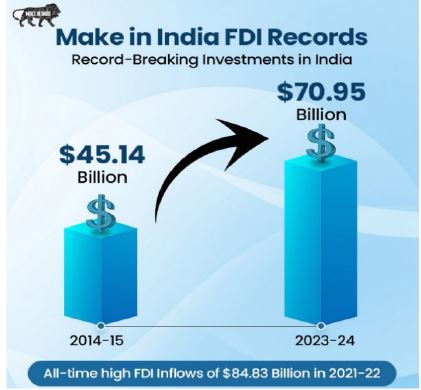
Prime Minister Modi has not only surpassed Jawaharlal Nehru’s record as the longest-serving elected prime minister, but he has also reshaped the very system Nehru left behind. What was once slow and inefficient has been transformed into an agile, responsive framework of governance.
From Shyama Prasad Mukherjee to Deendayal Upadhyay, from Atal Bihari Vajpayee to L.K. Advani, and now Narendra Modi — each leader was groomed to serve a larger purpose.
That purpose was never just about winning elections. It was about building a prosperous, strong, and united Akhand Bharat. Achieving this vision required transformation — a shift from colonial legacies and Nehruvian inertia to a system that responds swiftly to the needs of the people.
And that transformation is what we witness today.
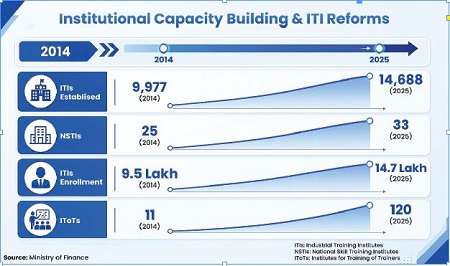
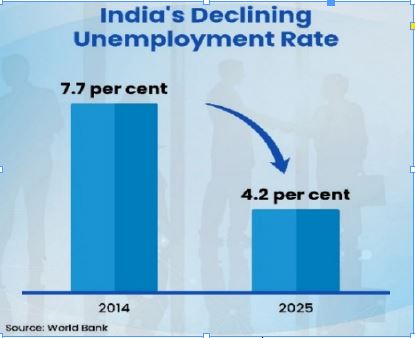
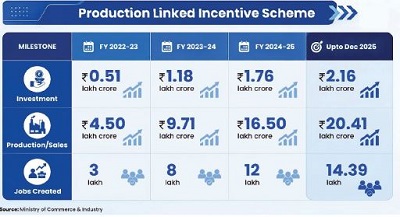
Key Transformations in
Governance and Policy
In short, “India First” does not mean abandoning neutrality; it means exercising strategic autonomy with a sharper focus on advancing India’s interests.
How does it matters?
Every achievement and setback of the PM has been scrutinized by both national and global media. So rather than repeating familiar milestones — economic growth, infrastructure expansion, or landmark missions like Mars Orbiter and managing COVID-19 — what truly matters is how these achievements touch the everyday lives of ordinary Indians. The reforms and progress are not abstract statistics; they translate into cleaner cooking fuel, faster digital services, better roads and railways and healthcare access that protects families in times of crisis. For the common citizen, the story of India’s rise is not about headlines — it is about dignity, opportunity, and a better quality of life woven into daily experience;
India as a Defence Superpower.
Conclusion.
Records are not the goal; they are simply the byproduct of performance. There is little value in crying foul when achievements are earned through persistence and delivery. What India truly desires is a strong and capable opposition — one that has the will, vision, and strength to challenge the government with a clear blueprint for a better future. It is high time leaders recognize the aspirations of ordinary Indians and begin working sincerely in that direction. If they fail to rise to the occasion, the relentless drive of Narendra Modi will continue to break records with ease, leaving the opposition to merely watch from the sidelines.
(The content of this article reflects the views of writer and contributor, not necessarily those of the publisher and editor. All disputes are subject to the exclusive jurisdiction of competent courts and forums in Delhi/New Delhi only)




















Leave Your Comment