



Deepak Kumar Rath
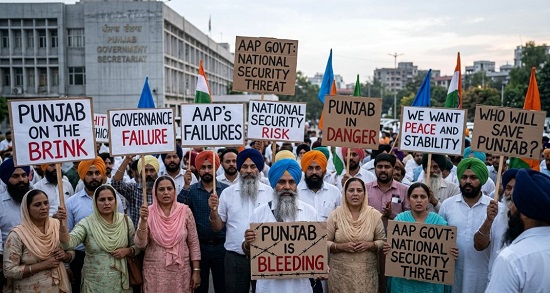
Punjab is not an ordinary state. It is India’s frontier against Pakistan, a land that has already paid an enormous price for terrorism, separatism and militancy. Yet under the Aam Aadmi Party government, the state increasingly appears trapped in a dangerous combination of fiscal stress, criminality, drugs and renewed extremist activity. This is no longer merely a question of administrative incompetence. It is becoming a matter of national security. Even Congress leaders have now publicly described the handling of Punjab as a “grave security concern.”
The first warning sign is the law-and-order situation. Punjab continues to battle the gangster-terror nexus, while questions over policing have reached the courts. The Punjab and Haryana High Court has already ordered a probe into alleged police connivance after gangster Lawrence Bishnoi was allowed to conduct television interviews from custody. More recently, Congress MP Sukhjinder Singh Randhawa alleged that senior police officers were in contact with gangsters and demanded an investigation into their call records. These are allegations, not proven facts, but their very emergence from political and judicial quarters exposes how seriously public confidence in the policing system has been shaken.
The drug crisis is even more damning. The Mann government can point to arrests and seizures, and indeed Punjab Police says that more than 67,000 people were arrested under the NDPS Act between March 2025 and July 2026. But the other side of the story is equally stark: admissions to government de-addiction centres jumped from 9,577 in 2024 to 25,290 in 2025—a staggering 164 per cent increase. When rehabilitation centres are witnessing such an explosion in demand, the government cannot simply declare victory through arrest statistics.
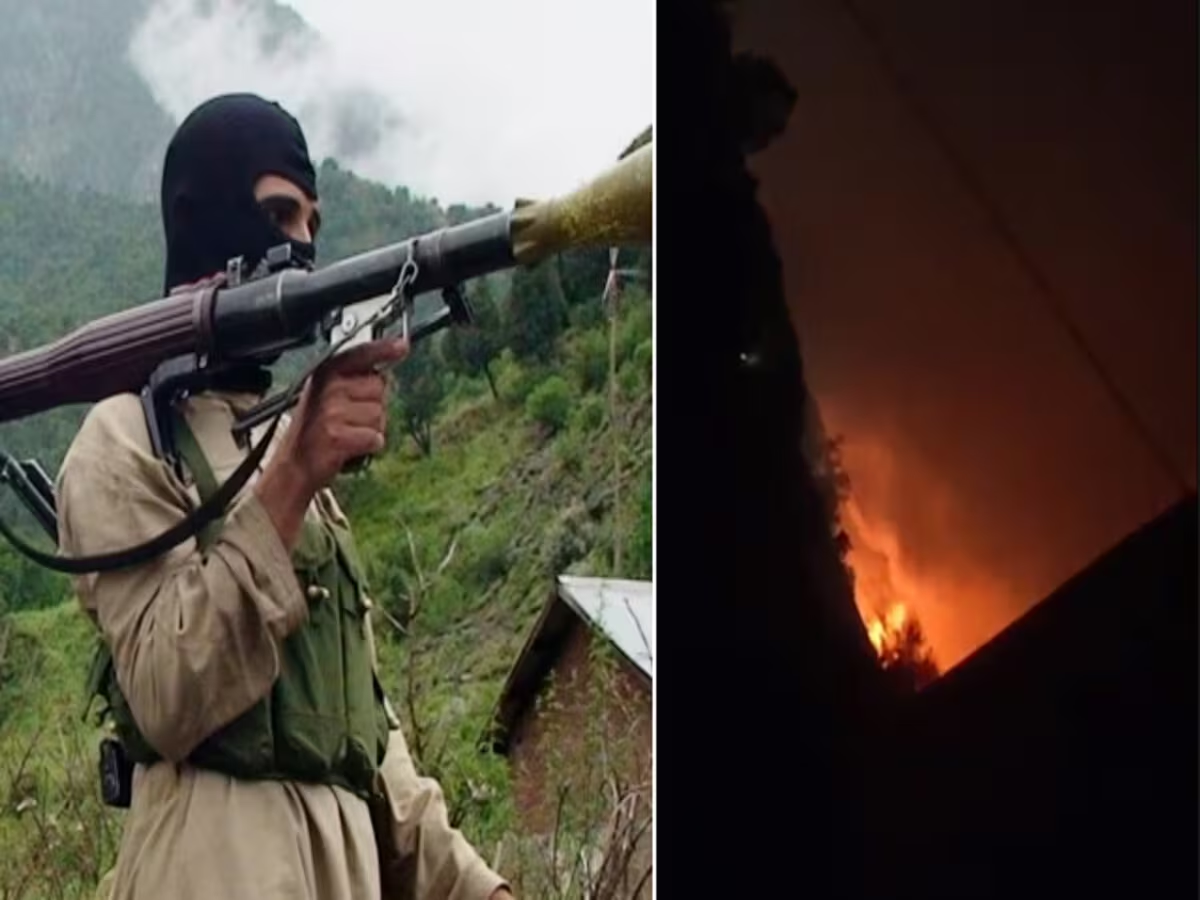
The most disturbing dimension is the convergence of drugs, organised crime and extremist networks. In June 2026, the NIA searched 18 locations in Punjab and Haryana in cases linked to Pakistan-based terrorist-gangster Shahzad Bhatti. Earlier, the agency had uncovered a wider conspiracy involving Pakistani handlers, local facilitators, arms smuggling and targeted attacks in Punjab. The Khalistani ecosystem has not disappeared; it has adapted, operating through foreign handlers, criminal networks, encrypted communications and radical propaganda.
This is where the rhetoric about “dimagi Naxals” must be treated with seriousness rather than political sloganeering. Ideological radicalisation, separatist propaganda and attempts to exploit social grievances are genuine threats. To casually dismiss such networks as political dissent—or, worse, allow them space to operate—is precisely how a security problem grows into a strategic crisis.
Then comes the financial question. Punjab’s 2026-27 budget estimates outstanding liabilities at 45.1 per cent of GSDP, while the state continues to carry a revenue deficit and relies heavily on borrowings. The fiscal deficit is projected at 4.1 per cent of GSDP. A government cannot indefinitely finance populism while postponing the harder task of creating jobs, expanding industry and rebuilding productive capacity.
Punjab therefore needs more than slogans, subsidies and political firefighting. It needs disciplined finances, uncompromising action against drug syndicates, stronger policing, intelligence coordination and zero tolerance for separatist terrorism. The brave men and women of Punjab Police are capable of delivering this; what they need is political clarity and administrative backing.
Punjab’s geography makes its security India’s security. Pakistan-backed terror groups understand this perfectly. The question is whether the AAP government does too. A state standing on the national frontier cannot afford a government that treats governance as electoral management. Punjab needs a government that governs—not one that merely survives.



















Leave Your Comment