


From the Artha Shastra of Chanakya to the Shanti Parva of Mahabharata , our sages have expounded the concept of Raj Dharma as the guiding tenet of state policy . Raj Dharma makes it abundantly clear that the sovereign is not above the law, but an instrument of it . Our political texts have defined Raj Dharma as comprising Prabhushakti ( the power of the sovereign ) Mantrashakti ( the power of knowledge ) and Utsahshakti ( the power of enthusiastic energy ), and it is only when the three work in absolute harmony that the state can move ahead and achieve the goals it sets out to achieve.
The Practise of Raj Dharma
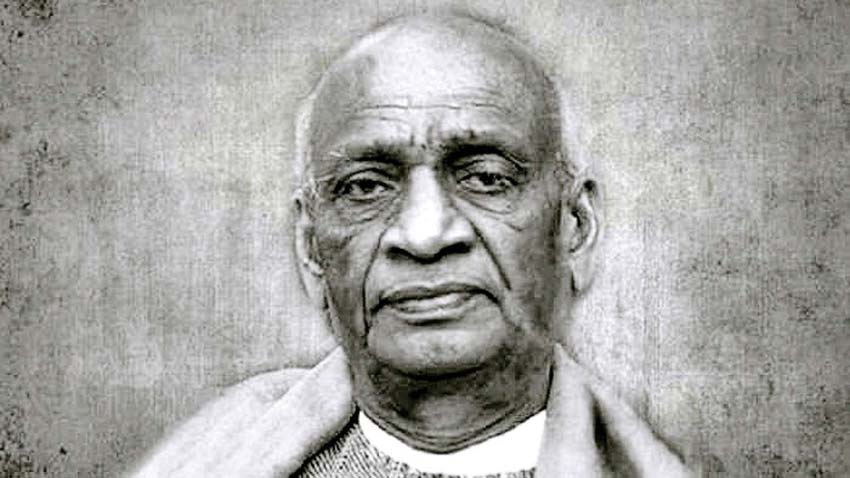
It is this conception of the Raj Dharma that Prime Minister Modi has tried to invoke by ensuring that those who have to manage the affairs of the state should be endowed with Mantrashakti and Utsahshakti. He was drawing inspiration from one of the tallest leaders of the freedom movement, the redoubtable Sardar Vallabh Bhai Patel, who clearly understood that while Prabhu Shakti must be derived from the elected representatives – the parliamentarians, the legislators and municipal councillors - the Mantrashakti and Utsahshakti must come from the steel frame, as well as professionals who should perform their duties without fear or favour, in the true spirit of a Karamyogi . The description of a Karamyogi comes to us from the fiftieth verse of the Bhagwad Geeta: (see the box above).
This motto of the IAS Yogah Sarvasu Kaushalam is also drawn from this verse , which lays focus on excellence in action , even as it clarifies that our action has to be rooted in intelligence.
The scale and scope of Mission Karamyogi
However , before we discuss the stepping stones to Mission Karamyogi (MK) let me share the scale and scope of the world’s largest online learning platform . MK has over 3000 courses covering key functional, behavioural, and domain competencies for governance professionals covering 12.6 million users on the IGoT(integrated government online training) -Karamyogi platform . This includes 4.1 million from the Central Govt and 8.5 million from states , zilla panchayats and municipal bodies It was launched by the Prime Minister on 20th August 2020 ( when this columnist was the Director of the LBS National Academy of Administration).
The Gujarat Experience of Chintan Shivirs
When Modi became the Prime Minister in 2014, he started looking at the extant system of selection and training of civil servants . By this time he already had the experience of successfully administering one of the most prosperous states in the country, and achieving spectacular success in many development interventions – notably , irrigation, agriculture , infrastructure and industry . The Vibrant Gujarat investment summits had become an exemplar for every state in their quest for projecting themselves as an industry -friendly destination. He had organized Chintan Shivirs (Knowledge Forums ) for everyone connected with the governance of the state. Drawing upon his experience as the CM of Gujarat , he realized that there was a major communication asymmetry between those at the helm, and those on ground zero.
In the perception of this columnist , the conception and rollout of MK is an outcome of the learnings from three interventions made by Prime Minister Modi on taking over the reins of governance : the Assistant Secretary Attachment for officer trainees, Aarambh -the combined Foundation course 2020 and the iGOT platform launched during Covid to overcome the challenge of having everyone come to the LBSNAA campus on account of the strict Covid protocols.
In his very first review meeting with the DoPT and the LBSNAA, he expressed concern about the lack of exposure of the youngest members of the service to the functioning of the Secretariat ,and about the principle the guiding schemes funded by the Union government , but implemented by the states often in conjunction with the municipal corporations and Zilla Panchayats. District officers were often unaware of the modalities of project preparation, funding options and special interventions. He therefore proposed that before the officer trainees took up their district assignments , they should be attached to a ministry or department to get a hands-on exposure to the functioning of the Secretariat . It is true that onboarding states like West Bengal and Tamil Nadu was initially difficult but the intervention was more than vindicated on account of the enthusiastic response of the officers reflected in their positive feedback to the Academy and their state governments . The valedictory session of the Assistant Secretary’s attachment became an occasion for the PM Modi , his cabinet colleagues and the senior most members of the bureaucracy, led by the Cabinet Secretary to interact with the brightest sparks of the bureaucracy.
Breaking the Silos with Aarambh
In the course of these dialogues, he also realised that while LBSNAA was doing a fine job of training all the offciers who came for the Foundation course (FC), there was a major lacuna .Not everyone who qualified the CSE could participate in the LBSNAA FC on account of infrastructure constraints . It bears recall that from the time when GB Pant established the Academy at Mussoorie in 1960,the number of candidates , as also services had increased manifold. In fact , from the late eighties , a parallel FC was also being conducted at the RCVP Noronha Academy of Administration and Management at Bhopal , the MCHRDI at Hyderabad as well as the Income Tax Academy at Nagpur. While the syllabi and the end of course of evaluation was done as per the parameters laid down by the Academy, the core objective – that of building an espirit de corps for the batch – could not be achieved when the training was held at multiple locations.
When told that the main reason was the lack of infrastructure – hostels, auditorium , seminar halls at the LBSNAA campus, Prime Minister Modi gave express instructions to the Secretary DoPT, the Director of the Academy and the DG of the CPWD to draw up an action plan and apprise the PMO of budgetary requirements for the same . The sanctions came immediately thereafter , and it was place it on the ‘fastest track mode’. In any case, from the 2019 batch onwards, LBSNAA was directed to launch the Common Foundation Course (CFC ), appropriately called Aarambh( the beginning ) -for each and every officer trainee selected by the UPSC, irrespective of their service and rank. He was aghast to learn that ‘silos’ had been created at the very beginning of their careers. Aarambh ensured that every officer trainee will participate in the interactive governance seminar , curated jointly by the LBSNAA and the World Bank at the Statue of Unity convention centre at Kevadia. The highlight of course was the address by the Prime Minister in which he exhorted the civil servants to live up to the ideals laid out for them by Sardar Patel, the Bheeshama Pitamah of the civil services.
Inspired by Sardar
This was indeed, more than a symbolic gesture, for as the CM of Gujarat, he had not only ensured the timely completion of Narmada irrigation project ,but also build the world’s tallest statue for Sardar Patel, whom the award wining author Hindol Sengupta has described as ‘ The Man who Saved India’. It was Patel’s swift and decisive action which ensured the integration of the 562 princely states with the Republic of India. Patel was at his persuasive best when the princes were forthcoming in their support , but he was equally firm and determined when it came to the recalcitrant states like J&K, Junagadh and Hyderabad. He was also very clear that the country needed a strong and independent minded civil service to ensure that the ruptures caused by partition are sutured. In fact , he was determined to ensure that the foundations of the civil service are rooted in transparency , fair play and objectivity . This is how the first civil services examination was conducted ,a the very first batch started its training at the Metcalfe House . It was to this group that Sardar gave his first civil services Day address on April 21, 1948 : “You will not have a United India if you do not have a good All India Service which has the independence to speak out its mind”|
The Covid Challenge – and a new opportunity
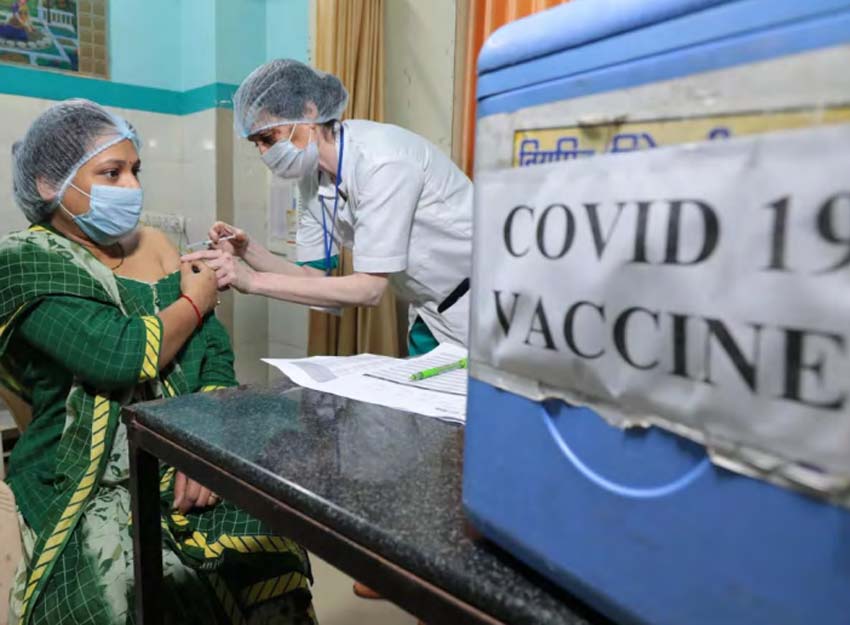
Meanwhile , even as the Academy was preparing for the follow up action on recommendations of the first Aarambh and working with the CPWD for new hostels and auditoriums to ensure that all civil service entrants could be trained together , the world was struck with Covid – a Black Swan event which brought in its wake , the ‘worst ever global pandemic’ which put everything out of gear. The Academy was no exception , and classroom teaching was affected because of the ‘social distancing norms’.
When the results of the CSE , 2020 were announced, the second phase of Covid was at its peak . This is when the first attempt at providing the core inputs on Law, Management, constitution and Public administration were was tried , and the flipped classroom was successful. This was the nucleus of the IGoT training , which later morphed into Mission Karamyogi. But Mission Karamyogi was much more than a technical platform . The Prime Minister wanted a thorough review of the rules, regulations and processes of governance.
From Rules to Roles : The new paradigm of governance
Explaining the context in the course of his meeting with the key stakeholders , Prime Minister Modi explained that prior to 1947, the colonial state in India existed to perpetuate its own power and raise resources for the ‘mother country’. As such, all laws were designed to ‘extract the maximum possible surplus’ and run the administration at the ‘least possible cost’. Although after independence, the welfare state looked at the citizen as a ‘beneficiary’: but the state thought it knew what was best for the citizen. While the objectives of the welfare state were different, it continued to use the same apparatus to deliver welfare. However, after seventy-five of Independence and in the Amrit Kal, the citizen had to become the centre -stage, and the defining element of governance had to be that of Trust : and therefore it was time for the old order to change !
Prime Minister Modi called for a new architecture of governance: one in which the civil service reimagined its role as a facilitator and co-creator, rather than as a controller and regulator. The focus had to shift from Rules which were ‘limiting the scope for action’ to Roles which empowered the officer to ensure effective delivery of the tasks at hand.
Overcoming Resistance
This was certainly easier said than done. Under the extant system in which ‘rules’ were treated as commandments, the resistance to change was quite pronounced. This was the context in which the Prime Minister announced the National Programme for Civil Services Capacity Building - Mission Karamyogi As the Prime Minister said: Mission Karamyogi is aimed at ‘making the civil servant more creative, constructive, imaginative, innovative, proactive, professional, progressive, energetic, enabling, transparent and technology-enabled’. It was felt that empowered with specific role-competencies, the civil servant will be able to ensure efficient service delivery of the highest quality standards.
Over the last five years , MK has been discussed in almost every newspaper, TV channel, social media as well as in academic journals connected with governance, public administration and political economy. From the numerous reports, commentaries and editorials available in the public domain, including the websites of DoPT, LBSAA, ISTM and the World bank, the following key points have emerge : the focus is on ‘How and Now’, Stakeholder engagement , Understanding the Framework of Roles activities and competencies (FRAC), comprehensive coverage of all employees with committed resources and the establishment of an Integrated government online Training platform (iGOT) linked to the human resource management portal.
How and Now
Unlike the earlier Administrative Reforms Commissions , (ARCs ) which were excellent in intent and purpose, and listed the Do’s and Don’ts, MK gives equal, if not more emphasis on the how, with the caveat that the change must begin now. Clear timelines were drawn up and displayed on the website of the DoPT so that each stakeholder was aware of what was expected. The six interconnected strands included strengthening of existing institutions, refreshing policy, detailing competencies that are required for each role and activity related to each position, and creating a strong push for a culture of life-long learning among civil services.
This is followed by the Stakeholder Engagement Plan (SEP) which provides a detailed overview starting from Stakeholder identification and their engagement in the project, to identification of roles and responsibilities of stakeholders, besides a grievance mechanism to address any issues that may crop up in the process of implementation. The real driving force behind MK is the Framework of Roles, Activities and Competencies (FRAC). This involves mapping of three constructs (roles, activities and competencies, supported by knowledge resources) for each individual position within all government ministries, departments and organisations (MDOs). Before identifying requisite competencies, an organization will also have to question the logic and rationale of its own existence. Why is it doing what it is currently doing? Is there any duplication of effort, or redundancy on account of technology?
Based on his experienced with the Chintan Shivirs of Gujarat , Prime Minister Modi has insisted that each and every employee being covered MK. A transformation at this scale had never been envisaged earlier, and it is the most comprehensive learning experiment for government employees ever. It is also important to note that a sum of over Rs 500 crore has been earmarked and spent on this transformative intervention.
Replicating the success on a global scale
The success of MK can also be gauged by the fact that almost all the countries participating in the National Centre for Good Governance (NCGG ) capacity building programmes for civil services – Bangladesh, Maldives, Kenya, Tanzania, Tunisia, Seychelles, Sri Lanka , Gambia, Laos, Vietnam, Nepal, Bhutan, Myanmar, Ethiopia, Eritrea, Somalia, South Africa, Indonesia, Madagascar, Fiji, Mozambique, Cambodia, and Malaysia are keen to implement the same in their countries. Needless to say, the PM has, in the true spirit of Vasudev Kutumbakam (the world is one family) tasked the NCGG to fulfil this ‘global responsibly’, and your columnist is privileged to be associated with this task as an Academic Council member of the NCGG.
By Dr. Sanjeev chopra
IAS (RETD.)
(The author is a Senior Fellow, Centre for Contemporary Studies (CCS) , PMML , New Delhi and an Academic Council of the NCGG. He superannuated as the Director of the Lal Bahadur Shastri National Academy of Administration, Mussoorie when the Mission Karmayogi was launched.)
(The content of this article reflects the views of writer/contributor, not necessarily those of the publisher and editor. All disputes are subject to the exclusive jurisdiction of competent courts and forums in Delhi/ New Delhi only.)














Leave Your Comment