



Vijay Sardana
A Strategic Framework for Sustainable Sugar and Ethanol Markets
India’s recent sugar-price episode is not merely a story about expensive sugar. It is a warning about how political intervention, weak market intelligence, production uncertainty and rigid supply controls can turn a manageable agricultural cycle into a consumer-price crisis.
Between 20 July and 20 August 2026, the reported average retail price of sugar rose from ₹48.18/kg to ₹55.70/kg, an increase of about 16% in one month. The government subsequently took several measures, including stock limits, tighter monitoring and duty-free import permission. By 28 August, official data indicated that ex-mill prices had fallen by around 20%.
The important question, therefore, is not simply:
“Why did sugar become expensive?”
The bigger question is:
Why does India repeatedly discover a sugar shortage only after prices have risen—and why does policy oscillate between export restrictions, quotas, stock controls and imports?
The answer lies in the structure of India's sugar economy.
1. Sugar is not just an agricultural commodity—it is a political commodity
Sugarcane occupies a unique position in India.
The Central Government fixes the Fair and Remunerative Price (FRP) of sugarcane. For 2025-26, the FRP was fixed at ₹365 per quintal linked to a 10.25% basic recovery rate. FRP has risen substantially over the past decade.
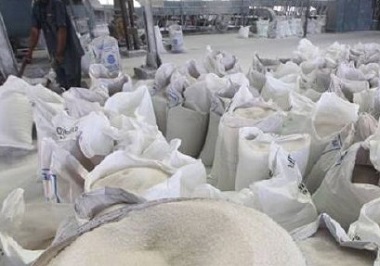
But sugar prices themselves cannot simply be politically fixed at whatever level the consumer prefers.
This is the fundamental problem:
India often manages sugar politically rather than managing it through market intelligence.
2. The biggest lesson from the previous sugar crisis: surplus can become shortage
India's history provides an extraordinary lesson.
During the 2017-18 and 2018-19 sugar seasons, India experienced substantial surplus production. By 2019-20, the government estimated opening stocks of roughly 142 LMT and anticipated season-end stocks of around 162 LMT.
The government responded with buffer stocks and export incentives, including an export subsidy of ₹10,448 per tonne for up to 60 LMT.
Why?
This illustrates the central paradox of Indian sugar:
A surplus is not necessarily good news if the market cannot evacuate it efficiently.
The reverse is equally true. A shortage does not necessarily mean India has physically run out of sugar. A relatively small reduction in production, combined with low stocks, speculative behaviour and seasonal demand, can create a very large price movement.
That is precisely why stocks matter as much as production.
3. The 2026 episode exposes the weakness of India's forecasting system
The government initially expected sugar production of approximately 343 LMT, while the latest estimate cited by the government is around 306 LMT, whereas the industry estimate was about 270 to 280 LMT.
That is a difference of roughly 37 LMT.
The decline has been associated with crop damage from red rot, top borer, excess rainfall / waterlogging and other weather-related factors. At the same time, global sugar prices also increased sharply.
But the most important lesson is not the 37-LMT difference.
It is this:
Why did the system not detect the production risk early enough?
India needs to move from: “How much sugar did we produce?”
To: “How much sugar will be physically available to consumers over the next 3, 6 and 12 months?”
These are completely different questions.
4. Production intelligence must replace production estimates
The Sugar Ministry must change forecasting policy and require a real-time Sugar Intelligence System, based on the FIRE Index designed by the author.
It should continuously monitor:
This should produce one simple indicator:
India Sugar FIRE Index = Opening stock + expected production + imports − domestic consumption − exports − other diversion = closing stock
The government should publish this balance every month.
The objective should be to know six months before a crisis whether the country is heading towards surplus or shortage.
5. Stop confusing ethanol with the entire sugar-price problem
The ethanol debate demonstrates the danger of politically convenient explanations.
The government has stated that sugar diversion towards ethanol declined from approximately 12% in 2022-23 to around 9% in 2025-26, while nearly three-fourths of ethanol production now comes from grains, particularly maize.
Therefore, blaming ethanol alone for the 2026 sugar-price rise is too simplistic.
The correct question is:
What is the marginal quantity of sugar available for food consumption after considering ethanol, exports, stocks, production and domestic demand?
That is a much better policy framework than blaming one sector.

6. Market forces are not the enemy—they are an early-warning system
India often treats markets as something that needs to be controlled. We should instead use markets as an intelligence mechanism.
A rising futures price, widening regional price differential, falling stock-to-consumption ratio or increasing import parity can provide an early warning.
Markets aggregate thousands of pieces of information that government departments may receive weeks or months later.
Therefore, the government should not necessarily suppress price signals immediately.
It should ask: Why is the market signalling a shortage?
That distinction is crucial.
7. Government should control abuse—not normal price discovery
There is an important difference between Market forces and Market manipulation.
If supply is genuinely tight, prices should rise.
Higher prices encourage:
That is the market's balancing mechanism.
But if someone deliberately withholds stocks to create artificial scarcity, government intervention is justified.
India has recently imposed stock-holding limits on sugar dealers, with the government saying the measure was intended to discourage hoarding and speculative activity.
The principle should therefore be: Don't fight the price signal. Investigate the reason behind the price signal.
8. Imports should become a market-stabilisation instrument
India's recent decision to permit 1 million tonnes of duty-free raw sugar imports demonstrates the usefulness of imports as a safety valve. But by the time such intervention occurs, domestic prices may already have moved substantially. India should create a trigger-based import mechanism.
For example: If projected closing stock falls below a predetermined percentage of domestic consumption, import duties could automatically reduce. If stocks recover, duties could automatically return. This would be much better than politically negotiated emergency decisions. The same principle should apply to exports.
9. India needs a Sugar Price Stabilisation Corridor
Instead of attempting to permanently control sugar prices, India should establish a price-stabilisation corridor.
Not a rigid price. A corridor.
For example:
The thresholds should be determined scientifically using:
This would reduce arbitrary intervention.
10. The long-term remedy: separate politics from supply management
The sugar sector needs a structural transformation.
First: Farmer income
Farmers should receive remunerative cane prices. But remuneration should increasingly reflect sugar and by-product economics, including ethanol, power and other value streams.
Second: Mill viability
Mills should have greater freedom to optimise their product mix according to market economics.
Third: Consumer protection
Consumers should be protected through targeted interventions during genuine shortages—not by permanently suppressing market prices.
Fourth: Strategic reserves
India should maintain a scientifically determined strategic sugar reserve rather than repeatedly improvising buffer stocks.
Fifth: Real-time intelligence
A national sugar dashboard should integrate production, stocks, disease, crushing, ethanol, trade and prices.
11. The real lesson from the sugar crisis
India's sugar problem is not simply: “Sugar production is low.” Nor is it that “Ethanol has consumed our sugar.” Nor is it that “Traders are responsible.”
The real problem is that India has too many policy levers and not enough integrated market intelligence.
We revise production estimates after the crop has already been harvested. That is reactive governance. But India needs predictive governance.
12. The future model: From Sugar Control to Sugar Intelligence
The future sugar policy should be based on five principles:
Conclusion: India doesn't need a Sugar Controller. It needs a Sugar Intelligence System.
The latest sugar episode should become a policy turning point. India has already demonstrated that it can produce enormous quantities of sugar. It has also demonstrated that it can become a major exporter and simultaneously face domestic price stress. The lesson is therefore much bigger than sugar.
Agricultural security in the 21st century is not simply about producing enough. It is about knowing—early, accurately and continuously—what will be available, where it will be available and at what economic cost.
The government should therefore create a National Sugar Intelligence & Price Stabilisation System, based on the FIRE index as designed by the author by combining satellite crop intelligence, disease surveillance, production forecasts, inventory tracking, consumption forecasts, trade data and real-time market prices.
Then government intervention can become predictable, rule-based and intelligence-led.
Because the best time to prevent a food-price crisis is not when the consumer is already paying ₹60–65 per kg. It is six months earlier—when the data first tells us that the market is moving towards a shortage.
That is the real lesson India should learn from the sugar crisis.
Will Indian policy makers learn is a bigger question.
(The content of this article reflects the views of writer and contributor, not necessarily those of the publisher and editor. All disputes are subject to the exclusive jurisdiction of competent courts and forums in Delhi/New Delhi only)





















Leave Your Comment