


Sanatana Dharma, often referred to as Hinduism, represents eternal and absolute duties incumbent upon all Hindus, regardless of caste or sect. Rooted in values like honesty, purity, goodwill, patience, mercy, self-restraint forbearance, and generosity. Sanatana has neither beginning nor end, symbolizing an everlasting order of peace and universal love. Dharma is often translated as duty such as the dharma of sugar is to be sweet, fire is to be hot and sun is to spread heat and light. Sanatana is the oldest religion of the world originated in the Indian subcontinent comprising several and varied systems of philosophy, belief, and rituals. Sanatana never tells wrong about any other religion of the world and does not believe in one God. It is a religion of peace with the aim to distribute love to the world. Its core scriptures include two epics, four Vedas, eighteen Puranas and 108 Upanishads, which embody its spiritual and philosophical depth. Ramcharitmanas has been included in UNESCO’s Memory of the World (MOW) regional register due to its enduring worldwide appeal. The Bhagavad Gita, a part of Mahabharata, remains timeless, inspiring people worldwide with its teachings on truth, purpose, and overcoming self-doubt. Sanatana advocates respect for all forms of life including nature, animals, and the elements. It does not endorse any type of violence or radicalism, on the contrary it emphasizes on ‘Ahimsa Parmo Dharma’, ‘Satyamev Jayate’, ‘Vasudhaiva Kutumbakam’, ‘Athiti Devo Bhav’ etc. Yoga, meditation and Ayurveda, rooted in Sanatana principles, have gained worldwide recognition.
Sanatana, the oldest Dharma, originated in the Indian sub-continent, is now shrinking and countries such as Pakistan, Bangladesh, and Afghanistan have become Islamic and Hindus are persecuted there. The population of Hindus in the world is about 1.16 billion (14.3%), the third largest after Christians and Muslims. Presently there are about 80% Hindus in the country. Most historians believe that Islam originated with Prophet Muhammad’s mission in Mecca and Madina at the start of 7th Century AD. Presently there are 57 Islamic countries and the Muslim population is about 1.9 billion (23.6%), second after Christians. This rapid growth is attributed to military conquest, trade, pilgrimage, and missionaries. In India, the Mughal invaders were instrumental in spreading Islam, often demolishing temples, and persecuting Hindus. India was divided in 1947 and Islamic Pakistan was created while India remained secular. Presently there are about 14% Muslims in India. All the religions exist peacefully but the rift between some Muslims and Hindus continues basically due to the policies pursued by some political parties. The problem arises when religion becomes above the nation. One member of Lok Sabha after taking oath said ‘Jai Philisteen’ and surprisingly no action was taken against him. India never supports any war either between Russia and Ukraine or between Israel and Hamas, Hezbollah, Houthi. In such a situation, all the citizens of the country are expected to support the decisions taken by our government. Surprisingly, one section of Muslims openly supports Hamas and Hezbollah, which is not in line with the government policy. And when the Hindus in Bangladesh, who were once our own brothers, are persecuted, the same people observe silence.
Christianity, the most widely practiced religion in the world, was founded on the life, teachings, death, and resurrection of Jesus Christ in 1st Century AD. There are about 2.4 billion (29.3%) Christians in the world. In India, they are about 2% of the population and largely peace-loving people. Christianity spread around the world through missionaries and colonizers. In India Christianity spread during the British rule and continues to flourish. The archbishops in the churches are appointed from the Vatican City.
The religious celebrations, largely of Hindus, are attacked often by stone pelting which increases communal tension. Local administration must take appropriate precautionary measures by sanitizing the route of the procession, proper intelligence inputs, houses and the places of worship being searched to remove stones, bottles, or any harmful material. Also, influential persons from other communities may be invited to be part of the celebrations. We must find a permanent solution to live in peace and harmony. Before implementing UCC, the government must frame a Uniform Education Policy. The Right to Education Act (RTE) 2009, ensuring free and compulsory education to all the children up to the age of 14 years, (up to 8th standard), was implemented in 2010. This act was amended in 2012 to specifically exclude madrasas from its scope, because only religious education is imparted there. And the RTI Act does not apply on madrasas, ultimately these children are deprived of quality education.
Recent political statements against Sanatana Dharma have sparked outrage. Udhayanidhi Stalin, the Deputy Chief Minister of Tamil Nadu, said in 2023 that Sanatana needs to be eradicated like dengue, malaria, mosquitoes, and corona virus. Karnataka minister Priyank Kharge, son of Congress president Mallikarjun Kharge, supported Udhayanidhi Stalin’s stance and added that religion that does not promote equality and dignity is a disease. Swami Prasad Maurya, former UP Minister passed derogatory comments about the sacred text Ramcharitmanas, and its pages were burnt in Lucknow. It shows a growing trend of disrespect towards the oldest living faith, hurting the sentiments of millions of Hindus.
In 2007, Digvijay Singh, former Congress Chief Minister of MP, used the term ‘Hindu terrorism’ during an election campaign. Former Home Minister of India and Congress leader, P Chidambaram urged Indians to beware of ‘saffron terror’ during a meeting of state police chiefs in 2010. Former Home Minister of India and Congress leader, Sushil Kumar Shinde in his book ‘Five Decades in Politics’ used the word ‘saffron terror’, he later expressed regret for it. Such statements are given to appease the other community for consolidation of votes to their party.
Caste-based surveys, particularly for Hindus, appear to be part of a larger agenda to divide the community along caste lines. These political tactics, reminiscent of British strategies in 1931, underscores unity among Hindus. Political parties advocating for such measures often exclude similar surveys within other communities, exposing a bias intended for electoral gains. Historically, prominent Congress leaders like Nehru, Indira Gandhi and Rajiv Gandhi did not support caste-based divisions, but the current leadership seems to have taken a different stance. The government must take care of the needy people of the country from any caste or religion.
The demographic imbalance in certain regions in the country needs to be addressed. It is imperative that the Parliament redefines the term ‘minority’ logically and ensures equal opportunity for all citizens. India belongs to all the citizens, and we need to learn to live in peace and harmony with mutual respect. The sentiments of any community are not to be hurt and they must follow their cultural and religious tradition without any hindrances. Any disrespect to Sanatana Dharma and attempt to divide its followers will not be in the national interest. India, a land of Gandhi and Buddha, has no room for violence. Respect for all faiths, without attempts to divide or incite hatred, is essential for national harmony. There is a need to preserve and promote Sanatana Dharma through education, interfaith dialogue, and community service, to make India a better place to live.
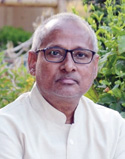
By Manoj Dubey
Principal (Retd.)
|Delhi Public Schools
(The content of this article reflects the views of writers and contributors, not necessarily those of the publisher and editor. All disputes are subject to the exclusive jurisdiction of competent courts and forums in Delhi/New Delhi only)





















Comments (4)
S
The article is excellent and gives us knowledge of santana dharam and its importance
D
Excellent writing. Clear thought
N
Valuable insight on Sanatana Dharma. Well researched article highlighting the principles of Sanatana. It can be asserted beyond doubt that Sanatana is the key to peace and universal brotherhood. Kudos to the author, Sh. Manoj Dubey for the article.
S
A very well written article which deserves appreciation for the accuracy of facts and positive insights.