


Brazil is one of the leading countries that has taken the initiative in alternative fuels, particularly biofuel and bio-ethanol. Today, the most critical problem facing global society is air pollution. In any society, there are three important pillars: ethics, economy, and ecology & environment. Regarding ecology and environment, the world is facing a crucial problem.
In the Indian scenario, 40% of our air pollution is due to transport fuel, and this is a significant problem for our country. Delhi, in particular, is facing a very crucial problem as one of the most polluted cities, with serious health issues arising solely due to air pollution. As the Transport Minister, I am responsible for this, as 40% of air pollution originates from the transport sector.
This is not the only problem. Simultaneously, for our country's economy, we have to import fossil fuels costing 22 lakh crores. We have an 85% dependence on energy imports. Therefore, from both an economic and a pollution standpoint, the time has come for the world, and for India, to provide an alternative: biofuel and alternative fuel.
The third important aspect relates to the Indian agricultural scenario. Today, our country has a surplus of sugar, corn, rice, and wheat. Let me give you an example: when the government decided to permit the production of bio-ethanol from corn, the market rate for corn was 1,200 rupees per quintal, while the government's Minimum Support Price (MSP) was 1,800 rupees. Farmers were facing severe economic problems as they were not getting a reasonably good price for their crops.
However, when the government granted permission to produce ethanol from corn, the price of corn immediately increased to 2,800 rupees per quintal. Today, across the country, particularly in UP and Bihar, corn plantation has increased threefold due to better prices.

Therefore, our policy is, first and foremost, import substitution, cost-effectiveness, pollution-free, and indigenous. Just from corn, farmers have received an additional 45,000 crores in their pockets due to ethanol production. We are saving on imports and directing that money to our farmers—this is exactly the need of the hour.
Diversifying agriculture towards the energy and power sector is our country's imperative. In our GDP growth, 65% of the population belongs to agriculture and rural India, including tribal India, yet their contribution to GDP is only 14%. The manufacturing sector contributes 22-24%, and the service sector contributes 52-54%. This illustrates the problem of poverty and unemployment we face in rural, agricultural, and tribal India. It is primarily because farmers are not getting good prices.
In the global economy, prices are determined by international markets. Brazil decides the price of sugar, the USA decides the price of corn, oil prices are decided by Malaysia, and soybean prices depend on Argentina. In this scenario, to protect our rural, agricultural, and tribal economy, we must support agriculture—this is very important.
The fourth crucial point, important for consumers and the country, is that compared to fossil fuels, biofuels and alternative fuels are much cheaper. We have the example of flex-engine cars and motorcycles. I have been using a Toyota Innova, running 100% on bio-ethanol with a flex engine, for one year. My experience is that the rate of ethanol is 65 to 70 rupees per liter. That flex-engine Innova generates 60% more power, and compared to petrol, the effective cost comes to 25 to 30 rupees per liter of petrol. This represents huge savings, and at the same time, there is no pollution because it is a green fuel.

Just 15 days ago, I had two meetings as Transport Minister. One was with construction equipment manufacturers, where I suggested they explore alternative fuels. I must thank Mr. Chowdhary and Kirloskar; on International Biofuel Day, I had the opportunity to launch two generator sets—one running on 100% ethanol and another on iso-butanol. Iso-butanol can be an alternative for diesel; we can blend 10% iso-butanol into diesel. Research and experiments have already begun with the Petroleum Conservation Research Association (PCRA). After receiving the reports, it will be very important to recommend this to the Petroleum Ministry for a decision.
Most importantly, ethanol production is now in surplus. Crucially, 70% of ethanol production is from food grains, which is very important for our country as we have a food grain surplus. I am also thankful to the concerned stakeholders, particularly in Numaligarh, where we have successfully implemented second-generation ethanol from bamboo—a great achievement.
A third important initiative is in Panipat, where Indian Oil is taking the lead. Parali (rice straw) is a major problem, and its burning causes significant pollution, which the people of Delhi face. We have 220 lakh tonnes of parali available, which farmers burn, causing a major air pollution problem for Delhi. The government has now taken a policy decision to convert parali into bio-CNG. Already, 110 plants have started, and we expect 500 plants, which will fully utilize the rice straw.
In Panipat, an Indian Oil project has already started, producing 1 lakh liters of bio-ethanol per day, 150 tons of bio-bitumen per day, and 78,000 tons per year of Sustainable Aviation Fuel (SAF) from rice straw.
I always advocate two important philosophies for our policies. First is the conversion of knowledge into wealth—this encompasses innovation, entrepreneurship, science, technology, research, skills, and successful practices. The second is the conversion of waste into wealth. Rice straw and other agricultural biomass can be used to produce bio-CNG and other biofuels.
I extend my special thanks to Mr. Promode Chawla and his team, and the Central Road Research Institute (CRRI). With their cooperation, we have successfully built a 1-kilometer NH road from Nagpur to Jabalpur using bio-bitumen. It is a very good road, and the CRRI has certified that it performs better than petroleum bitumen.
Consider our bitumen situation: the country needs 95 lakh tonnes of bitumen. Our refineries can only produce 45 lakh tonnes, so we import 50 lakh tonnes. By using biotechnology to increase biomass productivity, we can use that biomass to produce bio-bitumen. We can save 50 lakh tonnes of bitumen imports and create more jobs in agricultural, rural, and tribal India. This is very important for the Indian scenario.
Furthermore, we aim to make India a leader in Sustainable Aviation Fuel (SAF)—this is a big challenge. Many people are doing excellent work, and good research is underway. I am confident we will succeed in this mission.
For any business to succeed, four things are essential: vos World Economic Forum, there was extensive discussion on air pollution and blending Sustainable Aviation Fuel with conventional aviation fuel.
I believe that for the futuristic development of the world and our country, we must develop futuristic technology with innovation, research, and cost-effectiveness. India has huge potential due to the vast availability of biomass. We are in a position to produce Sustainable Aviation Fuel, and the potential is 100% there.
I also thank Toyota. I remember Vikram Kirloskar, the late chairman of Toyota India; because of his support, they successfully implemented the flex-engine policy. Now, Toyota, along with Tata, Mahindra, Suzuki, and Hyundai, have all developed flex-engine technology. Even tractor and agricultural equipment companies have assured me they will develop flex-engine tractors that can run on CNG, bio-ethanol, and electricity. The construction equipment sector is also taking significant steps towards hydrogen and alternative biofuels.
This is India's time for futuristic development. We need to reduce our imports and increase our exports. With the ethanol surplus, the country now requires us to export ethanol. We will meet with the Petroleum and Finance Ministers to request the necessary approvals.
I am very confident that the future of the biofuel industry is excellent because the whole world is concerned about air pollution. Simultaneously, creating more jobs and growth in the agricultural sector is an equivalent need. We are in a win-win position. However, we need to take initiatives, develop new technologies and innovations, amend our laws, and develop our agriculture properly.
It is time to coordinate, cooperate, and communicate all types of research and best practices on a single platform. I am truly happy that the Indian Bio-Energy Tech Expo will inspire and motivate you all to develop a futuristic vision for development.
Our Ola is doing an excellent job, but sometimes we need to create a platform between stakeholders and pursue government policies proactively. Under the leadership of Prime Minister Modi Ji, we have successfully implemented the 20% ethanol blending in petrol—a success story for India.
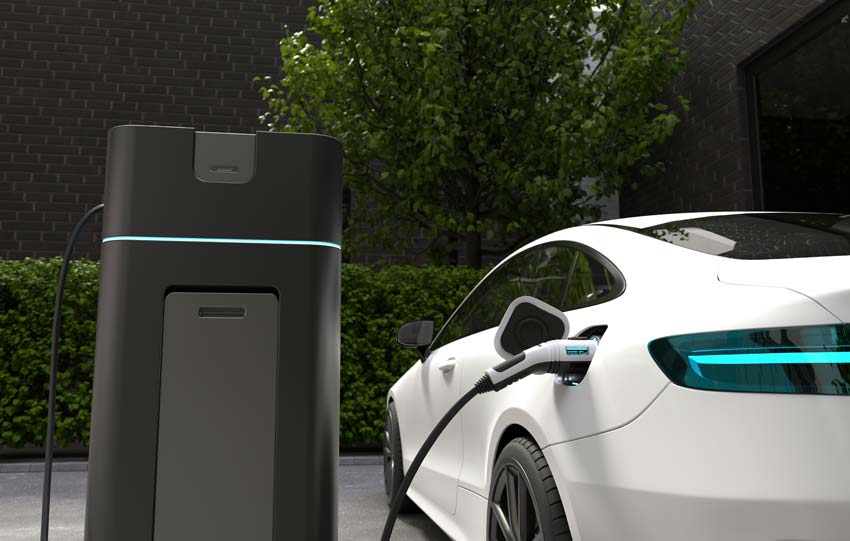
Simultaneously, across the country, we now have a waiting list for electric vehicles. As Transport Minister, I am delighted that demand for electric vehicles has increased compared to petrol and diesel. I remember when we started with electric buses, cars, and scooters, the cost of lithium-ion batteries was $150 per kilowatt-hour. Now it has come down to $55-$65. This is a great miracle.
Our startups, IITs, engineering institutions, and research organizations are doing excellent work. They are conducting significant research on alternative chemistries—not just lithium-ion, but zinc-ion, aluminium, and sodium-ion. Our automobile industry is now the third largest in the world. When we took charge, the industry's size was 14 lakh crores. Just four months ago, we surpassed Japan, and now we are number three. The USA is first with 79 lakh crores, China is second with 49 lakh crores, and India is third with 22 lakh crores.
All major global brands are now present in India. It is a remarkable story that two-wheeler companies like Bajaj and TVS Honda export 50% of their production. Indian companies like Tata, Mahindra, Hyundai, and Toyota are also exporting significantly from India. Our mission is to make the Indian industry number one in the world within five years. For this reason, alternative fuel and biofuel technologies are equally important.
Now is the time for innovative research and experiments on construction equipment, agricultural equipment, and generator sets for alternative fuels and biofuels. This is a success story. I believe the sky is the limit. We must save society from air pollution, which is a major concern. It is also an economic problem for a country like India, with 85% dependence on imported fossil fuels.
It is important that people like you, with your initiative, vision, and development of new technologies—and with countries like Brazil and Finland represented here by their Honourable Ambassadors—we are open to new ventures, new technologies, and new innovations. I am delighted that Indian industry is now taking interest in producing CNG and ethanol, and they no longer need to import machinery from abroad. There is now potential for export. This type of development will make India "Aatmanirbhar" (self-reliant), which is the dream of our Prime Minister, Modi Ji.
This important industry is related to the "Atmanirbhar" mission. It will also strengthen our agricultural sector, create more jobs, and foster growth in rural and tribal India, which is vital for our country.
Some people on social media, as Mr. Chawla referenced, are running paid campaigns against biofuels. Those with vested interests in fossil fuel imports are behind this, but do not be bothered by it. The people are cautious and clever; they understand the truth. I am 100% sure that we are not working in the interest of any individual but for the national interest. We are working to reduce pollution in our country.
The people of Delhi are facing a pollution problem. If we can reduce pollution in Delhi, research indicates we can increase the life expectancy of its residents by at least 10 years. This is the importance of addressing the problem of fossil fuels and pollution.
I am very confident that the future is with us. The sky is the limit, but quality, innovation, research, and new technology are the foundation. A futuristic vision and development are crucial for any country and the entire world.
We are also working on green hydrogen. I am happy that my department has already started 10 pilot projects on the road with hydrogen vehicles. Tata, Ashok Leyland, Volvo, IOCL, HPCL, and Reliance are all with us. We are now planning to start hydrogen fuel stations. There are two challenging areas: hydrogen fuel station technology and hydrogen transport.
I thank the Railway Ministry; they have a train and engine ready on hydrogen fuel cells. I launched three Tata trucks—two with hydrogen fuel cells and one with an internal combustion engine that can use hydrogen.
Therefore, alternative fuel and biofuel represent a great future for India. Our dream is that, although we are currently energy importers, due to the initiatives you are all taking, the day will come when we will be energy exporters. This will be a most important historical achievement for our country.
Let us come together, think together, and work together. Let us establish cooperation, coordination, and communication among all stakeholders, including the government. I feel the future is very bright.

By Nitin Gadkari
(This article is based on the speech delivnj ered by the writer at Bio-Energy Expo, New Delhi)














Leave Your Comment