


The word Sanatan means eternal, hence ‘Sanatan Dharma’, as per popular Hindu beliefs, is a religion which has existed since time immemorial. The word Sanatan was used in Bhagavad Gita, and refers to the knowledge of soul, which is eternal. It is also said that Sanatan Dharma refers to eternal religion which believes in soul and rebirth. International Society for Krishna Consciousness (ISKCON), known as Hare Krishna Movement was founded in 1966 by Swami Prabhupada. Its beliefs are based on Bhagavad Gita and Bhagavat Puran. ISKCON was formed to spread the practise of Bhakti Yoga, and dedicated their thoughts and actions to Lord Krishna whom they consider as the Supreme Lord. ISKON has millions of followers in many countries. As per ISKON Educational Services, Sanatan Dharma is used to denote the set of duties and practices incumbent upon all. Another related meaning is “that which is integrated to something.” For example, the dharma of sugar is to be sweet and the dharma of fire is to be hot.
There are two historic classifications of Sanatan texts, one is Shruti (which is heard) and the other is Smriti (which is remembered). The Shruti refers to the body of authoritative, ancient texts, believed to be eternal knowledge authored by neither human nor divine agent but transmitted by sages. It includes the four Vedas and early Upanishads. Of Shrutis, the Upanishads alone are widely influential among Hindus, considered scriptures par excellence and their central ideas have continued to influence in thoughts and traditions. Smriti is the interpretation given to the Shruti by great sages of time and attributed to the authors like Mahabharat, Ramayana, Ram Charit Manas.
Broadly speaking, in Sanatan Dharma there are two Epics, four Vedas, 18 Puranas and 108 Upanishads.
The greatest strength of Sanatan Dharma is its proven power of adaptability, which has weathered centuries of tsunamis hitting it from all directions. It is only the Sanatan Dharma that has proven in myriad ways the truth of dictum that ‘change is the only constant’. Sanatan has been under attack from many centuries, invaders from out side destroyed the places of worship, killed Hindus and forcefully converted Hindus to Islam. After Mughals, the Britishers ruled. They looted us, destroyed our culture and promoted Christianity. Sanatan Dharma responded by evolving the Bhakti Movement. Its saints exhorted the people to preserve their way of life and worship in whatever form they can; nothing was a taboo. In the 19th century, the British takeover of India witnessed the unprovoked attack by the Christianity upon Sanatan Dharma. Conversion was accepted, if not the official, endorsed organ of British policy. A strong tide of Hindu resurgence led by the likes of Swami Dayanand Saraswati and Swami Vivekanand scuttled conversion attempts. A section of thinkers, writers and scholars produced well researched materials in defence of Sanatan Dharma and exposed imperialistic ideologies like Islam, Christianity and communism. Repeated attacks on Hindus, their way of life, places of worship and institutions are denied, justified, or brazened out. Ultimately the country was divided on the lines of religion, in 1947. And this unfortunate Hindu-Muslim divide continues till today. Sanatan followers feel hurt when its Gods, Goddesses and scriptures are desecrated. Some examples are mentioned to understand this shameful practise of recent past.
Akbaruddin Owaisi of AIMIM in his hate speech took jibes at Hindu Gods and Goddesses. Amravati’s independent Lok Sabha member, Navneet Rana and her MLA husband Ravi Rana were arrested and charged with sedition, when they attempted to recite Hanuman Chalisa outside ‘Matoshri’, the residence of CM Uddahav Thakrey. Bihar Education Minister Chandra Shekhar alleged that Ramcharitmanas, composed by Goswami Tulsidas, promoted discrimination and spread hatred in the society. S P leader Swami Prasad Maurya demanded the govt. either to ban Ramcharitmanas, or delete certain portions of the epic that, as per him showed the majority population of backward class and Dalits in bad light. And subsequently the copies of this holy book were torn and burnt. CM Yogi gave proper explanation of the text in the state assembly to the satisfaction of all. Former UP CM and S P Supremo late Mulayam Singh Yadav ordered firing on Kar Sevaks who had gathered in Ayodhya in support of the Ram Temple, killing many innocent people and later he justified the act of firing.
All the limits were crossed recently when Udhayanidhi Stalin, a minister in Tamil Nadu govt., son of CM M K Stalin and grandson of Karunanidhi spewed venom against Sanatan Dharma, when he compared it with dengue, malaria and Covid 19 and said that we do not have to fight with Sanatan Dharma but to eradicate it. Udhayanidhi Stalin is a prominent South Indian film maker, actor and politician. His mother Durga Stalin is a religious lady who recently visited a temple and presented a golden crown.
Adding salt to the wounds of Hindus is the endorsement of Stalin Jr.’s statement by Priyank Kharge, minister in Karnataka govt. and the son of Congress President Mallikarjun Kharge. Karti Chidambaram, sitting Congress MP and the son of P Chidambaram is also in support of Udhayanidhi’s statement. Where as former MP CM Kamalnath and Maharashtra Congress Chief Nana Patole distanced the party from the statement, showing north south divide on the issue. However, the parties such as SP, RJD, JDU and BSP have been silent in their response. The BJP interpreted his remarks as a call for ‘genocide’ of Hindus. The controversy didn’t have much impact in Tamil Nadu as not many believers in the state identify their Hinduism with Sanatan Dharma. Can such statement be given about any other religion? One lady in a TV debate said something, which should have been avoided, about some other religion, is not seen anywhere in an attempt to save her life.
Political parties have responded differently to Stalin’s statement. One reason for the reticence of some parties may be the transformation of the BJP into a party inclusive of all Hindus. The BJP in South India does not have the mobilization capabilities or intellectual resources to forcefully articulate its stance.
This anti Sanatan agenda is carried out mostly by the political parties to divide Hindu votes for their political gains in the elections. There may be religion in politics but no politics in religion. We must not make attempts to divide the society based on caste or religion and the sentiments of anyone should not be hurt. Mahatma Gandhi called himself a Sanatani Hindu. Sanatan Dharma is inclusive and accommodates diverse beliefs and practices within its fold , promoting unity among its followers. Sanatan Dharma is for the welfare of all. Detractors will come and go but Sanatan Dharma, being eternal, will always be there!
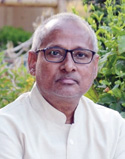
By Manoj Dubey
Principal (Retd.) Delhi Public Schools
(The content of this article reflects the views of writers and contributors, not necessarily those of the publisher and editor. All disputes are subject to the exclusive jurisdiction of competent courts and forums in Delhi/New Delhi only)














Comments (3)
A
Well explained , good amount of research and honest approach.good luck.
S
The origin of Sanatan is well defined by the author The The origin of sanatan is well defined by the authorThe politicians in south are biased and they are dividing society for vote bank
N
Beautifully articulated Mr. Dubey. The academic article is factually and elaborately referenced. It is indeed sad to see vote bank politics taking the center stage in a deliberate attempt to undermine and demean Hindus. Ironically, despite having taken giant leaps in almost all spheres, the people at large get carried away and vote enmasse for such parties. My warmest appreciation for Mr. Dubey for this highly academic article, which offered wonderful reading.