


A six-member police team from Jhunsi Police Station is scheduled to reach Varanasi's Kedarghat to question one of Hinduism's most prominent spiritual leaders, marking a significant escalation in a case that has shaken India's religious establishment.
A police team from Jhunsi Police Station in Prayagraj, led by Station In-Charge Mahesh Mishra, is set to arrive at Shri Vidyamath in Kedarghat, Varanasi, to question Jyotish Peeth Shankaracharya Swami Avimukteshwaranand Saraswati. The development comes as part of an ongoing investigation into serious allegations of sexual exploitation involving minors at the ashram.
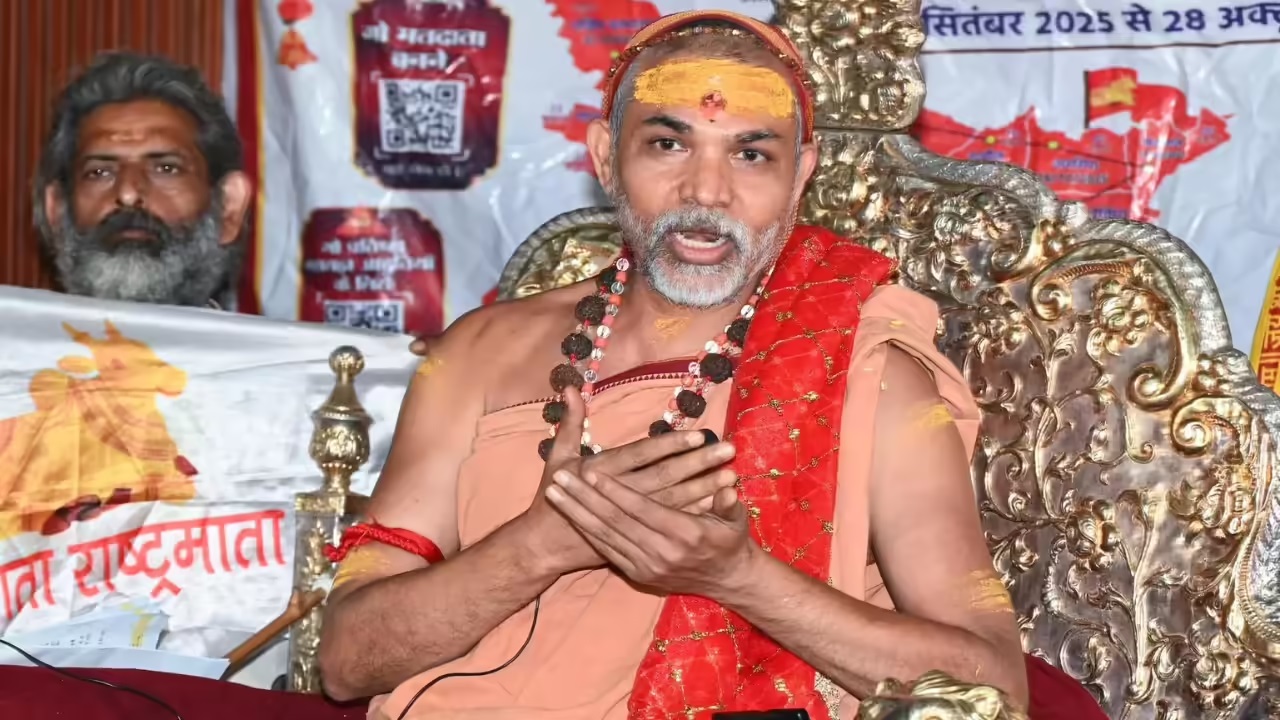
Speaking to media ahead of the police visit, Swami Avimukteshwaranand struck a composed but defiant tone, signalling full cooperation while firmly rejecting the allegations against him.
"We are confident. The police are investigating. We are ready for their arrival. There is no need for arrest. The case is false. We are not running away. We will not oppose the police," he said. Invoking a layered metaphor of justice, he added: "The truth will come out sooner or later. Courts are threefold — the lower court for people, High Court for us, Supreme Court for God."
The statement, characteristically philosophical in tone, reflects the Swami's approach of treating the matter as both a legal and moral battle — one he appears confident of winning on both fronts.
The chain of events leading to the police visit was set in motion by the ADJ Rape and POCSO Special Court in Prayagraj, which directed the Jhunsi police to register an FIR against Swami Avimukteshwaranand and his disciple Swami Mukundanand Giri.
The directive followed allegations submitted by Shakumbhari Peethadheesh Ashutosh Brahmachari, chairman of the Shri Krishna Janmabhoomi Mukti Nirman Trust. Brahmachari alleged that minors were systematically exploited at Vidyamath under the guise of 'guru seva' — a traditional practice of service rendered by disciples to their spiritual teacher. The court also reviewed video statements recorded by two minor victims, which served as a key basis for ordering the FIR.
The invoking of the Protection of Children from Sexual Offences (POCSO) Act makes this case particularly serious, as it signals that the allegations involve victims below the age of 18 and carries stringent legal consequences upon conviction.
The allegations first came to light during the Magh Mela, one of Hinduism's most sacred seasonal gatherings held annually in Prayagraj. According to Brahmachari, the exploitation was concealed behind the veil of religious service and devotion — a setting that critics argue made it especially difficult for victims to speak out or be believed.
The case has drawn sharp divisions. Supporters of the Swami have dismissed the allegations as politically motivated fabrications designed to tarnish the reputation of a revered spiritual figure. On the other side, Brahmachari has vowed to lead a foot march from Prayagraj to Varanasi to draw public attention to the issue, signalling his determination to keep the matter in the national spotlight regardless of how the legal proceedings unfold.
The case arrives at a moment of heightened national sensitivity around the accountability of religious institutions. The court's willingness to order an FIR against a sitting Shankaracharya — a title that carries immense spiritual authority within the Hindu tradition — is itself a landmark development, underscoring that no institution, however revered, stands beyond the reach of the law when credible allegations of child abuse arise.
As the six-member police team makes its way to Kedarghat, the outcome of their questioning is likely to shape the next critical phase of a case that sits at the intersection of faith, power, and justice. Whether the allegations are ultimately proven or disproven, the scrutiny being brought to bear on high-profile ashrams is unlikely to abate anytime soon.



















Leave Your Comment