


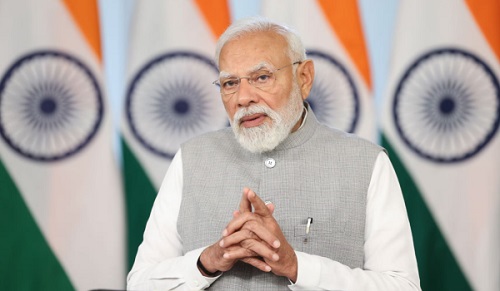
Prime Minister Narendra Modi on Thursday shared a poem written by former Prime Minister and Bharat Ratna Atal Bihari Vajpayee on the occasion of Samvidhan Hatya Diwas, remembering the hardships faced by the nation during the Emergency period and highlighting its impact on Indian democracy.
In a post on social media, Prime Minister Modi said that Vajpayee’s poem is much more than a collection of verses. He described it as a powerful expression of the pain, suffocation, and curbs on democratic freedoms experienced during the Emergency imposed in 1975.
The Prime Minister noted that the poem continues to resonate even today, serving as a reminder of one of the darkest phases in India’s democratic journey. He said the timeless words of Atal Bihari Vajpayee give voice to the struggles and challenges faced by citizens when democratic institutions and freedoms came under severe restrictions.
Sharing the poem, Modi urged people to listen to the sentiments reflected in Vajpayee’s writings, saying that the verses capture the emotions of an era marked by political repression and curtailed civil liberties.
The lines shared by the Prime Minister read:
"Jhulsata jeth maas, sharad chandni udaas,
Siski bharte saawan ka, antarghat beet gya,
Ek baras beet gya."
The poem reflects the anguish and despair of a period when democratic rights were suspended and political opposition faced significant constraints.
Samvidhan Hatya Diwas is observed to remember the Emergency period and to reaffirm the importance of safeguarding constitutional values, democratic institutions, and individual freedoms. The day serves as a reminder of the need to protect democracy and ensure that such circumstances are never repeated.
Prime Minister Modi’s tribute to Vajpayee’s poetry underscored the enduring relevance of the former Prime Minister’s words and their connection to India’s democratic history.



















Leave Your Comment