


In the dead of night on May 7, 2025, Indian fighter jets roared into hostile airspace, locked on their coordinates, and unleashed a series of precise airstrikes that reduced multiple terror launchpads to rubble. The operation was swift, deadly, and symbolic. Dubbed Operation Sindoor—personally named by Prime Minister Narendra Modi—it marked one of the most significant retaliatory military actions in India’s history, carried out in response to the brutal Pahalgam terror attack that left over 30 Hindu pilgrims dead just days earlier.
While the strikes themselves lasted barely an hour, the planning, coordination, and resolve behind them were weeks in the making. This was not just an act of military precision; it was a tightly choreographed exercise in strategic messaging, political will, and national resolve. According to top government and defense sources, the mission bore the personal imprint of Prime Minister Modi, who not only approved the strikes but was deeply involved in their conception and execution. This is the story of how Operation Sindoor was planned and executed—an unprecedented mission that reaffirmed India's changing security doctrine under its most decisive leader in decades.
Operation Sindoor: Reinforcing Modi’s ‘Iron Man’ Image Amid Rising Security Stakes
In the aftermath of the brutal terror attack on pilgrims in Pahalgam, Prime Minister Narendra Modi’s swift authorization of Operation Sindoor sent a clear message—not just to Pakistan, but to the Indian populace and the international community. Defying calls for restraint and brushing aside skepticism over India’s potential response, the precision strikes under Operation Sindoor marked a significant moment in India’s evolving counter-terrorism doctrine. They did more than neutralize terrorist hideouts—they fortified Modi’s longstanding image as the ‘Iron Man’ of India, a leader willing to walk the talk when national security is challenged.
Operation Sindoor represents a continuation—and escalation—of the muscular security policy that has become a hallmark of Modi’s governance since 2014. From the surgical strikes after Uri in 2016 to the Balakot air strikes following Pulwama in 2019, the Modi government has consistently shown a willingness to cross traditional red lines in dealing with cross-border terrorism. This latest operation, carried out with surgical precision and strategic surprise, reaffirmed that willingness, signaling to the world that India will not hesitate to act decisively, regardless of nuclear blackmail or diplomatic pressure. In doing so, it also reasserted Modi's credentials as a leader with a high tolerance for risk when it comes to defending national interests.
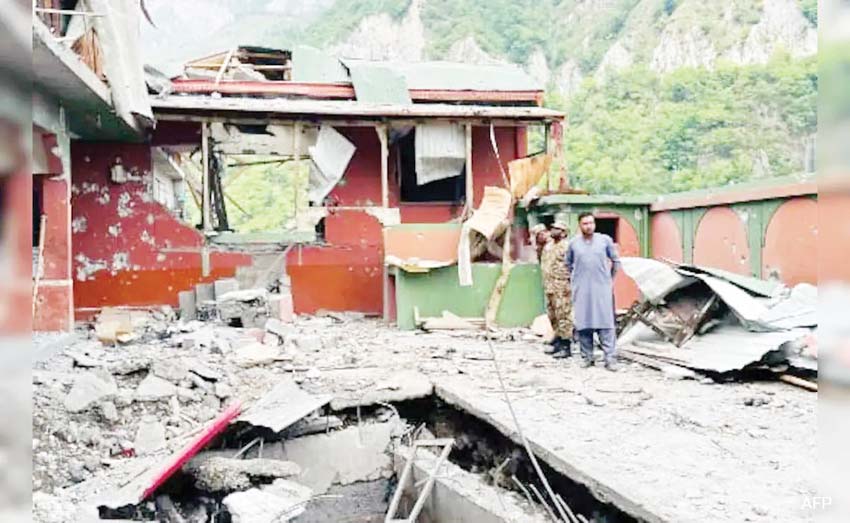
What sets Operation Sindoor apart, however, is not just its tactical success but the psychological impact it had on domestic and international perceptions. At home, it came at a time when critics of the government were questioning its preparedness and resolve, especially in light of increased infiltration attempts and attacks in Kashmir. The Prime Minister’s decision to greenlight the strikes—despite warnings from sections of the global diplomatic community urging de-escalation—flipped the narrative. By demonstrating a bold and unflinching resolve, Modi silenced many detractors, both within the opposition and in civil society, who had begun framing the BJP’s national security rhetoric as hollow election-time posturing.
In fact, the political implications of Operation Sindoor are immense. Security has always been a strong pillar of the BJP’s electoral messaging, and Modi’s persona as a decisive leader has been central to that appeal. With these strikes, he has once again aligned action with image—delivering a response that resonates with a nation increasingly intolerant of terrorism and appeasement. In reinforcing the BJP’s dominance over the national security discourse, the operation also sets the stage for political consolidation, especially as India heads into state elections and gears up for the 2029 general elections. It reinforces the belief among voters that under Modi, India will respond, not just react.
Importantly, the strikes also reframe India's security posture. No longer does India appear constrained by the fear of international censure or the nuclear overhang of its western neighbor. By executing Operation Sindoor in a calibrated but bold manner, the Modi government has laid down a new doctrine of preemptive and retaliatory strikes that could serve as a template for future responses. This evolution mirrors what many defense analysts see as India’s transition from strategic restraint to strategic assertiveness—a shift that is likely to have long-term implications for regional stability.
Critically, for the Indian public, especially in a time of heightened nationalism and assertive identity politics, such military actions go beyond strategic calculus—they symbolize strength, self-respect, and sovereign will. Modi’s iron-fisted response has therefore not only ensured justice for the victims of the Pahalgam tragedy but has also strengthened the emotional contract he shares with millions of citizens who see in him a leader who will never bow under pressure.
Operation Sindoor, thus, is more than a counter-terrorism response—it is a defining political and strategic act that has solidified Prime Minister Modi’s image as India’s modern-day Iron Man, unafraid to bear the burden of high-risk decisions in the pursuit of national honor and security.
The Catalyst: Pahalgam Massacre
and National Outrage
The bloodbath in Pahalgam on April 29, 2025, was unlike previous attacks in Jammu and Kashmir. Gunmen, allegedly backed by Pakistan-based terror outfits, ambushed a convoy of pilgrims en route to the ancient Amarnath shrine. Eyewitnesses described scenes of horror as automatic gunfire tore through the buses, killing men, women, and children. The brutality of the attack triggered national outrage, with protests erupting in cities across India demanding a strong response.
Within hours, PM Modi convened a high-level security review meeting at his official residence, 7 Lok Kalyan Marg. Present were National Security Advisor (NSA) Ajit Doval, Defence Minister Rajnath Singh, Chief of Defence Staff Gen. Anil Chauhan, RAW chief Ravi Sinha, and Intelligence Bureau (IB) Director Tapan Deka. According to senior officials, the mood in the room was grim—but focused.
“PM Modi was calm, but you could sense the steel in his resolve,” said a senior official present at the meeting. “He made it clear: the response would not be symbolic. It had to be definitive and unforgettable.”
The Directive: “There Must Be Blood for Blood”
PM Modi, known for his strategic patience and bold decisions, reportedly issued a singular directive to the military and intelligence brass: “There must be blood for blood. But it will be our time, our place.” With this, the groundwork for Operation Sindoor was laid.
The name “Sindoor”—a red vermilion powder symbolic of marital sanctity and Hindu cultural pride—was chosen by the Prime Minister himself. Sources say Modi saw the attack on pilgrims as not just terrorism, but an assault on India's civilizational values. Naming the operation Sindoor was a way to emotionally tie the counterattack with the very identity the terrorists tried to desecrate.
NSA Ajit Doval and his core team at the National Security Council Secretariat (NSCS) began working around the clock, identifying high-value terror targets across the Line of Control (LoC) and in Pakistan-occupied Kashmir (PoK). Concurrently, RAW activated its deep assets to track the movements of key Lashkar-e-Taiba and Jaish-e-Mohammed operatives, particularly those involved in facilitating the Pahalgam attack.
The Planning Room: Military
Precision and Stealth
While the public clamored for vengeance, India’s armed forces quietly prepared for one of their most complex air operations since Balakot. Over the next week, the Indian Air Force (IAF), Army, and Navy conducted simulated rehearsals in concealed zones across Rajasthan and Ladakh. Unmanned Aerial Vehicles (UAVs) and satellite surveillance were used to monitor target sites, ensuring minimum civilian collateral and maximum tactical gain.
“Precision was non-negotiable,” said an IAF source. “The PM made it clear: this wasn’t about symbolism; it was about neutralizing capability and sending a deterrent signal.”
Operation Sindoor’s execution plan was finalized on May 5, during a late-night war room meeting at the South Block. Modi, who attended the session in person, listened to every detail—from sortie paths to exit strategies. He greenlit the operation at 2:17 a.m., with one final instruction: “Ensure there are no civilian casualties. But do not leave anything standing.”
The Execution: May 7, 2025 — The Night Sky Lit Red
At 1:00 a.m. on May 7, Mirage 2000 and Su-30MKI jets took off from forward airbases in Srinagar, Jodhpur, and Bareilly. Flying low to avoid radar detection, the squadrons crossed into PoK under a blanket of electronic warfare jamming provided by indigenous Netra AEW&C aircraft. By 1:38 a.m., the first wave of strikes hit terror camps in Lipa Valley, Athmuqam, and Chakothi—known hubs for cross-border infiltration.
Simultaneously, Indian Army Special Forces launched precision artillery strikes from the ground to prevent any retaliatory movement from Pakistani forward posts. Surveillance drones streamed real-time footage to Delhi, where PM Modi, NSA Doval, and CDS Chauhan monitored every second from a secure command center.
In total, 12 terror launchpads were obliterated. Intelligence intercepts confirmed the death of at least 70 militants, including three key handlers of the Pahalgam massacre. The operation ended by 2:45 a.m., with all aircraft returning safely. Not a single Indian casualty was reported.
During Operation Sindoor, one of the most consequential outcomes was the reported elimination of key members of the Masood Azhar family, a bloodline synonymous with the leadership of the banned terror outfit Jaish-e-Mohammed (JeM). Intelligence sources revealed that the Indian Air Force targeted a high-security JeM compound in Balakot, believed to be a fallback command center, where several close relatives of Masood Azhar were holding a clandestine strategy session following the Pahalgam massacre. Among those killed were his nephew Usman Azhar, a senior operations planner, and two of his brothers known to be managing recruitment and arms logistics. This decapitation strike not only avenged the attack on Indian pilgrims but also sent a decisive message to Pakistan’s deep state—that familial and hierarchical sanctuaries for terror leadership would no longer be safe. The symbolic and strategic value of eliminating the Azhar kin has significantly eroded JeM's leadership core and disrupted its ability to regroup, marking a watershed moment in India’s doctrine of targeted counter-terrorism.
Pinpoint Precision: The Missiles That Powered Operation Sindoor
Operation Sindoor, executed in the early hours of May 7, 2025, was not only a strategic triumph but also a showcase of India’s evolving missile capabilities. The Indian Air Force’s strike package, consisting of Mirage 2000 and Su-30MKI aircraft, deployed a deadly mix of precision-guided munitions (PGMs) designed for deep penetration, minimal collateral damage, and high kill probability.
At the core of the operation were SPICE-2000 bombs, a smart munition with Israeli origins, modified for Indian needs. These GPS-guided bombs are known for their pinpoint accuracy and bunker-busting capabilities—ideal for targeting terror camps fortified in remote, mountainous terrain. First famously used during the Balakot airstrikes in 2019, the SPICE-2000’s reappearance in Operation Sindoor signaled a continuity in India’s approach to covert-terror infrastructure elimination.
Complementing the SPICE bombs were Crystal Maze missiles, air-to-surface missiles capable of locking onto targets from long distances using electro-optical seekers. These weapons allow pilots to launch from standoff ranges, avoiding enemy radar and surface-to-air threats. The ability to track and hit moving targets—such as convoy launchpads or mobile communication units—made Crystal Maze an ideal choice for suppressing high-value terror leaders attempting to flee.
There is also credible speculation, based on trajectory footprints and blast signatures observed in satellite data post-strike, that the BrahMos-A (air-launched version of the supersonic BrahMos missile) may have been deployed in a limited capacity. Mounted on Su-30MKIs, the BrahMos-A would have been used for targeting deeper infrastructure—such as weapon stockpiles or communication hubs—located in Pakistan-occupied Kashmir’s more inaccessible valleys.
The use of such advanced missile systems not only highlights India’s growing indigenous arsenal but also its ability to deliver tailored strikes based on mission objectives. Operation Sindoor affirmed that India’s airpower is no longer just reactive—it’s intelligent, strategic, and capable of precision retaliation, calibrated to escalate or de-escalate as needed.
In combining Israeli, Russian, and indigenously developed missile platforms, the Indian strike force created a seamless ecosystem of firepower—one that speaks not only of technological depth but also of a matured military doctrine under the Modi administration.
The Fallout: Strategic Shock and Global Calculus
Pakistan responded as expected—with denial and bluster. Its Foreign Office called the strikes “baseless aggression” and vowed retaliation. But behind closed doors, the embarrassment was palpable. Not only had India penetrated deep into PoK, but it had also done so under the nose of Pakistan’s air defense grid, exposing critical vulnerabilities.
Internationally, the reaction was mixed. The U.S. State Department acknowledged India’s right to self-defense, while urging restraint. Russia and France voiced support for India’s counter-terrorism efforts, while China remained conspicuously silent. More importantly, within India, the operation re-energized public sentiment and silenced critics who had questioned Modi’s decisiveness in recent months.
“This is not just a strike; this is a doctrine,” said a retired General, speaking on condition of anonymity. “India has shifted from strategic restraint to strategic assertion—and Operation Sindoor is the clearest evidence yet.”
Modi’s Doctrine: Assertive, Calculated, Uncompromising
What sets Operation Sindoor apart from previous operations like Balakot or the 2016 surgical strikes is not just scale, but intent. This was not just retaliation—it was a redefinition of India’s red lines. By authorizing a multi-target deep strike without escalating into full-scale war, PM Modi demonstrated a unique blend of audacity and control.
This mission also highlights Modi’s personalized approach to national security. Unlike previous administrations that deferred heavily to military command structures, Modi maintains a hands-on involvement, demanding updates, questioning assumptions, and often personally approving final plans. His rapport with NSA Doval—built on mutual trust and shared strategic vision—has become the backbone of India’s external security architecture.
“Modi doesn’t blink,” said a senior diplomat. “He calculates. He prepares. And then he strikes.”
Political Implications: National Unity and BJP’s Security Credentials
The political dividends of Operation Sindoor are already visible. Opposition leaders, barring a few outliers, have supported the action, while public approval ratings for the Modi government have surged. In politically sensitive regions like Uttar Pradesh, Maharashtra, and Gujarat, the operation has resonated strongly, reinforcing BJP’s narrative of being the sole party capable of protecting national integrity.
More broadly, the operation has unified a country fatigued by repeated terror strikes and prolonged border standoffs. It has rekindled confidence in India’s deterrence capacity and reinforced the belief that the nation is no longer a passive observer in its own security calculus.
Conclusion: A New Red Line Drawn in Fire
Operation Sindoor is more than a military achievement—it is a strategic turning point that could reshape India’s future counter-terrorism policy. Planned with secrecy, executed with precision, and driven by the political will of a leader unafraid of confrontation, it marks a new chapter in how India responds to terror threats.
In personally naming and approving the mission, Prime Minister Narendra Modi has sent a signal far beyond South Asia: India’s patience is not infinite, and her responses will no longer be reactive or hesitant. As the smoke settles over the destroyed terror camps, the message is clear—Pahalgam will not be forgotten, and under Modi’s leadership, justice will be delivered not just in words, but in fire.

By NILABH KRISHNA
(The content of this article reflects the views of writers and contributors, not necessarily those of the publisher and editor. All disputes are subject to the exclusive jurisdiction of competent courts and forums in Delhi/New Delhi only)














Leave Your Comment