


I n the annals of modern military history, Operation Sindoor stands out as a decisive and calculated blow to Pakistan’s terror infrastructure. Launched in the early hours of May 7, 2025, this Indian military operation was a direct and calibrated response to the April 22 Pahalgam terror attack in Jammu & Kashmir, which claimed 26 lives. With surgical precision and strategic depth, India dismantled multiple terror camps across Pakistan and Pakistan-occupied Kashmir (PoK), including high-value targets deep inside Pakistan’s Punjab province. More than a counterterrorism operation, Sindoor sent an unambiguous message: India will not tolerate cross-border terrorism, and it now possesses the indigenous technological muscle to back its intent.
The Indian Armed Forces, using a combination of precision-guided munitions, long-range drones, and sophisticated electronic warfare systems, struck 21 terror training and logistics camps across nine locations, many of which were considered untouchable due to their depth inside Pakistani territory. Among the most prominent targets were the Markaz Subhan Allah in Bahawalpur — the operational HQ of Jaish-e-Mohammed (JeM), and the Muridke Markaz near Lahore, the headquarters of Lashkar-e-Taiba (LeT). Satellite imagery and post-strike assessments revealed large-scale destruction of infrastructure and personnel, indicating the effectiveness of the mission. One significant target, the Syedna Bilal Camp in Muzaffarabad, known for infiltrating terrorists into the Kashmir Valley, was wiped out entirely.
While the Indian side has remained officially tight-lipped about specific numbers, credible reports emerging from Pakistani and international media have confirmed extensive damage. Pakistan’s Inter-Services Public Relations (ISPR) reluctantly admitted the loss of 11 soldiers and 40 civilians, while over 199 people were injured. Independent assessments and Indian intelligence sources estimate that the actual figures are far more severe, with more than 100 terrorists eliminated, including several top commanders from JeM, LeT, and Hizbul Mujahideen. These losses are not just in terms of manpower, but they also signify the disruption of long-standing terror logistics and operational chains deeply entrenched in Pakistan’s security architecture.
In a carefully worded statement following the operation, the Indian Army stated that it had achieved all its strategic objectives with “minimal collateral damage” on the civilian side, while the casualty figures on the Pakistani side were “substantial and in triple digits.” The Army's spokesperson noted that key leadership figures from proscribed terrorist outfits were confirmed dead through real-time satellite imagery and intercepted communications. “The strikes were highly successful in neutralizing leadership nodes, arms stockpiles, and launchpads that were being readied for infiltration into India,” the statement read. The Army clarified that it deliberately refrained from releasing an official count to avoid escalation but emphasized that Pakistan’s terror infrastructure had been “decapitated” and its operational capabilities “crippled for the foreseeable future.”
One of the most revealing aspects of Operation Sindoor was the exposure of Pakistan’s military vulnerabilities, especially in the domain of air defence. Despite deploying Chinese-supplied HQ-9 and LY-80 missile defence systems, Pakistan’s radar and interception capabilities failed to detect or neutralize the incoming Indian air assets. Indian drones and fighter aircraft managed to bypass or jam these systems effectively, completing the strike package within a tight 23-minute window. This breach of Pakistan’s airspace and the inability to mount a credible defence speaks volumes about its preparedness and the overhyped reliability of its Chinese-origin weapons. A recent analysis highlighted a “pattern of failures” in Pakistan’s air defence during the operation, raising questions about its dependence on Beijing’s military technology.
In stark contrast, India’s indigenously developed Akashteer Air Defence Control and Reporting System performed flawlessly. Designed by Bharat Electronics Limited (BEL), Akashteer not only tracked but neutralized every single incoming drone and missile from Pakistan in retaliation attempts. With a 100% kill rate, this was a massive validation of the "Make in India" defence initiative. The system’s ability to provide real-time data fusion, command and control, and precision engagement was crucial in protecting civilian and military targets across Jammu & Kashmir. The Indian Army confirmed that this indigenous network played the most critical role in blunting Pakistan’s attempted counterstrikes.
International observers, particularly military experts, have taken note. Austrian air warfare historian Tom Cooper, in an exclusive interview, labeled India the “clear winner” in this confrontation. Cooper emphasized that the operation was not just tactically successful, but strategically transformative. He revealed that Indian strikes had targeted not only terror bases but also Pakistani nuclear weapon storage sites, thereby exposing a disturbing level of vulnerability in Pakistan’s nuclear command and control systems. According to Cooper, the fact that Indian assets could get so close to nuclear facilities without triggering adequate Pakistani defence responses is a glaring security failure for Islamabad and a worrying development for global non-proliferation advocates.
The most humiliating moment for Pakistan during Operation Sindoor, however, came during what is now being referred to as the Kiarana Hills fiasco. As part of its retaliatory response, the Pakistan Army attempted to launch a coordinated drone and artillery strike from the Kiarana Hills region in PoK, targeting forward Indian posts in the Tangdhar sector. But this operation ended in complete disaster. Not only did Indian EW (Electronic Warfare) systems jam the Pakistani drones mid-air, rendering them useless, but the automated counter-battery system integrated with India’s Swathi weapon-locating radars and Pinaka MBRLs unleashed a swift and punishing response. Within minutes, the Pakistani artillery batteries were neutralized, with confirmed damage to at least two launch platforms and a communication outpost. The Indian Armed Forces also released high-resolution infrared satellite images showing burning debris across Kiarana’s forward slopes, further embarrassing Pakistan’s military planners. Defence analysts have since cited this incident as a textbook failure in command coordination and battlefield readiness on Pakistan’s part — a tactical misadventure that exposed not just incompetence but the lack of basic battlefield integration.
Beyond military losses, Operation Sindoor has shifted the strategic balance in South Asia. By demonstrating that it can strike deep inside Pakistan with accuracy and minimal collateral damage, India has recalibrated the deterrence dynamic. This has severely dented Pakistan’s long-standing policy of using terrorism as an instrument of state policy under the cover of nuclear deterrence. Indian Lt Gen Sumer Ivan D'Cunha, Director General of Army Air Defence, stated that even if Pakistan were to shift its military HQ from Rawalpindi to Khyber or anywhere else, “India now has the capability to strike any point, any time,” thanks to its indigenous missile and drone programs.
Operation Sindoor, thus, is not just a story of retribution. It is a story of how India has evolved — militarily, technologically, and strategically. It reflects the country’s increasing ability to mount precision operations that are politically bold, diplomatically calibrated, and technologically sophisticated. More importantly, it also signals India’s departure from strategic restraint when provoked and its emergence as a nation that can defend its red lines assertively.
Looking ahead, the implications are manifold. Pakistan will be forced to rethink its open patronage of terrorist groups. It may also prompt internal military reforms, particularly around air defence and intelligence coordination. For India, Operation Sindoor is a validation of the Modi government’s long-term push toward defence self-reliance, indigenous R&D, and proactive counter-terrorism policies. With systems like Akashteer, Netra AEW&C, Pinaka rockets, and Rudram missiles becoming operational, India has built a modern warfighting infrastructure that is silent, smart, and self-reliant.
In conclusion, Operation Sindoor is a defining moment in India’s security doctrine. It inflicted enormous material, human, and psychological damage on Pakistan’s terror ecosystem and military establishment. It exposed the hollowness of Chinese defence exports, highlighted the vulnerabilities of Pakistan’s nuclear and air defence systems, and established India’s supremacy in indigenous military capability. For the world, it was a wake-up call about the dangers posed by failed state-sponsored terrorism. For Pakistan, it was a strategic nightmare. And for India, it was a moment of righteous power — delivered with precision, pride, and purpose.
Pakistan’s systemic military failure and India’s superior planning, technology, and execution.
Sabzkot Radar Station Blackout

One of the lesser-known but highly significant aspects of Operation Sindoor was the temporary blackout of the Sabzkot radar station, located in northern PoK. This Chinese-upgraded facility was crucial to Pakistan’s early warning radar grid, monitoring airspace over Jammu & Kashmir. During the operation, Indian cyberwarfare units — working in tandem with airborne jamming systems from the IAF’s Netra AEW&C — disrupted radar feeds and power supply to the station for nearly 18 minutes, effectively blinding Pakistan’s northern air defense grid. This allowed deep-penetration drones and cruise missiles to slip through undetected. The cyber intrusion also caused confusion in Pakistani command centres, delaying any coordinated response. According to military sources, this was the first time India successfully deployed its offensive cyber-electronic suite in active combat, marking a new frontier in hybrid warfare.
Collapse of the 30th Mujahid Battalion Post
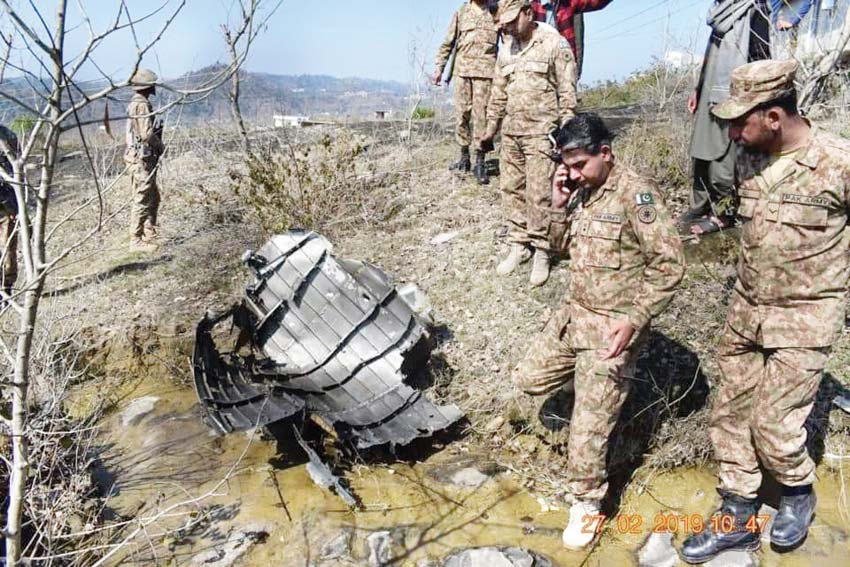
In the aftermath of the strikes, Indian satellite imagery and SIGINT (Signals Intelligence) confirmed the complete collapse of a key Pakistani army post in PoK manned by the 30th Mujahid Battalion, known for providing logistical support to infiltrating terrorists. Located near Kotli, this post had served as a transshipment and medical aid centre for terrorists injured during training. When Indian loitering munitions — believed to be domestically modified Kamikaze drones — hit the site, they triggered secondary explosions from stored ammunition, resulting in a chain blast that flattened the entire post. Over 25 Pakistan Army personnel were reportedly killed, and several were airlifted to hospitals in Rawalpindi, according to intercepted radio chatter. The Indian Army’s silence on this particular strike only adds to its tactical brilliance. Analysts later confirmed this strike had a paralyzing effect on infiltration attempts for several days following the operation.
Failure of Pakistan’s Electronic Counter Measures (ECMs)
Another strategic highlight was the complete failure of Pakistan’s Chinese-supplied ECM (Electronic Counter Measure) systems during the Indian drone onslaught. Pakistan had deployed ECM trucks equipped with radar jammers near key military installations around Lahore and Bahawalpur, expecting to intercept India’s incoming drones and missiles. However, Indian drones — operating on autonomous GPS-denied mode with AI-based rerouting algorithms — successfully bypassed the jamming fields. This failure not only rendered Pakistan’s defensive preparations useless but also exposed the lack of integration between its radar, ECMs, and missile defense units. Indian defense sources described the entire Pakistani defense system as “working in silos,” with no real-time coordination. This validated India’s decision to develop integrated air command systems like Akashteer, which proved vastly superior in both offense and defense.
Operation Sindoor: A Loud Wake-Up Call on the Power of Made-in-India Defence Tech
When the Indian Armed Forces launched Operation Sindoor, the world watched in awe. What appeared on the surface to be a precise and swift counter-terror operation was, in reality, much more — a bold and unambiguous message: India’s defence no longer depends on foreign firepower. It is now self-reliant, silent, and smart — powered by indigenous technology.
This was not just a military success. It was a techno-strategic showcase of India’s new defence doctrine — one shaped by Atmanirbharta (self-reliance), innovation, and digital warfare supremacy. From AI-powered precision drones to homegrown radar-jamming systems and satellite-integrated strike planning, Operation Sindoor was a watershed moment that rewrote the rules of engagement.
The Precision Paradigm: Drones Built in Bharat
In the past, India’s surveillance and strike capabilities leaned heavily on imports. But Operation Sindoor turned that assumption on its head. The real heroes were swarm drones developed under DRDO’s Combat Air Teaming System (CATS) and private startups fostered under the iDEX (Innovations for Defence Excellence) scheme.
These drones weren’t just for reconnaissance — they were mission enablers. Equipped with AI for autonomous navigation, real-time data relays, and facial recognition targeting, they penetrated hostile terrain, tracked high-value targets, and guided missile units with pin-point accuracy. They functioned as silent eyes in the sky — proof that India has leapfrogged into the era of autonomous warfare.
Stealth and Strike: Missiles that Whisper Before They Roar
Operation Sindoor featured the deployment of indigenous stealth cruise missiles with deep-strike capabilities. One of the key highlights was the use of the Nirbhay subsonic cruise missile, a product of Indian ingenuity, enhanced with stealth technology to evade enemy radar.
Paired with BrahMos, the world’s fastest supersonic cruise missile developed jointly by India and Russia but increasingly "Indianised" in components and assembly, the operation saw precision strikes on terror infrastructure located beyond Line of Control-style zones, with minimal collateral damage and surgical efficiency.
In military circles, this type of execution is called "shock and silence" — the enemy never saw it coming until it was too late. That’s the advantage of stealth, guided by data, and built in India.
Made in ISRO: Eyes in the Sky
Much of the success of Operation Sindoor hinged on real-time satellite support, enabled by India's own network of surveillance and communication satellites — particularly Cartosat, RISAT, and GSAT series. These indigenous satellites provided live imagery, terrain mapping, and encrypted communication channels between units.
This was not merely about having eyes in the sky — it was about data fusion, where satellite intel fed directly into command centers, which then transmitted actionable intelligence to drone operators and field units on the move. No foreign satellite dependency, no blind spots.
The Indian Armed Forces didn’t just fight with boots on the ground — they fought with bytes in the cloud.
Cyber Warriors and Radar Ghosts
In a move that shocked even seasoned analysts, Operation Sindoor featured the first known combat use of India's indigenous radar-jamming and cyber-disruption systems. Developed by DRDO and Bharat Electronics Limited (BEL), these systems jammed enemy radar frequencies, blinded communications, and left hostile drones dead in the air.
For the duration of the operation, India created a temporary electronic blackout zone — neutralizing potential reinforcements, ensuring opaqueness, and maintaining complete tactical surprise. This is next-generation warfare: electronic dominance, not just firepower.
It signaled the rise of Bharatiya EW (Electronic Warfare), where battles are no longer fought just with bullets, but with bandwidth.
Digital Command, Local Execution
Gone are the days when every major operation required foreign GPS, imported rifles, or leased surveillance platforms. Operation Sindoor ran on a fully Indian-built Command and Control Infrastructure, integrated via NCW (Network Centric Warfare) principles.
At its heart was the Integrated Battle Management System (IBMS) — linking ground forces, air units, and command centers in real-time through secure Indian networks. Using software designed under ‘Make in India’ for Defence, Indian commanders could make fast, data-driven decisions, reroute units, or abort missions based on fluid battlefield intelligence.
It wasn’t just Made in India hardware that triumphed. It was also Indian code, Indian chips, and Indian coordination.
A Message Beyond Borders
Every military operation has a message. Operation Sindoor’s message was strategic, diplomatic, and technological: India is no longer the arms-importing, reactionary power of yesteryears. It is now a producer, innovator, and proactive force.
Countries that underestimated India’s homegrown capabilities — from China to Pakistan — will now be recalibrating their threat assessments. The success of Sindoor has raised alarms not just on borders, but in global arms lobbies which once counted India as their biggest market.
In just a decade, India has moved from being the world’s second-largest arms importer to becoming an arms-exporting, self-reliant power. According to SIPRI, India’s arms exports grew by over 300% in the last five years. With indigenous defence manufacturing contributing more than ₹1.2 lakh crore in FY2024, the shift is irreversible.
The Road Ahead: From Atmanirbhar to Atmavishwas
What Operation Sindoor truly proves is that self-reliance breeds confidence — and confidence breeds deterrence. In military terms, this is strategic deterrence achieved not through nukes, but through tech-enabled dominance.
It validates PM Modi’s long-standing vision of ‘Aatmanirbhar Bharat’ in defence. His government’s push for indigenous procurement, export promotion, tech incubators, and private-sector participation has now borne visible fruits.
And this isn’t just about military bravado — it’s about economic strength, geopolitical leverage, and national pride. The technologies used in Sindoor — drones, satellites, chips, AI — are dual-use. Their civilian applications in disaster response, agriculture, urban planning, and cybersecurity are equally transformative.
Conclusion: You Don’t Mess With Made-in-India
The global defence ecosystem must now reckon with a new reality: India is no longer merely catching up — it is setting benchmarks.
Operation Sindoor wasn’t just a mission to eliminate a threat. It was a demonstration of dominance, driven by innovation. A loud and clear warning wrapped in silence and precision. It told adversaries and allies alike — if you cross the line, you’ll face not just Indian soldiers, but an integrated machine of Made-in-India intelligence, power, and precision.
This is India’s new deterrent: indigenous, invisible, invincible.
And to all those still stuck in the era of Cold War geopolitics and arms imports, here’s the memo you missed: You don’t mess with Made-in-India. Not anymore.
By NILABH KRISHNA
(The content of this article reflects the views of writers and contributors, not necessarily those of the publisher and editor. All disputes are subject to the exclusive jurisdiction of competent courts and forums in Delhi/New Delhi only)

















Leave Your Comment