


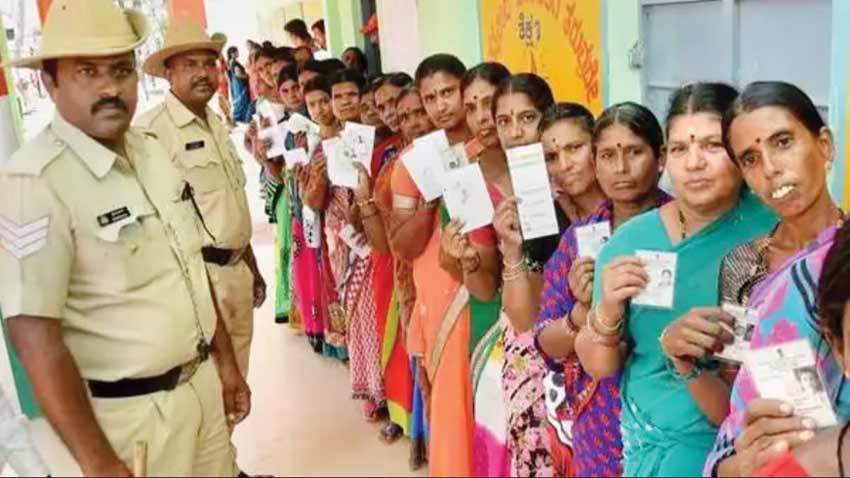
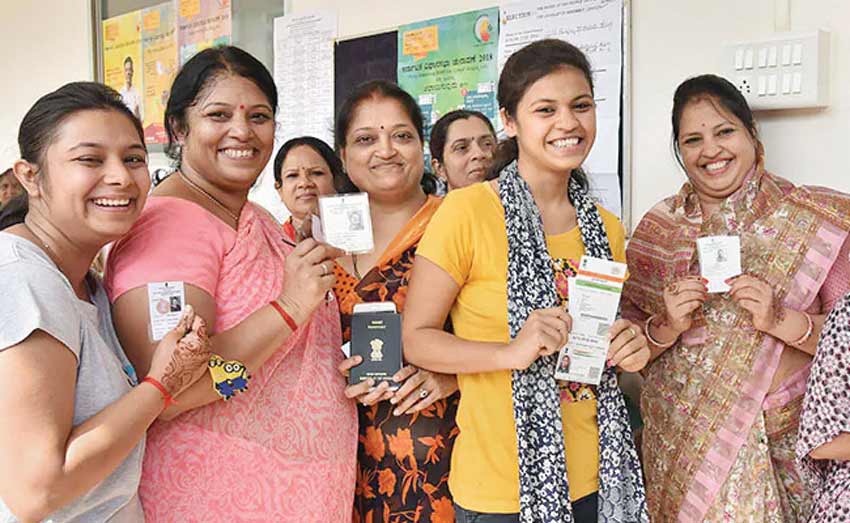
Democracy, with power vested in the people, stands as the best form of government. India’s bicameral system includes Lok Sabha (Lower House) and Rajya Sabha (Upper House) with elections for the 543 members Lok Sabha held every five years, if not dissolved earlier. The first Lok Sabha elections were held in 1952 and we are in the process of going for the 18th in 2024. India is the world’s largest democracy having about 97 crores eligible voters to exercise their right to franchise in the ongoing elections. This enormous task of conducting free and fair elections is carried out by the Election Commission of India (ECI or EC), a constitutional body also responsible for resolving election related disputes.
India is a multiparty democracy and the contesting parties present their priorities, policies, and programmes to the people of the country, before elections in a written document, known as a manifesto. If the party is voted into power, the promises made to the people are expected to be implemented.
Unemployment, poverty, and inflation have been the core issues in the country since independence. Here is a brief analysis of the promises made by the Congress which had been in power for over 50 years, and the BJP formed in 1980 and in power for the last ten years. Garibi Hatao (remove poverty) was the theme and the slogan of Indira Gandhi in the 1971 election campaign and a part of the fifth five-year plan. In her speech on 15th August 1975 from the Red Fort, she said that there is only one magic which can remove poverty and that is hard work, sustained by a clear vision, iron will and the strictest discipline. Subsequent governments made promises with varying degree of success in implementing them. Initiatives like liberalisation of economy (a game changer), Antyodaya Ann Yojana (AAY), Sarva Shiksha Abhiyan (SSA), Right to Education (RTE), and MGNREGEA have been introduced over the years.
After ten years of the UPA rule, NDA came to power with Modi as the Prime Minister in 2014 and returned with better majority in 2019. In this ten years tenure, the Modi government has taken watershed decisions including the implementing of GST, abrogation of Article 370, removal of triple talaq, and the construction of the Ram Temple in Ayodhya by the trust as per the Supreme Court Order with the donations received from the public. The country has seen a phenomenal growth in infrastructure in all the sectors. India’s achievements in the last ten years have changed the world perception. Its economy, a decade ago was 11th and now ranked as the 5th largest in the world. The investments are robust and we will be the 3rd largest economy soon. The welfare schemes of the government including the construction of toilets, PM Anna Yojana, Ujwala Yojana, Awas Yojana, Kisan Yojana etc. are in place to support the poor. Bank accounts have been opened and financial help is provided through direct bank transfer (DBT) with no leakage and without considering any caste or religion.
For the coming Lok Sabha elections, both Congress and BJP have released their respective manifestoes outlining their visions and promises for the future of India. While the Congress presented its manifesto titled ‘Nyaya Patra’ and the BJP unveiled its manifesto named ‘Sankalpa Patra’. The Nyaya Patra is inspired by Rahul Gandhi’s Bharat Jodo Nyaya Yatra, focussing on five pillars of justice, including youth, women, workers, farmers, and equity. Whereas the Sankalp Patra is titled ‘Modi Ki Guarantee’ emphasising party’s commitment to nation’s development through youth, women, farmers and the underprivileged. The comparison of two major national parties’ manifestoes for ongoing elections reveals the similarities in their approval on major national issues and some stark differences on others. On issues like defence, national security, foreign policy, health care, terrorism, infrastructure, social security, education, and reforms concerning the economy, judiciary and agriculture, there are more similarities than differences between the Congress and the BJP, at least on the paper. The major differences lie in their approach to religious and cultural rights, reservation, and federalism.
The Congress mentions Jammu and Kashmir, NCT of Delhi, Manipur, and institution of governor in their manifesto and has promised a departure from the BJP’s stand. Interestingly, Congress has also promised the distribution of legislative fields in the 7th schedule of the Constitution and build consensus on transferring some fields from the concurrent list to the state list. The Congress mentions nationwide socio-economic caste census and raise 50% cap on reservation. BJP has not touched this issue. The Congress promises minorities to have freedom of choice of dress, food, language, and personal laws. The BJP on the other hand promises Uniform Civil Code at national level. Congress is opposed to the BJP’s commitment of ‘one nation, one election’.
The BJP ought to have clarified its stand on issues like restoration of complete statehood to Jammu and Kashmir and restoration of peace in Manipur. And the Congress should have mentioned controversial legislations like CAA, minority rights, draconian provisions in PMLA, legal process of appointment of Election Commissioners. It could have mentioned its stand clear on its commitment on the places of worship act.
Both the parties have tried to attract the voters by focussing on youth, women, farmers, and senior citizens. The intention of the government should be development with inclusive growth. We must not attempt to divide the society on the lines of caste and religion. The caste politics of the Congress is a sharp deviation from the path of development. The welfare schemes of the government should be made and implemented for the poor without considering any caste or religion.
As the elections proceed, voters are urged to make a wise decision, the focus should remain on development and inclusive growth, avoiding divisive politics based on caste and religion. So, please come out in large numbers and vote.

By Manoj Dubey
Principal (Retd.)
Delhi Public Schools
(The content of this article reflects the views of writers and contributors, not necessarily those of the publisher and editor. All disputes are subject to the exclusive jurisdiction of competent courts and forums in Delhi/New Delhi only)














Leave Your Comment