


India presents a troubling paradox today. We speak confidently of becoming a global power, celebrate record economic growth and take pride in digital infrastructure that astonishes the world. Yet, in the everyday life of the ordinary citizen, there is a persistent and almost brutal neglect of public interest. The poor concern for people’s time, health, dignity and mental peace has become so normalized that outrage itself seems fatigued.
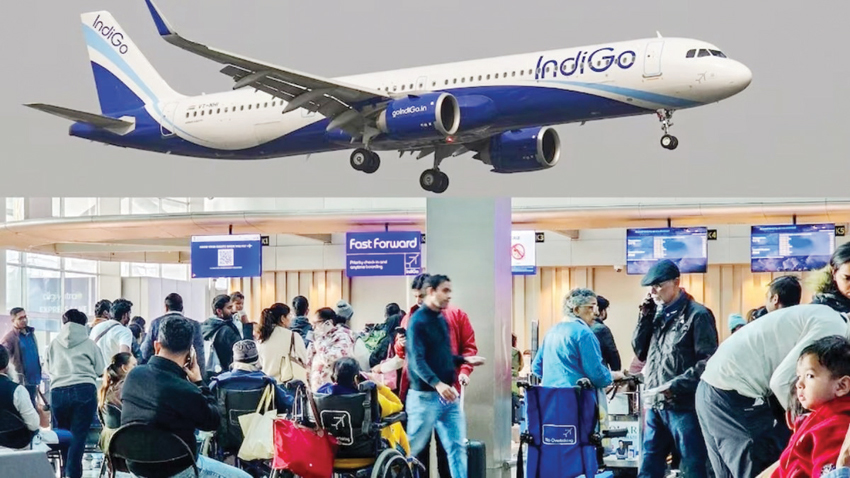
Take the recent chaos involving IndiGo airlines. Flights were cancelled, delayed, rescheduled and then cancelled again. Passengers were stranded for hours, sometimes days, with little clarity, poor communication and minimal accountability. What stood out was not merely an operational failure that happens everywhere, but the casualness with which passenger inconvenience was treated. In many countries, such chaos would trigger immediate regulatory scrutiny, public apologies backed by compensation and visible corrective action. In India, the dominant sentiment was resignation: “Yahi hota hai”- this is how it is.
This resignation is deeply dangerous. It signals that inconvenience, stress and even humiliation of citizens are acceptable collateral in the march of growth.
Now consider the air we breathe. An Air Quality Index crossing 400 in Delhi NCR is not just “very poor”; it is a public health emergency. No other country that claims to value human life would tolerate such conditions year after year without drastic measures. Schools would shut, traffic would be restricted ruthlessly, construction would stop without exceptions and political leadership would be forced to act decisively or step aside. In India, we distribute masks, issue advisories, argue over stubble burning versus firecrackers and then carry on as if lungs are renewable resources. The implicit message is chilling: citizens will adjust, children will adapt and the vulnerable will quietly suffer.
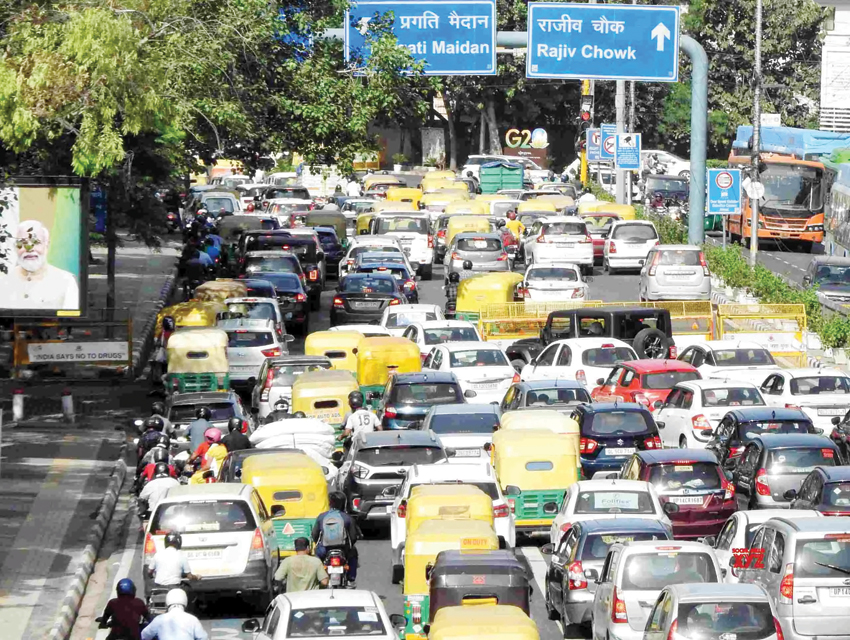
Road congestion in cities like Delhi and Bengaluru tells the same story. Hours are lost daily in traffic jams that drain energy, productivity and mental health. The economic cost runs into billions, but the human cost is even higher. Parents reaching home too tired to engage with their children, professionals burning out before they turn triggers of success and tempers fraying into daily aggression. Yet, traffic planning remains reactive, public transport under-prioritized and pedestrian dignity an afterthought. We have accepted that wasting human time is normal.
What ties these examples together is not incompetence alone. It is a deeper failure of intent. Systems appear designed for optics rather than outcomes, for announcements rather than experience. The public is rarely treated as a stakeholder whose inconvenience must be minimized; instead, people are expected to be endlessly resilient, adjusting and patient.
One might argue that India is large, complex and resource-constrained. That is true. But scale cannot be an excuse for apathy. In fact, scale demands greater sensitivity to public systems, not less. Countries far poorer, with weaker institutions, have shown sharper concern for basic public well-being because they understand a simple truth: when the daily life of citizens becomes intolerable, social trust erodes and no economic statistics can compensate for that loss.
There is also a moral dimension to this neglect. When a society repeatedly signals that public discomfort does not matter, it trains citizens to care less for one another. Queue-jumping becomes normal, rules are bent casually and empathy shrinks. Poor concern for the public is not just an administrative failure; it is a cultural corrosion.
Leadership plays a critical role here. Political and corporate leaders often experience a version of India that is insulated: fast lanes, priority boarding, filtered air, gated communities and so on. Without deliberate effort, it is easy for decision-makers to lose touch with the lived reality of the majority. But leadership, by definition, demands stepping out of insulation. It demands designing systems as if one’s own child were breathing that air, one’s own parents were stuck in that traffic and one’s own family were stranded at that airport.
India does not lack intelligence, resources or solutions. What it lacks is urgency rooted in empathy. Until people's problems don't hurt politicians, until regulatory failure leads to visible consequences and until citizens collectively refuse to normalize suffering, this pattern will persist.
The real question, then, is not whether India can do better. We clearly can, but whether we still believe that the comfort, health and time of ordinary Indians are worth protecting or whether we have quietly accepted that progress must always be built on public exhaustion.
By MANAS SATPATHY
(The content of this article reflects the views of writer and contributor, not necessarily those of the publisher and editor. All disputes are subject to the exclusive jurisdiction of competent courts and forums in Delhi/New Delhi only)














Leave Your Comment