


Right before the general election for the 18th Lok Sabha the NITI Aayog has published the position paper on the issue of elderly in a village or a city. Political class is not unaware of one of the most potential voting classes, often ailing but still seriously thinking how to improve the democracy in India. However this issue related to geriatrics was not noticed like the other paper on Hindu Muslim binary that Pr. Shamika Ravi and certain other members wrote in order to define population trend of the 65 years after the partition and independence of the India.
Five years ago the NHRC expert panel had advised to introduce Switzerland’s model of the senior care Time Bank in addition to increasing the old age pension from rupees 200 to 2000 and to establish new old age homes for the care of ever rising number of elderly people across the states. The Union of India can further promote cooperative schemes combining the silver economy with the noble systems of senior care and to address the riddles of geriatrics.
My friend Dr. Onkar Mittal wrote a book, Care of the Aged, and last month we have initiated dialogue series on it. Dr. Prem Aggarwal, Pro. Gopa Joshi, Pro. Tarakeswari Negi and Mudit Mishra have been providing meaningful inputs that need attention from many other corners. Affordable to charitable senior care homes to irreparable and unorganised time banks are parts of this series of sessions in addition to the troubles of the old people and their caregivers.
They recollected the mother’s love and waiting to inspire the young generations. A mother’s destiny is to wait, during the pregnancy she waits to give birth to a child, and when her child goes to school she waits for him or her to return home, ready with delicious food. They reminded a duty to ensure that she should not wait for help, affection and companionship after growing old and helpless since there is only one mother who loves selflessly. The irony of the day is that most of us expect from new generation that they will take care in old age, but we want to run away from the family responsibility.
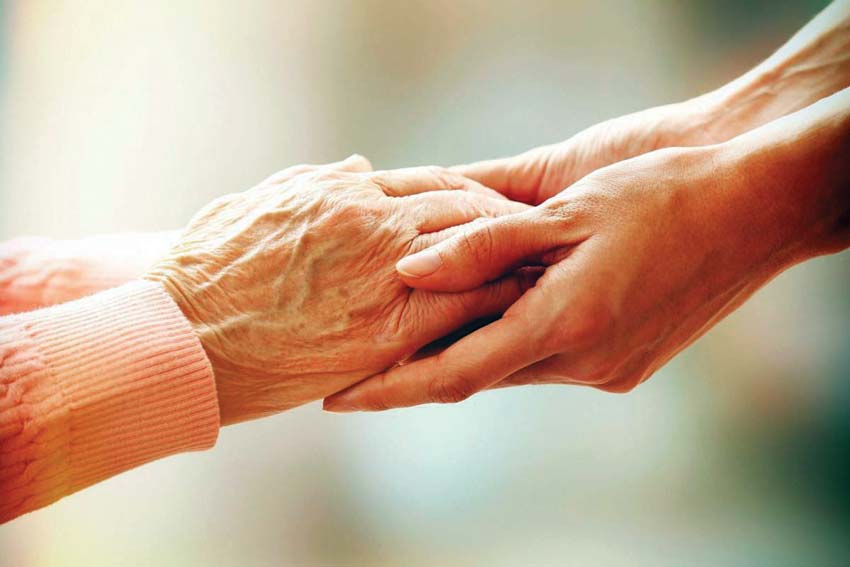
The influence of colonialism and western civilization is discussed in this process before moving to the senior care business options scattered across the states. The state started funding of certain non government organisations to ensure the dignified life of elderly people, such a charitable senior care centre also get private funds with a view to ensure a dignified life of the elderly people.
NITI Aayog in its position paper i.e. Senior Care Reforms in India estimates, in the next 25 years, one fourth of India’s population is going to be the elderly people in ripe old age. It means the total population of senior citizens will be equal to the population of the United States. Advancements and discoveries in the field of medical science, especially geriatrics, in the recent times have increased average span of human life. But the quality of life continues to decline in old age. The elderly people feel physically unable to carry out the daily life and need actual help. In addition to the promotion of the silver economy, the NITI Aayog’s paper focused on the use of modern technology.
The ancient Indian civilizations and the Vedic texts mentioned the human life divided into four different ashrams and the two of them described how to deal with the old age. After living a family life, the individuals are advised to join the Vanaprastha Ashram after leaving the responsibilities, and to start austerity in the forest for a considerable length of time in order to prepare for Sanyasa Ashram with the aim of attaining salvation.
Aryans’ civilization were based on four different castes and four separate Ashrams, as defined in the Vedas. Life of an individual in the ancient Indian society used to move around these two. But the path of sacrifice is not always so easy. As such a few people would have been interested in it. The leftover of ancient tradition is still alive in India and it needs the state aid since the modernity has closed most of the doors available to them since ages. The political parties shared about the schemes to help different class of voters in their manifesto, but this class is nowhere in any of their schemes. Although the census data of such a mendicant class is not available but it’s estimated somewhere around 8 to 10 millions in the 21st century.
Senior and old aged people often suffer from various diseases, due to that weakness and changes in behaviour are reported in most of the cases. Providing emotional care and support in addition to the treatment of diseases are a must requirements. The physical weakness can lead any person towards mental weakness that often creates disappointments, irritations, dementia, etc. Due to that sometimes the caregivers get into trouble. The story of Anu, the caregiver needs attention.
She used to serve an 80 years old lady in a prosperous family of the city. One of her two sons lives in Canada and the other looking after the family business in Delhi. The resourceful son had a strong desire to serve the mother, but the time constraints compelled them to appoint Anu to take care of old and ailing mother suffering from dementia. As such often she would get angry and started to abuse and hit the caregiver with a stick. But still she used to serve her with utmost care, love and dignity. Sometimes the ailing mother made complaint that Anu beat her. But there were cameras installed in the house helping the son and daughter-in-law to know the truth. Absence of the devices could have created quite difficult situation for her.
Today such caregiving is one of the most unorganised service sectors in India. In case they are not organized soon in the future, the troubles of both—the elderly and the caregiver—can increase further. The civil society and the government need to help working class caregivers with training and resources in order to repay the contribution of senior citizens.
Pr. Joshi described the questions of this new age of hypertension. She has raised one of the burning issues, how can someone assure others when he or she is under stress? Affordable senior care home was an idea that Dr. Prem Aggarwal seems to promote. The consensus among the experts is on the fact that there are very few people in the Indian society, who have sufficient time, resources and a strong desire to serve their elderly parents. The possibility of the family member taking up the responsibility of the elderly clans is quite bleak in future.
The time bank system persuaded the younger generation in certain European countries like the UK and Switzerland to help the old people. Investment of time with a guarantee to get it back when he or she need. It can be fascinating to import and improve it. Asian countries like Singapore is trying hard to introduce the senior care time bank. The government of Rajasthan introduced reforms in the law related to care of elderly people. However the National Human Rights Commission has advised the government of India to initiate such a noble project, nothing has happened in the last five years. It reflected that the governments and civil societies are the two serious parties fully dedicated to this issue.
Undoubtedly the technology has rendered solutions to a number of problems, and its utility in the senior care systems across the globe is unchallenged. But still the repercussions of the modern technology and its limitations are least discussed subjects since its proponents have been trying hard to conceal negative effects of their products. Here we need to consider about its limitations and its impacts on surroundings.
By Kaushal Kishore
(The content of this article reflects the views of writers and contributors, not necessarily those of the publisher and editor. All disputes are subject to the exclusive jurisdiction of competent courts and forums in Delhi/New Delhi only)














Leave Your Comment