


October 7, 2001, stands as a pivotal day in Indian politics, marking the beginning of Shri Narendra Modi's political ascendancy. On this day, Modi, a dedicated volunteer of the Rashtriya Swayamsevak Sangh (RSS) and a key organizer in the Bharatiya Janata Party (BJP), took charge as the 14th Chief Minister of Gujarat. At 51, with little prior involvement in electoral politics, Modi faced an uphill battle but emerged as a leader whose influence would eventually reshape the political landscape of India.
Modi's Rise to Chief Minister
Before his appointment as Chief Minister, Modi was primarily known for his work behind the scenes, playing a crucial role in the BJP’s organization. His nomination for Gujarat's leadership came at a time when the state was grappling with significant challenges. Gujarat had suffered a massive earthquake earlier that year in Kutch, leaving the region in ruins, and the state was also facing declining conditions in sectors like education, health, and agriculture.
Stepping into the Chief Minister's office in Gandhinagar, Modi encountered a political and social environment that presented immense obstacles. Yet, with his characteristic determination, he confronted these challenges head-on. His resilience mirrored the process of refining gold, becoming stronger through the "Agnipath"—the fiery path of political trials.
Modi's Governance Strategy: A New Vision for Gujarat
From the moment Modi took office, his governance style stood out. During his first meeting with administrative officials, he chose to remain silent, encouraging them to express their ideas. This approach of recognizing others’ potential was seen as unusual, but it laid the groundwork for his unique leadership style.

Modi prioritized good governance, aiming to restore Gujarat's reputation as an industrial powerhouse. His initiatives were groundbreaking for the time, particularly the launch of Swagat, an online platform designed to address public grievances. By leveraging technology to solve citizens' issues, Modi set a precedent for governance in India.
His leadership extended beyond the confines of government offices. He urged officials to leave their air-conditioned rooms and engage with the public directly. This hands-on approach laid the foundation for several of Modi’s flagship programs, including Shala Praveshotsav, Kanya Kelavani Rath Yatra, Gunotsav, Krishi Mahotsav, Pashu Arogya Mela, Khel Mahakumbh, and the globally recognized Vibrant Gujarat Global Summit. These programs not only addressed critical issues like education and agriculture but also showcased Gujarat as a model of development.
From Gujarat to the Prime Minister’s Office
October 7, 2001, not only marked Modi’s entry into electoral politics but also set the stage for his rise to national prominence. The strategies and reforms he implemented in Gujarat laid the foundation for his larger political journey. Today, Modi serves as the Prime Minister of India, continuing to shape the country’s trajectory on the global stage. His governance, which began in the corridors of Gandhinagar, has now elevated India's stature worldwide.
As we look back at 23 years since Modi first took the oath as Gujarat's Chief Minister, it becomes clear that his journey—from leading Gujarat through some of its most challenging times to guiding India’s rise as a global power—has left an indelible mark on the political history of India.
Reviving Gujarat's Water Resources and Tourism

A critical issue Modi confronted was Gujarat’s long-standing water scarcity, despite the presence of the Narmada River. One of his key achievements was advancing the construction of the Sardar Sarovar Dam. Faced with numerous challenges and opposition, Modi's persistence ensured the project’s completion. Today, the dam’s waters have reached the drought-prone regions of Saurashtra, Kutch, and North Gujarat, significantly benefiting the state’s farmers.
Modi also recognized the potential of tourism as an engine of growth. His Khushboo Gujarat Ki campaign put Gujarat’s cultural and historical landmarks on the map, drawing tourists from across India and the world. This initiative, coupled with systematic efforts to promote the state's natural beauty and heritage, further boosted Gujarat's economy.
Gujarat’s Transformation under Modi
Modi's tenure as Chief Minister spanned 13 years, during which he was sworn in four consecutive times, making him the longest-serving Chief Minister in Gujarat's history. His leadership brought unprecedented development to the state, proving how stable governance and strong political will can transform a region. From infrastructure to industry, Gujarat flourished under Modi’s leadership, setting a national example for development.
Presented below is a glimpse of the initiatives and programs he launched in various sectors during his tenure as Chief Minister of Gujarat and later implemented by central government :
Sanitation: Nirmal Gujarat 1 to Swachh Bharat Mission
Gujarat

Modi’s drive to improve sanitation also began in Gujarat, with the Nirmal Gujarat initiative
India
This approach laid the foundation for the nationwide Swachh Bharat Mission, launched in 2014.
Sabarmati Cleaning to Namami Gange
Gujarat
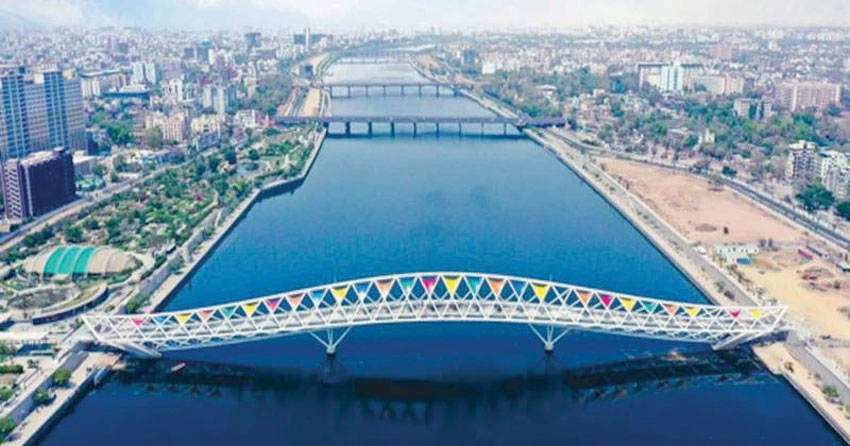
Sabarmati river in Ahmedabad was an integral part of the City . When Narendra Modi became the Chief Minister, he ensured that river was revived and a river front was made in the city of Ahmedabad.
India

This model was replicated in the form of Namami Gange, an ambitious project for the cleaning and conservation of the Ganga River, focusing on ecological rejuvenation and sustainable practices.
Jal Mandir and Amrit Sarovar Initiatives
Gujarat

Jal Mandir initiative, in Gujarat led to restoration of approximately 1,200 traditional water bodies
India
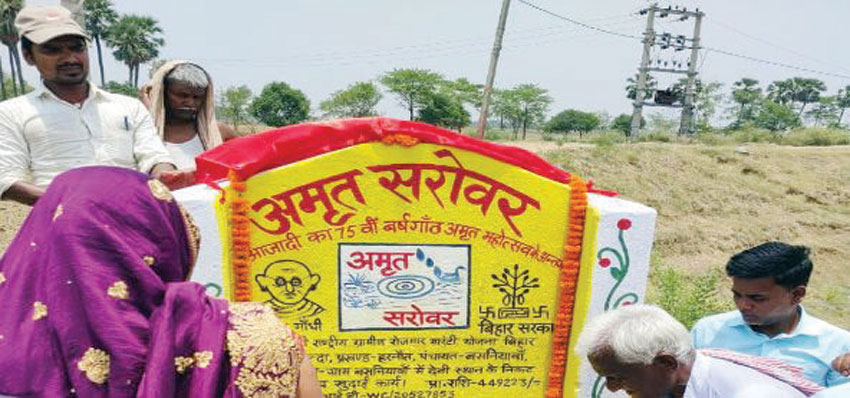
Mission Amrit Sarovar was launched on 24th April, 2022, with mission period till 15th August, 2023.
Infrastructure
Gujarat

BISAG played a key role in Gujarat’s infrastructure development using geospatial technology and remote sensing for planning, resource management, and disaster preparedness.
India

This approach was expanded under the Gati Shakti National Master Plan, integrating 16 ministries using GIS technology for national infrastructure development. Gati Shakti mirrors BISAG’s success.
Jyotigram Yojana to Deen Dayal Upadhyaya Gram Jyoti Yojana
Gujarat

The Jyotigram Yojana was a revolutionary rural
electrification scheme that ensured 24x7 power supply to villages in Gujarat.
India

The success of this scheme led to the launch of the Deen Dayal Upadhyaya Gram Jyoti Yojana in 2015.
Vibrant Gujarat 6 Summit to Make in India
Gujarat
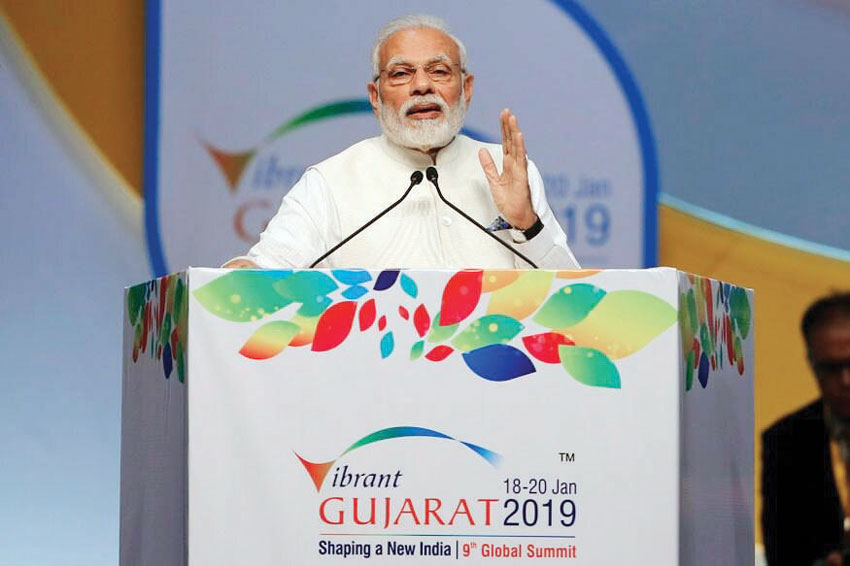
The Vibrant Gujarat Summit was a biennial investor summit launched to attract global investment to Gujarat.
India

Taking a cue from its success, Modi launched the Make in India initiative at the national level to promote India as a global manufacturing hub, inviting both domestic and foreign investments.
Uday India Bureau














Leave Your Comment