


After the assembly elections in five states, the BJP high command has shifted its focus to Uttar Pradesh. On one hand, the final phase of voting in West Bengal was underway on April 29, while on the other, Prime Minister Narendra Modi was, at the same time, setting the agenda for the Uttar Pradesh Assembly elections from his parliamentary constituency, Varanasi. This time, the BJP aims to win Uttar Pradesh through Hindutva, women’s reservation, and development, while also highlighting strong law and order and the establishment of a fear-free society. A glimpse of this was seen in Varanasi when, on April 28, PM Modi visited the Kashi Vishwanath Temple to offer prayers to Baba Vishwanath. A day earlier, he interacted with 50,000 women on the issue of the Nari Shakti Vandan Adhiniyam (Women’s Reservation). By blaming Congress and the Samajwadi Party for the delay in implementing women’s reservation, the BJP signaled its strong reliance on the state’s female population. On the same day, April 28, the Prime Minister also inaugurated a nearly 600-kilometer-long expressway from Prayagraj to Meerut from Hardoi and dedicated it to the public. This indicates that the BJP is trying to appeal to followers of Sanatan Dharma through temples, attract youth and the people of western Uttar Pradesh through expressways, and win over women by emphasizing reservation.
A notable aspect of the Prime Minister’s visit was that while Uttar Pradesh Chief Minister Yogi Adityanath was naturally present alongside him, the presence of BJP’s national president Nitin Naveen with Modi in Varanasi also drew attention. A deeper analysis of these developments clearly shows that the BJP will enter the political battlefield of Uttar Pradesh armed with religious faith, symbols of development, and women’s empowerment. In fact, PM Modi’s visit to the Kashi Vishwanath Temple was not merely a religious trip, but a reflection of the BJP’s core strategy. The party has always considered Kashi its stronghold. Modi’s massive victories from Varanasi in the 2014 and 2019 Lok Sabha elections stand as proof. After the redevelopment of the temple, it has become a center of Hindu nationalism. During the two-day visit, through offering prayers to Baba Vishwanath, the Prime Minister conveyed a message to followers of Sanatan Dharma that the BJP alone will protect their faith. One may recall that the inauguration of the Ram Temple in Ayodhya was also part of this strategy, which significantly benefited the party in the 2024 Lok Sabha elections.
In Uttar Pradesh, where the number of Hindu voters is substantial, the temple issue has always been influential. Opposition parties like the Samajwadi Party and Congress attempt to dismiss it as communal, but public sentiment cannot be ignored. Through this visit, the BJP once again demonstrated that it is the custodian of Sanatan culture. Especially in eastern Uttar Pradesh, where lakhs of Ram and Shiva devotees reside, this visit has effectively sounded the bugle for the 2027 elections. The presence of Yogi Adityanath further strengthened this message. Yogi, established as a Sanatan saint himself, has consistently centered his politics around religious issues from Gorakhpur to Varanasi. This time, the presence of the BJP president alongside Modi signaled organizational unity, conveying that both the central and state leadership are aligned.
The second major highlight of the Prime Minister’s visit was his interaction with 50,000 women on the Nari Shakti Vandan Adhiniyam. He described the women’s reservation bill passed in Parliament as a historic step toward women’s empowerment. However, he clearly stated that its delay in implementation is due to Congress and the Samajwadi Party. Although the promise of reserving one-third seats for women in Parliament and state assemblies has now become law, it cannot be implemented without caste census and delimitation. Modi accused opposition parties of deliberately stalling it to deny women their rights. This is a tactically sharp move, but Modi has consistently asserted that he will ensure its implementation.
Women constitute nearly half of the voters in Uttar Pradesh. In the 2022 Assembly elections, women significantly supported the BJP, especially in cities like Lucknow, Kanpur, and Saharanpur. Now, in 2027, the party is directly targeting this demographic. The presence of 50,000 women at the Nari Shakti Vandan event is evidence of this strategy. Modi appealed to women to teach the opposition a lesson. This issue gains traction as the Samajwadi Party is often accused of dynastic politics, while Congress is perceived as indifferent to women’s concerns. The BJP has already built trust among women through initiatives like the Ujjwala Yojana, Beti Bachao Beti Padhao, and the abolition of triple talaq. Now, it aims to further consolidate this support through women’s reservation. The Yogi government’s initiatives such as women’s helplines and Sakhi centers also contribute in this direction. In the presence of the BJP president, Modi indicated that the organization would be mobilized through the Mahila Morcha. Overall, this marks the starting point of the BJP’s women-centric strategy.
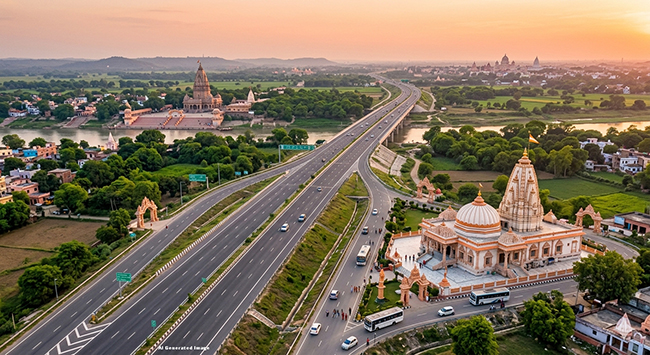
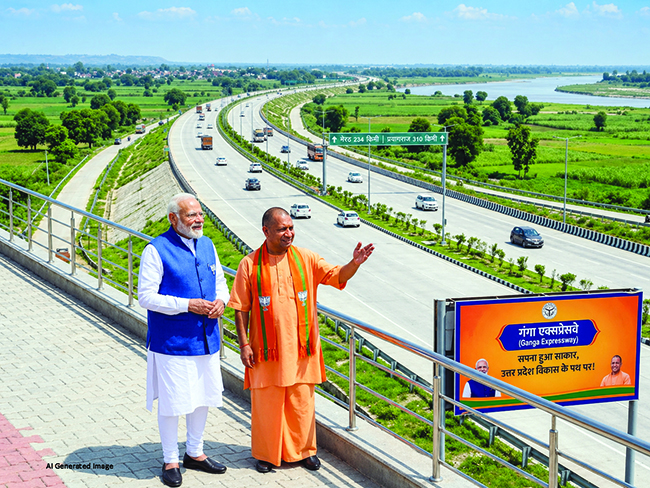
Meanwhile, by inaugurating the expressway from Prayagraj to Meerut, Modi is strongly projecting development as a key electoral issue in Uttar Pradesh. This expressway, approximately 600 kilometers long, passes through Hardoi, Shahjahanpur, Bareilly, Moradabad, and Bijnor before reaching Meerut. While inaugurating it, the Prime Minister said it would bring employment opportunities for youth and better market access for farmers. Western Uttar Pradesh has always been a challenging region for the BJP, where Jat, Muslim, and Dalit voters play a decisive role. Although the party faced setbacks here in the 2022 elections, it made a recovery in the 2024 Lok Sabha polls. The expressway is expected to strengthen connectivity in this region. It will also connect with the Delhi-Meerut Expressway, facilitating faster movement of trucks and cargo. For the youth seeking jobs and business opportunities, this presents a golden opportunity. The BJP understands that tangible symbols of development bring votes. The Eastern Dedicated Freight Corridor, Ganga Expressway, and now this expressway are all steps toward making Uttar Pradesh a development hub. The opposition may call it rhetoric, but the work is visible on the ground. The choice of Hardoi for the inauguration is significant, as it has been considered a stronghold of Akhilesh Yadav. By sending a message from here, the BJP is directly challenging the Samajwadi Party. During the inauguration, Yogi Adityanath stated that under Modi’s leadership, Uttar Pradesh is progressing rapidly. On this occasion, Governor Anandiben Patel, BJP state president Pankaj Chaudhary, Deputy Chief Ministers Keshav Prasad Maurya and Brajesh Pathak, among other leaders, were also present. This expressway will not only attract western Uttar Pradesh but also serve as a model of development for the entire state.
(The content of this article reflects the views of writer and contributor, not necessarily those of the publisher and editor. All disputes are subject to the exclusive jurisdiction of competent courts and forums in Delhi/New Delhi only)




















Leave Your Comment