


Prime Minister Narendra Modi’s handling of trade negotiations with US President Donald Trump has been hailed as a diplomatic masterclass, with the American media acknowledging his deft maneuvering in securing key agreements despite growing trade tensions. At a time when Trump's "America First" policy was disrupting global trade dynamics, India faced significant pressure. Yet, Modi turned these challenges into opportunities, securing trade, energy, and defense deals that reinforced the Indo-US partnership.
From the moment Trump assumed office, he made it clear that he intended to recalibrate America’s trade relationships. India, which had previously enjoyed favorable terms under the Generalized System of Preferences (GSP), was soon hit by Trump’s demand for "reciprocal tariffs." The announcement sent shockwaves through Indian diplomatic circles, as New Delhi faced the risk of losing a crucial trading advantage. However, Modi did not react impulsively; instead, he adopted a strategic approach that turned a potential diplomatic setback into a remarkable win.
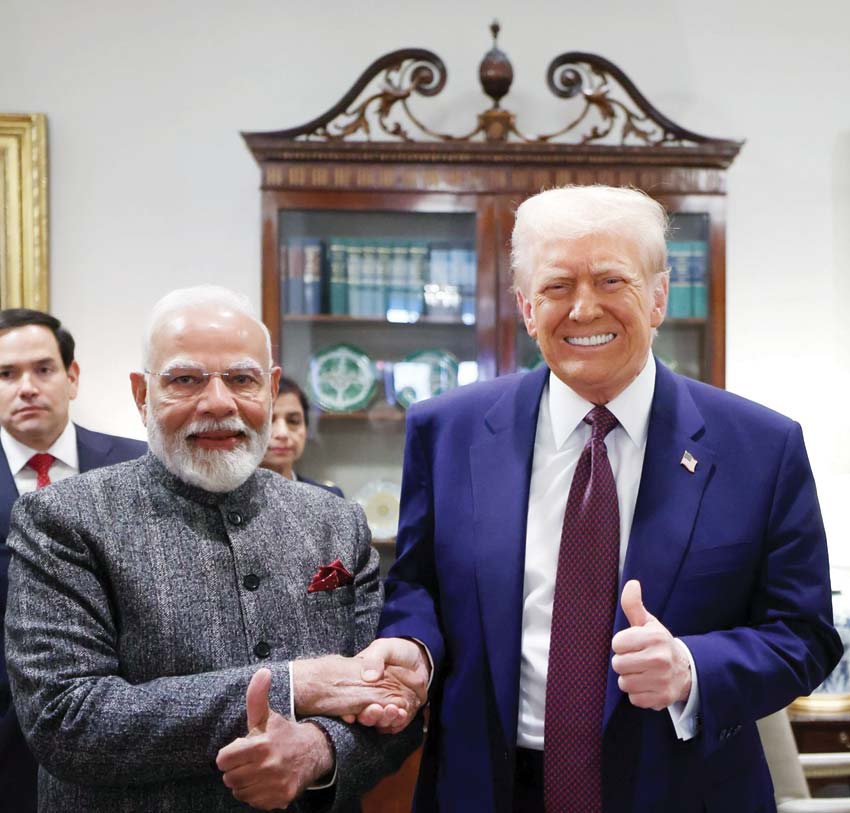
During his visit to Washington, Modi engaged in direct, candid discussions with Trump, steering the conversation away from the adversarial rhetoric of trade disputes and towards mutual cooperation in key areas. By emphasizing India’s role as a valuable strategic partner rather than merely a trading entity, he successfully shifted the narrative. His charm and negotiation skills played a significant role in persuading Trump to look at the broader Indo-US relationship rather than fixating on tariff disparities.
One of Modi’s most significant achievements was securing a robust energy partnership with the United States. Understanding Trump’s emphasis on boosting American energy exports, Modi positioned India as a major buyer of US liquefied natural gas (LNG) and crude oil. This move not only diversified India’s energy sources but also helped balance the trade deficit, addressing one of Trump’s key concerns. By increasing energy imports from the US, Modi skillfully neutralized trade tensions while ensuring India's long-term energy security.
Defense cooperation was another area where Modi played his cards astutely. The Trump administration had been vocal about increasing arms exports, and Modi leveraged this to India’s advantage. The signing of defense agreements, including major purchases of Apache and Chinook helicopters, bolstered India's military capabilities while simultaneously strengthening ties with Washington. This strategic move also countered the perception that Indo-US relations were solely transactional, reinforcing the broader security partnership between the two democracies.
Trade negotiations aside, Modi’s ability to manage diplomatic optics was another highlight of his Washington visit. The Indian Prime Minister ensured that every meeting and handshake projected an image of strength, mutual respect, and strategic alignment. His personal rapport with Trump, evident from warm exchanges and public gestures of camaraderie, played a crucial role in shaping the US President’s perception of India. Unlike other world leaders who found themselves at odds with Trump’s unpredictability, Modi adapted his diplomacy to work with, rather than against, Trump’s approach.
New Delhi’s deft handling of the first few weeks of the disruptive Trump administration stood in stark contrast to the struggles faced by many other nations. European leaders, for example, found themselves frequently clashing with Trump over trade, defense spending, and global agreements. Even traditional US allies like Canada and Mexico faced strained relations due to Trump’s aggressive renegotiation of trade deals. In contrast, Modi’s pragmatic diplomacy allowed India to not only maintain but enhance its strategic standing in Washington.
Moreover, India’s response to Trump's aggressive trade policies demonstrated a larger shift in New Delhi’s foreign policy approach—one that is assertive yet adaptive. By balancing strategic autonomy with economic pragmatism, Modi ensured that India did not get entangled in trade wars while still protecting its national interests. His engagement with key American stakeholders, including industry leaders and lawmakers, reinforced India's position as a reliable trade and defense partner.
Ultimately, Modi’s Washington visit was a testament to his diplomatic acumen. While Trump’s America sought to upend traditional trade relationships, Modi ensured that India remained an indispensable partner rather than a casualty of shifting US policies. His ability to navigate complex negotiations, secure key agreements, and project a strong yet flexible stance proved that India was more than capable of finessing global disruptions. As India continues to assert itself on the world stage, Modi’s handling of US trade negotiations serves as a blueprint for diplomatic resilience in an era of uncertainty.

By Deepak Kumar Rath














Leave Your Comment