


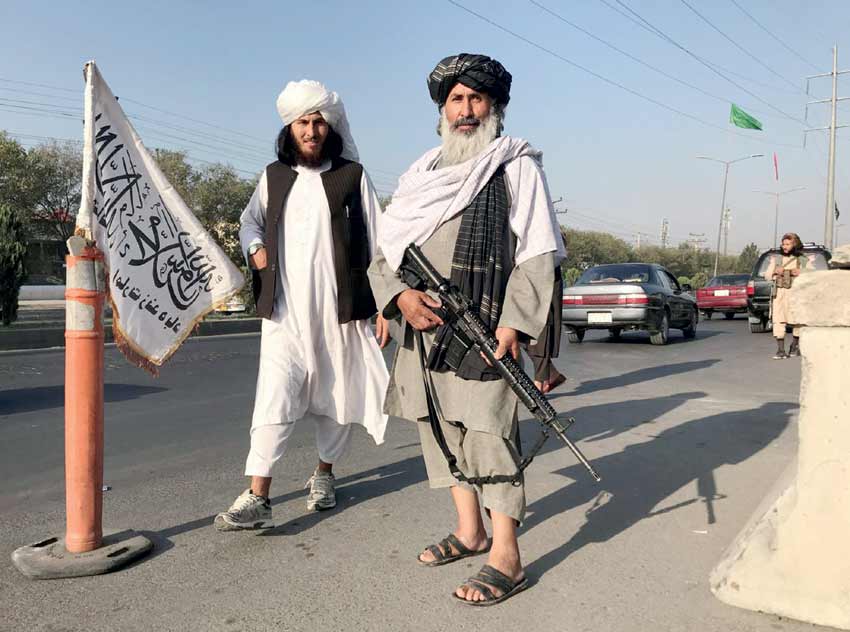
Recently, I read news in the morning, which in the given circumstances is a surprise for me or anyone who dabbles in international affairs. The news said that Afghanistan’s Taliban authorities are working to restore private land to Hindu and Sikh minorities, reclaiming these properties from warlords linked to the previous West-backed regime. We all have seen the exodus of Sikhs and Hindus from Afghanistan after the Taliban took over it once again. How gurudwaras were being destroyed, holy Guru Granth Sahib being desecrated by the Taliban, and how the Indian government worked proactively to bring the Sikhs and Hindus from war-torn Afghanistan, we have seen all of that. So it was a bit of a surprise for me and I am sure for you too.
Now how this change of attitude in the Taliban government of Afghanistan, is a true testament of how PM Modi’s foreign policy is working overtime in the interests of the Indians in foreign lands.
Prime Minister Narendra Modi's tenure has witnessed a significant transformation in India's foreign policy landscape. Characterized by strategic assertiveness and proactive diplomacy, Modi's approach has aimed at repositioning India as a major player on the global stage. One of the key manifestations of this paradigm shift is evident in India's engagement with Afghanistan, particularly in its response to the evolving dynamics under Taliban rule. Notably, the recent efforts by the Taliban authorities to restore private land to Hindu and Sikh minorities highlight a departure from traditional power politics and a move towards pragmatic engagement. Today we will explore how the Modi government has orchestrated this shift and its implications for India's standing as a favored nation among Western powers.
Upon assuming office in 2014, Prime Minister Modi articulated a foreign policy doctrine centered around three core principles: proactive diplomacy, economic engagement, and strategic assertiveness. This doctrine sought to leverage India's growing economic prowess and strategic significance to foster stronger ties with key global actors while advancing its national interests. Central to this approach was the recognition of India's potential as a leading player in shaping regional and global affairs.

Historically, India has maintained close cultural, economic, and political ties with Afghanistan. However, the emergence of the Taliban in the 1990s posed significant challenges to India's interests in the region. The Taliban's oppressive regime and its support for terrorist groups threatened regional stability and posed a direct threat to India's security.
Under the Modi government, India adopted a multifaceted approach towards Afghanistan. This approach combined development assistance, capacity-building initiatives, and strategic partnerships aimed at promoting stability and countering extremism. India's investments in infrastructure projects, education, and healthcare have contributed to Afghanistan's socio-economic development, earning India goodwill among the Afghan people.
Moreover, India's support for a democratic and inclusive political process in Afghanistan resonated with the aspirations of the Afghan people. India's commitment to Afghan-led, Afghan-owned peace initiatives underscored its respect for Afghanistan's sovereignty and territorial integrity.
The return of the Taliban to power in Afghanistan following the withdrawal of Western forces presented a new set of challenges and opportunities for India. While the Taliban's resurgence raised concerns about the resurgence of extremism and instability in the region, it also opened avenues for recalibrating India's engagement with Afghanistan.
The recent move by the Taliban authorities to restore private land to Hindu and Sikh minorities reflects a pragmatic approach towards governance and minority rights. By reclaiming properties from warlords linked to the previous West-backed regime, the Taliban has signaled a departure from its past policies of religious persecution and intolerance.
India's response to these developments has been marked by cautious optimism. While acknowledging the need for vigilance, India has expressed willingness to engage with the Taliban government on issues of mutual interest, including the protection of minority rights and counter-terrorism
Cooperation.
The Modi government's nuanced approach towards Afghanistan has resonated positively with Western powers, particularly the United States and its allies. India's role as a responsible stakeholder in the region has been acknowledged and appreciated by the international community.
India's willingness to engage with the Taliban government while upholding its commitment to democratic values and human rights has positioned it as a key player in shaping the future of Afghanistan. The Modi government's diplomatic overtures and strategic outreach have contributed to India's growing influence in the region and beyond.
Furthermore, India's emergence as a reliable partner in promoting peace and stability in Afghanistan has strengthened its credentials as a favoured nation among Western powers. The Modi government's proactive diplomacy and pragmatic engagement have earned India respect and admiration on the global stage.
In conclusion, Prime Minister Narendra Modi's foreign policy doctrine has ushered in a paradigm shift in India's approach towards Afghanistan and the wider world. By leveraging its economic and strategic assets, India has sought to play a proactive role in shaping regional dynamics and advancing its national interests. The recent developments in Afghanistan underscore the efficacy of Modi's foreign policy vision, as evidenced by the Taliban's efforts to restore minority rights and India's constructive engagement with the new dispensation. As India consolidates its position as a favoured nation among Western powers, the Modi government's diplomatic acumen and strategic foresight are poised to shape the contours of international relations in the years to come.
Uday India Bureau




















Leave Your Comment