


India’s foreign policy has undergone a remarkable transformation over the past decade. Long viewed as a regional power with limited global ambitions, India today presents itself as a confident advocate of the Global South, a responsible stakeholder in multilateral institutions, and a pragmatic partner in bilateral and regional cooperation. Its foreign policy blends traditional concerns of development and security with new priorities:climate change, renewable energy, critical minerals, digital infrastructure, and maritime security.
At the heart of this transformation lies a deliberate effort to project India as both a bridge and a leader: a bridge between developed and developing nations, and a leader that offers inclusive, demand-driven solutions rather than conditional aid or coercive partnerships. Prime Minister Narendra Modi has articulated this vision through multilateral initiatives, South-South cooperation, and a renewed emphasis on soft power. Together, these elements constitute a distinctive model of global engagement, that is gaining recognition as an alternative to established donor-driven paradigms.
Multilateral Diplomacy and Global Governance
India’s reassertion on the global stage has been most visible in its multilateral diplomacy. Historically, India has been an active participant in international institutions, from the Non-Aligned Movement to the United Nations and later to the Colombo Plan, G15, BRICS and the Act East Policy. However, in recent years, New Delhi has sought not merely to participate but to reshape global governance frameworks in ways that reflect the voices of developing countries.
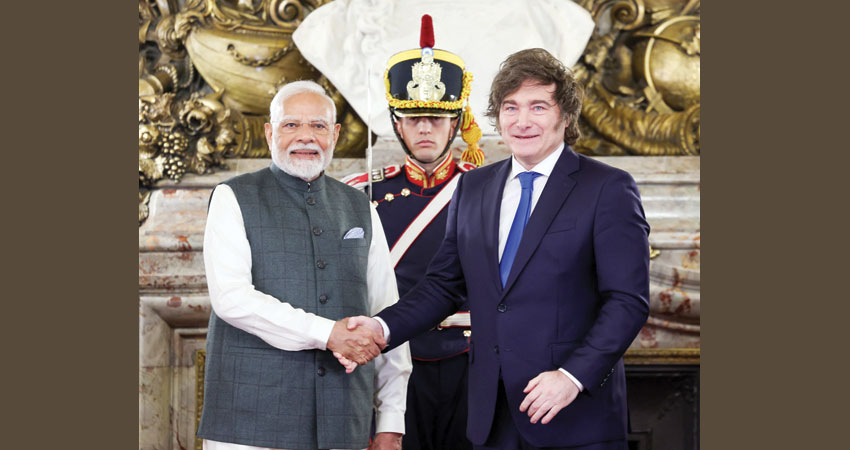
The Voice of the Global South (VOGS) Summits, launched in January 2023, stand as a landmark in this process. Bringing together over 120 developing nations, the summits provided a platform for countries often marginalized in forums dominated by advanced economies. At the inaugural event, Modi announced three initiatives: the “Aarogya Maitri” program to deliver medical aid to crisis-hit countries, the Global South Science and Technology Initiative to promote collaborative research, and a Centre of Excellence to share scalable development solutions. These moves positioned India not as a distant benefactor but as a partner offering practical, affordable tools to address shared challenges.
By the third VOGS Summit in August 2024, India had deepened its commitments with financial mechanisms, including a $2.5 million trade promotion fund, $5 million for trade promotion agreement–related activities, and a $1 million trade capacity fund. In addition, commitments were made to strengthen the supply of generic medicines, train pharmaceutical regulators, and share knowledge on natural farming. The progression from symbolic initiatives to concrete financial instruments underscored India’s seriousness in institutionalizing the forum.
Equally significant was India’s 2023 G20 presidency, which culminated in the admission of the African Union as a permanent member. This step was widely celebrated as a turning point in global governance, recognizing Africa’s collective voice in one of the world’s most influential economic groupings. It highlighted India’s ability to translate rhetoric into structural reform and reinforced its role as a bridge between Africa and global economic powers. This elaborated r=the India Africa Summits by getting Africa a seat at the high table.

India’s engagement with BRICS has followed a similar trajectory. Since the 2014 Fortaleza Summit, where the New Development Bank (NDB) was conceived, India has used the grouping to press for institutional reform, digital public goods, and climate justice. The NDB’s financing of infrastructure and sustainable development projects in member states has demonstrated that alternatives to Western-dominated financial institutions are both possible and necessary. Now the SCO is taking a similar development onus from,its security priority.
Beyond traditional forums, India has innovated by launching initiatives around the global commons. The International Solar Alliance (ISA), co-founded in 2015, aims to mobilize sun-rich countries to accelerate solar adoption. Similarly, the Coalition for Disaster Resilient Infrastructure (CDRI), launched at the 2019 UN Climate Action Summit, focuses on embedding resilience in infrastructure design and finance. Both initiatives exemplify India’s ability to craft coalitions around pressing global challenges while ensuring that the Global South’s needs remain central. Add to this the Biofuels Alliance and the Big Cat Alliance which provides countries of the Global South with sectoral opportunities to be heard.
Taken together, these multilateral initiatives reflect a consistent strategy: India seeks to redefine multilateralism as inclusive, solution-oriented, and South-driven, rather than elite-dominated and donor-led.
Bilateral and Regional Outreach
While multilateral platforms amplify India’s global voice, bilateral and regional partnerships provide the practical foundation of its foreign policy. Over the past decade, New Delhi has invested heavily in cultivating regions that had often been peripheral to its diplomacy, including Asean, the Pacific Islands, Africa, and Latin America.
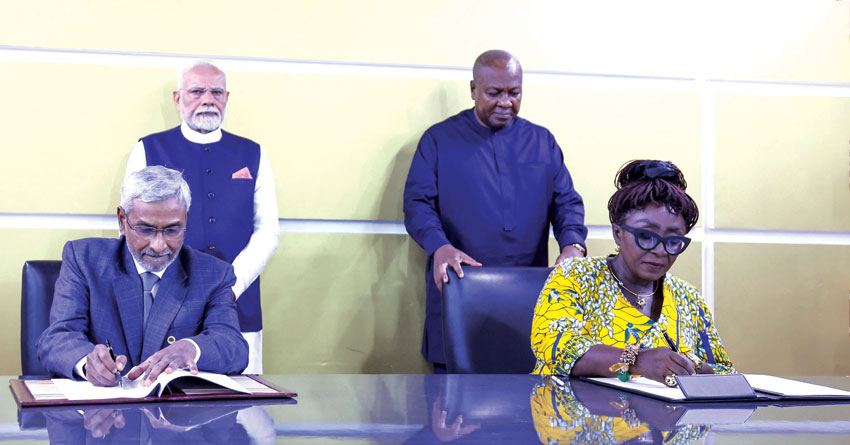
With ASEAN. the 2014 enunciation of the Act East Policygave it a prominence and diversity in Indian engagement that was unprecedented.in 2023 this was enhanced to a Comprehensive Strategic Partnership with augmented development funds.
The Forum for India–Pacific Islands Cooperation (FIPIC), launched in 2014, is a prime example. Engaging 14 Pacific nations, the forum has prioritized clean energy, blue economy development, space applications, digital connectivity, and visa facilitation. In a region facing acute climate threats and great-power competition, India has carved out a niche by offering targeted, sustainable support rather than grandiose but debt-heavy projects.
In Africa, India has made substantial strides. The 2015 India–Africa Forum Summit (IAFS) in New Delhi brought together all 54 African nations and committed $600 million in grant assistance, $10 billion in concessional credit, and 50,000 scholarships. Since then, India has expanded cooperation in critical minerals, energy, maritime security, and digital technologies. Africa’s importance to India’s economic and strategic goals has only grown, particularly as India seeks to diversify supply chains away from China. Modi’s 10 point Africa policy enunciated in 2018 in Uganda showed the imprint of the Global South.
India’s engagement with Latin America and the Caribbean (LAC) has also accelerated. Modi’s 2024 visit to Guyana, the first by an Indian Prime Minister in over 50 years, generated significant goodwill. Agreements included mobile hospitals, drug-testing laboratories, scholarships, solar power systems, and technologies to counter seaweed infestations. A subsequent five-nation tour in July 2025—to Ghana, Trinidad & Tobago, Argentina, Brazil, and Namibia—focused on digital partnerships, critical minerals, health cooperation, and diaspora diplomacy. In Argentina and Chile, India prioritized lithium and copper supply chains essential for its green energy transition. Embassy expansions in Bolivia and other resource-rich countries further institutionalized these efforts.
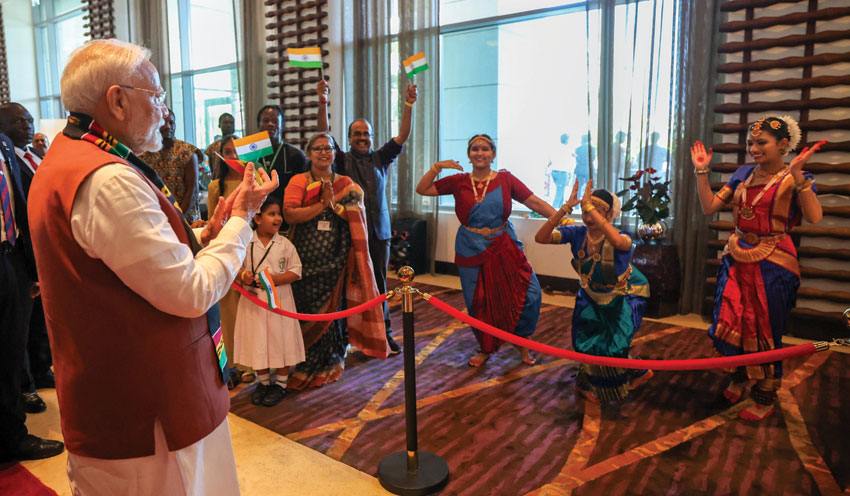
Nigeria, Africa’s largest economy and India’s biggest African trading partner, has also been a priority. Modi’s visit highlighted joint commitments on maritime security in the Gulf of Guinea, counter-terrorism, intelligence sharing, and cooperation in technology and energy. This blend of security and development diplomacy reflects India’s broader approach: advancing its own interests while contributing to regional stability.
In recent years African leaders like Cyril Ramaphosa of South Africa, El-Sisi of Egypt and 10 leaders of ASEAN, including Gen Prabowo of Indonesia in 2025, have been Republic Day Chief Guests. Since Modi assumed office for 5 of the 9 years R Day chief Guests were from the Global South.
These initiatives mark a pragmatic diversification of India’s diplomacy. By engaging regions often neglected by major powers, India is building long-term partnerships that align developmental priorities with strategic cooperation.
Development Initiatives and South-South Cooperation
India’s development diplomacy is rooted in the ethos of South-South cooperation: mutual benefit, respect for sovereignty, and demand-driven partnerships.
The most striking example was the Vaccine Maitri initiative during COVID-19, when India delivered millions of vaccine doses to countries across Asia, Africa, and Latin America. At a time when many advanced economies were hoarding supplies, India’s actions built immense goodwill. This was complemented by its support for the Loss and Damage Fund at the UN climate talks, designed to aid climate-vulnerable nations.
The International Solar Alliance (ISA) and Coalition for Disaster Resilient Infrastructure (CDRI) further represent India’s efforts to create global public goods tailored to the Global South. Both platforms address urgent developmental needs—affordable energy and resilient infrastructure—while ensuring inclusivity and local ownership. The Asia-Africa Growth Corridor (AAGC), developed with Japan, exemplifies India’s cooperative approach to infrastructure development. This is now the Japan-India-Indian Ocean-Africa cooperation matrix.Unlike China’s Belt and Road Initiative, this emphasizes transparency, sustainability, and respect for local contexts. It offers African and Asian nations an alternative that aligns more closely with their developmental aspirations.
India’s long-standing programs, notably the Indian Technical and Economic Cooperation (ITEC) scheme, continue to train thousands of officials and professionals from partner nations in fields ranging from information technology to public policy. The Indian Council for Cultural Relations (ICCR) promotes cultural and educational exchanges, while Lines of Credit finance infrastructure, energy, and agriculture projects across the Global South.The pattern of these LOCs is now undergoing change.
India’s role as a first responder has also been visible through humanitarian operations: Operation Raahat in Yemen, Operation Maitri in Nepal, and Operation Sankat Mochan in South Sudan. These missions highlighted India’s logistical and organizational capabilities while enhancing its reputation as a dependable partner in crises.
Collectively, these efforts project India’s holistic development model, that blends renewable energy, resilient infrastructure, public health, capacity-building, and humanitarian relief. Unlike donor-driven models, India’s approach reflects a partnership ethos, grounded in shared challenges and aspirations.
Soft Power, Strategic Diplomacy, and Influence
India’s growing global influence is also rooted in its soft power and strategic diplomacy.
The SAGAR (Security and Growth for All in the Region) doctrine, announced in 2015, articulated India’s maritime vision, portraying it as a net security provider in the Indian Ocean. This was reinforced by the Maritime Vision 2030, which sets out ambitious plans for port modernization, blue economy development, and cooperative maritime governance. Shri Narendra Modi announced Vision MAHASAGAR- “Mutual and Holistic Advancement for Security and Growth Across Regions” for the Global South in Mauritius in March 2025.
These frameworks align India’s maritime strategy with its broader Indo-Pacific objectives, while reassuring smaller states of India’s benign leadership.
India’s diaspora diplomacy has been another consistent feature. With over 30 million people of Indian origin living abroad, the diaspora represents both cultural capital and economic networks. Modi’s foreign visits often include high-profile interactions with diaspora communities, particularly in regions like the Caribbean and Africa where historic migration has left deep roots. These interactions not only strengthen emotional bonds but also promote trade, investment, and educational linkages.
Strategically, India has maintained its doctrine of strategic autonomy. It has deepened engagement with Western-led platforms such as the Quad and G7 outreach sessions, while remaining active in BRICS and the Shanghai Cooperation Organisation (SCO). This balancing act reflects India’s refusal to be drawn into rigid alliances, preferring instead to maximize its options across multiple axes of power. In a world increasingly shaped by bloc politics, India’s ability to navigate between West and non-West remains a core strength.
Through a mix of maritime leadership, cultural outreach, and balanced diplomacy, India has been able to project itself as a confident yet independent actor on the global stage.
Achievements and Challenges
India’s global diplomacy has produced significant achievements. It has demonstrated institutional leadership through forums such as VOGS, ISA, and CDRI, while ensuring Africa’s inclusion in the G20. It has expanded its geographic footprint, engaging regions once peripheral to its diplomacy. Its alternative development model, emphasizing transparency and demand-driven cooperation, has been welcomed by many partners. Finally, its soft and cultural capital—diaspora, digital infrastructure exports, and humanitarian relief—has enhanced its credibility as both capable and compassionate.
Yet challenges persist. The execution and scale of India’s projects often fall short compared to China’s Belt and Road Initiative, which delivers projects at speed and scale. Institutional capacity remains a constraint, with implementing agencies sometimes lacking the resources to ensure continuity and sustainability. Geopolitical competition, especially from China in Africa, the Pacific, and South Asia, intensifies the pressure on India to deliver quickly and effectively. Perception risks also linger: some critics view India’s initiatives as more symbolic than substantive. Finally, economic constraints limit India’s ability to match the financial muscle of advanced economies or China, especially in large developing markets. This leads to the pursuit if trilateral partnerships with G7 countries for the Global South.
India’s achievements are thus substantial but not without vulnerabilities. Sustaining momentum will require strategic focus, stronger institutions, and greater resource mobilization.
Conclusion and Way Forward
India’s foreign policy today stands at an inflection point. Over the last decade, New Delhi has successfully projected itself as a voice of the Global South, a responsible multilateral player, and a credible development partner. Through platforms such as the VOGS, ISA, and CDRI, and through bilateral engagements across ASEAN, Africa, Latin America, and the Pacific, India has redefined its global identity. It is no longer merely a rising power—it is a power that offers a vision of inclusive, equitable, and sustainable global governance.
However, for this vision to translate into long-term influence, India must address its challenges. It needs to scale up delivery mechanisms, ensuring that initiatives announced are consistently implemented. Building institutional capacity, both at home and in partner countries, will be critical to sustaining credibility. India must also carefully navigate geopolitical competition—not by attempting to match China dollar-for-dollar, but by emphasizing its unique strengths: transparency, sustainability, people-centric development, and soft power. Finally, India should expand its resource base by mobilizing private sector investment, diaspora capital, and multilateral financing to supplement limited state resources.
The way forward lies in deepening India’s role as a partner of choice for the Global South, while also leveraging its partnerships with advanced economies for technology, finance, and capacity-building. By maintaining its strategic autonomy, expanding development cooperation, and investing in global public goods, India can consolidate its position as a global leader for the 21st century.

By Gurjit Singh
IFS (RETD.)
(The writer is Former Ambassador of India to Germany, Indonesia, Ethiopia, ASEAN and the African Union.)
(The content of this article reflects the views of writer/contributor, not necessarily those of the publisher and editor. All disputes are subject to the exclusive jurisdiction of competent courts and forums in Delhi/New Delhi only.)














Leave Your Comment