


Ministry of Defence (MoD) had announced formation of a high-level committee to address shortages in the Indian Air Force (IAF). For some time, the IAF has been grappling with the shortages of fighter aircraft with the squadron strength coming to an all-time low of 31 vis-à-vis the authorised strength of 42. The committee headed by Defence Secretary includes senior ministry officials, Defence Research and Development Organisation (DRDO) chairman Dr Samir V Kamat, and senior IAF Officers. It will look at the shortage of fighter jets, weapons, and other equipment and suggest solutions, including accelerating indigenous production, and selectively inviting foreign collaborations, amid growing security challenges from China, Pakistan, and Bangladesh. The report is expected by mid-March 2025.
Meanwhile China unveiled two sixth-generation fighter jets on December 26, 2024 in Chengdu, representing the next evolutionary leap, drawing on lessons from two decades of R&D. It stunned the world, but China’s fighter aircraft have made a huge leap since the introduction of the J-10 in the 2000s. The J-20, unveiled in 2011, was its first fifth-generation aircraft, showcasing stealth, super-cruise, and advanced avionics.
Pakistan plans to acquire 40 J-35 stealth fighters from China, marking the first export of Beijing's fifth-generation jets to a foreign ally. It could mean induction by around 2029. That will change the entire air dominance dynamics in the sub-continent. China's potential sale of fighter jets to Bangladesh also adds to regional security concerns.
IAF Fighter Shortages
The IAF’s fighter aircraft shortages had been anticipated as early as 2001. A case for 126 aircraft had been initiated. IAF would then have been very happy to acquire additional Mirage-2000 aircraft with upgraded standard and these could have been Made-in-India for the world. French finally closed the Mirage-2000 line in 2006, and offered Rafale. The process of selecting the Medium Multi-Role Combat Aircraft (MMRCA) got going in 2008. The Rafale came out as a winner among the six contestants in 2012. But there were complexities of Make-in-India between Dassault and HAL. Finally only 36 were bought off-the-shelf in a G2G deal. Since the Su-30 MKI that began inducting in early 2000s, 36 Rafale were the only foreign fighters inducted.
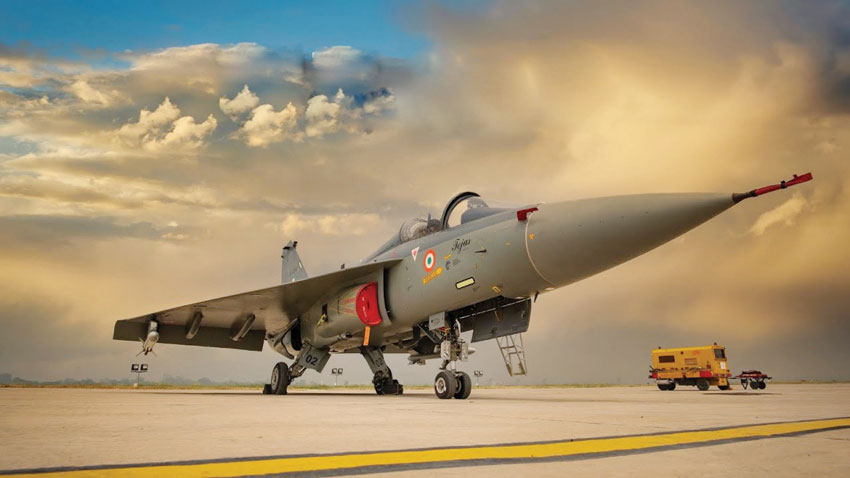
LCA Mk1 made its first flight in 2001. It finally inducted in IAF in 2015. 24 years after first flight IAF has just two squadrons. The Air Chief AP Singh highlighted this aspect at a recent Seminar on “Athmanirbharta in Aerospace”, where he mentioned that 40 aircraft in 10 years means just 4 aircraft a year. The LCA Mk1A which was to begin inducting in March 2024 is already delayed by a year. IAF was forced to extend MiG 21 fleet till 2025. In fact India is one of the last operators of the type.
The HAL Tejas Mark 2, Medium Weight Fighter (MWF), which will be closer to Rafale in capabilities, is planned to be roll-out by 2025, and first flight within 2026. The mass production is planned by 2029. Once again these are very optimistic figures considering more so that we are dependent on foreign sub-systems.
India is also the only operator of Jaguar aircraft, which we may continue to fly for another 8-10 years. 30 squadrons is a precariously low figure for the threat assessment made by India’s security establishment.
Advanced Medium Combat Aircraft
The DRDO-HAL fifth-generation, stealth, Advanced Medium Combat Aircraft (AMCA) feasibility study was launched in October 2010. In 2015, the basic design configuration of AMCA was finalized, and was accepted by IAF in 2016. The design work was completed in 2023, and government approval for the ₹15,000 crore ($1.8 billion) project for prototype development was received in March 2024. The first flight is expected in late 2028. Mass production of the aircraft and induction are planned to start by 2035. From the LCA experience the above timelines seem very optimistic and delays should be expected and factored.
Way Ahead For Fighters
In 2001 India had a 3:1 advantage over Pakistan in fighter numbers. This is now close to 1.6:1. China has a 3:1 advantage over IAF in numbers. Considering the three front threat, most analysts believe that IAF requires around 50 fighter squadrons.
To make good the 42 squadrons first, some urgent steps are required. All, the 83 ordered LCA Mk1A were to be delivered by 2029. For that to happen, nearly 24 aircraft must now be built every year. Currently we are still at best around 12 LCA a year. Even the proposed third line at Nasik will thus not be sufficient. Another 97 LCA Mk1A are being ordered. All the more production must quickly go up to 24 aircraft a year. Supply chain issues for GE 404 engines must be resolved quickly. In fact India must keep a buffer stock.
LCA Mk2 development must be hastened. Ideally HAL must find a private partner at this stage itself who can support both basic design work and production. Same arrangement is envisaged with AMCA. The partner must be selected quickly.
Pakistan is working closely with Turkey on their TAI ‘Kaan’ fifth generation fighter. They are also in talks with China to buy 40 J-35A fifth-generation fighters. It will be a shame for the country with 4th largest military and soon to be 3rd largest economy if a financial impoverished Pakistan would induct fifth-generation fighters earlier than India.
If India has to sit on the global high-table, it must make world class fighter aircraft as China has been doing for some time. A national task-force must be created for fighter aircraft design and development. The task-force must report directly to PMO.
Lastly, and no less importantly, the proposal for one-time buy of make-in-India 114 fighters must be pushed. Even if ordered today, these will induct only after 5-6 years. To save time it should be a G2G deal. Ideally it should be the latest Rafale F4 variant. India has already paid for IAF specific modifications, and also airbase infrastructure exists. Rafale are already operational and induction will be fastest. Also French are tried and tested partners. We cannot keep putting more eggs in the Russian and US basket. Even after all above actions, the 42 squadrons will be completed only in 2038 or so.
Force Multipliers a Critical Requirement
For a continental sized country like India, 3 large (IL-76 based) and 3 small (DRDO Netra) AEW&C are highly inadequate. Even Pakistan has more AEW&C than India. India has decided to make six more Netra and also develop six larger ones (Netra 2) using pre-owned airliners. Similarly, India has only six Flight Refuelling Aircraft (FRA). Six more are being developed indigenously using pre-owned airliners. These two activities will take around six years. Timelines have to be shortened. Also further planning is required for yet another additional six each of the two types.
UAS and Drones
Recent conflicts have highlighted the importance of uncrewed aerial systems (UAS) and smaller sized drones. China is already among the leaders in UAS. Pakistan has not only acquired Chinese Wing Loong II UAS, but is manufacturing them under license. Pakistan’s close Turkey connections opens another UAS and drone supply line. India has understood the requirements.
The DRDO TAPAS-BH-201 medium altitude long endurance (MALE) has been under development for long. India was forced to buy the General Atomics MQ-9B armed High Altitude Long Endurance (HALE) UCAVs, by paying nearly $3.5 billion for 31 of them. The deliveries will be undertaken from late 2027 till September 2030. India has over 100 drone start-ups. Adani group in a joint venture with Israel’s Elbit is making Hermes 450 and 900 UAS variants in India. India has the capabilities. These need to be harnessed. Many drone components are currently being imported. If orders and production are coordinated the components can be made in India.
Missiles and Ammunition
Recent conflict have highlighted the need for modern aerial weapons with precision and range. Even a larger power like Russia was denied air superiority because of modern air defence systems. China is already making world class aerial missiles with some having ranges up to 3-400 kilometres. India has done well with aerial missiles (Astra), AD systems (Akash) and air-to-surface missiles (BrahMos). The development of advanced variants have to be pushed.
The second aspect is weapons and kamikaze drone stocking and securing supply chains. It is important to become “atmanirbhar” on both these. India must diversify sources in the interim period.
Aero-Engine
The aero-engine development remains another Achilles heel. India is in talks with the Safran, Rolls-Royce and some others to build an aero-engine with Indian intellectual property rights (IPR). This would be an important step, and India must bite the bullet earlier than later. Also ToT negotiations for GE-414 engine to be built in India must spell out technologies in great detail. It should not end up as any other license production contract.
Directed Energy Weapons and Hypersonic
Directed energy weapons (DEW) have a great promising future. Once developed they will be less expensive to operate and will have unlimited magazine. These are required both for surface and airborne platforms. India must invest much more in their research, including assign funds to private partners.
The future is in hypersonic flight and weapons. Hypersonic weapons have already been used in Ukraine conflict. They are difficult to defend against. The big three USA, Russia and China are investing big in them. India’s DRDO is working on it, but the same needs to be accelerated and private players involved.
Space and Cyberspace
There is huge action in space which is the ultimate vantage point. Space today directly supports all spheres of human life. For military operations it is important for intelligence, surveillance, reconnaissance (ISR), Positioning, Navigation, and Timing (PNT), and targeting. Space and atmosphere are nearly getting merged, and there is significant action in near space. Major powers like USA, Russia, France and UK have dedicated Space Force under their air forces. India must consider the same.
Anti-satellite capability is becoming important, including satellite grab operations. India must quickly operationalize NavIC satellite navigation system. Also more satellites are required for ISR to reduce revisit time.
With network-enabled operations, cyberspace is a place of great action. India must concentrate on securing own networks and have enough offensive tools to neutralise adversary military networks. It is time to gain advantage both in kinetic and non-kinetic warfare.
Artificial Intelligence and Machine Learning
Artificial Intelligence (AI) and Machine Learning (ML) are crucial for faster decision making in combat situations. They are also important for greater autonomy to weapon platforms. They will be of great use in Manned Unmanned Teaming (MUM-T). India needs to invest much more in these. Private sector is already working big on this and must be harnessed.
Joint Ventures
India has had successful joint ventures (JV) for radars and missiles with Israeli companies. BrahMos with Russia is a successful JV with greater potential ahead. AK-203 rifles are being made through an Indo-Russian JV. CASA-295W is being built through a JV with Tata group. The JV route is better than license production as both partners have a stake in both risks and profits. The government had given approval to 45 companies/JVs operating in defence sector with foreign OEMs just last year. These maybe pushed.
Encourage Private Sector
India’s private sector is now growing big in defence. Many large groups like Tata, Adani, Mahindra and Bharat Forge among many others are in defence. They are making world class equipment for global customers including aero-structures of top aircraft. DRDO and Defence PSUs must also create more JVs with Indian private sector. There are many private companies in Drones. They need greater hand-holding.
Increasing Defence Production
“India defence production clocked ₹1.27 lakh crore last year. India is exporting military hardware to over 90 countries. India's defence exports crossed the ₹21,000 crore mark for the first time in 2023-24 and the defence ministry has set a target of increasing it to ₹50,000 crore in the next five years” said the Raksha Mantri Rajnath Singh. The momentum needs to be sustained.
Out of the Box Ideas
As India pushes its Make-in-India projects with all earnestness, it may have to take some hard interim calls. India’s AMCA is likely to take some time. India may wish to consider acquiring 2-3 squadrons of interim fifth generation aircraft. The choice is either to join up with Russians on Sukhoi Su-57 or impress upon USA to supply the F-35. Another school of thought is to acquire 12-15 bombers. Russia has reportedly offered the Tu-160M strategic bombers which could substantially boost the IAF's aerial capabilities.
India is currently sandwiched between the two ends of a vice. Decisions must flow quickly. It is hoped that the high-level MoD committee will come out with good solutions. Time to act is now. Lest it becomes too late.

By Air Marshal Anil Chopra PVSM AVSM VM VSM (Retd)
(The content of this article reflects the views of writers and contributors, not necessarily those of the publisher and editor. All disputes are subject to the exclusive jurisdiction of competent courts and forums in Delhi/New Delhi only)














Comments (2)
R
Air Marshal Chopra is a visionary and his views are so relevant.
P
The problem with us in India is that we talk big, aim to be big, and ultimately fizzle out like a burning cracker in no time. All our futuristic plans are known to our adverseries well in advance to take counter measures. India is therefore left in a perpetual catch up mode of we must do this and do that with nothing substantial as fighting aerial assets at any point of time. HAL hasn’t even planned or designed for a 24 aircraft production assembly line anywhere till date. So what atmanirbharta are we talking about..?