


Malnutrition remains a significant issue in Kendujhar district, Odisha. According to the National Family Health Survey-5, approximately 33 percent of children under the age of five exhibit stunting, indicative of chronic malnutrition in Kendujhar. Additionally, 45 percent of children in the same age group are underweight. The situation is further exacerbated by anemia, with more than 70 percent of children and over 60 percent of women in the district being anemic. These alarming statistics reflect the deep-rooted problems of poverty and limited access to nutritious food.
In Odisha’s Kendujhar district, a women’s self-help group has addressed malnutrition through the introduction of nutrient-rich millet-based diets for the preschool children under the integrated child development scheme.
A women-owned millet enterprise is tackling nutritional deficiencies
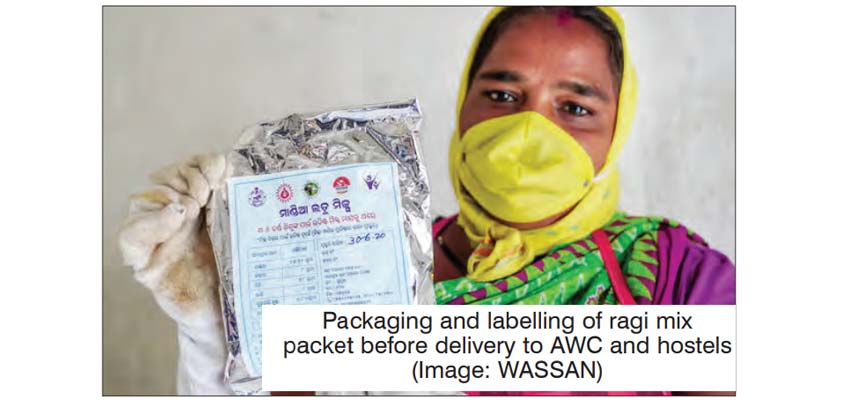
The Radha Krishna women's self-help group in Kendujhar district, Odisha, serves as a remarkable example of how determination and the effective use of humble millets can combat malnutrition. Their efforts have been supported by Shree Anna Abhiyan, a flagship program initiated by the Department of Agriculture and Farmers' Empowerment, Odisha, in partnership with the Mission Shakti Department and the District Mineral Foundation.
The Radha Krishna SHG's journey commenced with the ambitious goal of producing a nutritious snack for pre-school children enrolled in Anganwadi Centres and Scheduled Caste and Scheduled Tribe Development Department Schools, as part of the Integrated Child Development Scheme.
“As children have a natural love for sweets, ragi ladoo satisfies their taste buds and also provides essential nutrition for their development and a strong body,” said Sabita Naik, Anganwadi Worker at Keutasahi in Sadar Block, Kendujhar.
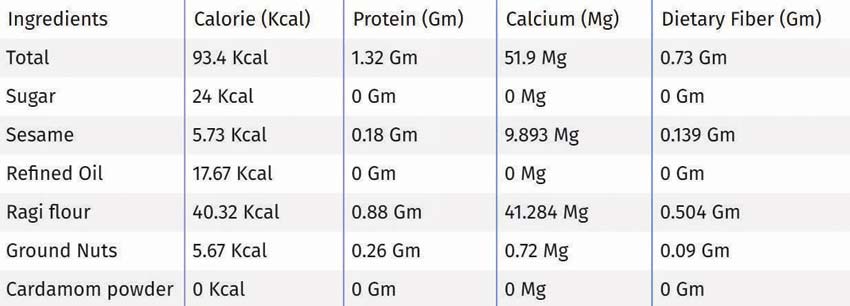
Nutritional value in ragi ladoo Visible impacts
Previously, the women's self-help group was generating a modest income of approximately Rs. 20,000 per month from chatua. The ragi ladoo program enabled their earnings to increase substantially to Rs. 60,000 per month. This brought economic stability and significantly improved their quality of life. Beyond financial gain, the women acquired valuable skills in business management and millet processing, enhancing their operations and establishing themselves as successful women entrepreneurs and community leaders.
Mamata Mohanta, a member of the women's self-help group, exemplifies this spirit of resilience. After the loss of her husband during the COVID-19 pandemic, she became the sole breadwinner for her family. "In my initial days after joining the women's self-help group, I used to assist other women's self-help group members in maintaining cash books and bankbooks, which provided me with additional income. However, now, the opportunity to work at the ragi ladoo processing unit has not only given me financial stability but has also instilled in me a renewed sense of purpose and financial independence," said a beaming Mamata. Her daughter is currently studying in the 12th grade and preparing for her entrance examination for Delhi University, while her younger son is in the 5th grade.

Mamata also shared her personal health challenges. She underwent heart surgery in 2022. Following her doctor's advice to consume millet-based foods, she observed a significant improvement in her health. This experience ignited her passion for promoting the nutritional benefits of millets, particularly for vulnerable groups such as children, pregnant women, and lactating women.
The ragi ladoo program gained national recognition. The Government of India and NITI Aayog acknowledged the decentralised model of millet production, processing, and distribution implemented in Kendujhar district. The Radha Krishna women's self-help group's story is a powerful testament to how a sustainable program, coupled with the determination and hard work of local women's groups, can lead to transformative change. Their achievements alleviated the economic hardship of women and served as an inspiration to others, demonstrating that with the right support and collective will, sustainable development and empowerment are achievable.
Shishir Kumar Sarangi, the District Project Coordinator with Mission Shakti in Kendujhar, stated, "The members of the Radha Krishna self-help group have become true changemakers, transforming their community by promoting millet-based products and enhancing both nutrition and financial stability through their dedicated efforts."
"Millet-based enterprises led by local women's groups could harness the potential of these mighty crops, boost millet production, and promote sustainable agriculture," said Satyajit Samal, the District Project Manager of Shree Anna Abhiyan, who works with the Watershed Support Services and Activities Network (WASSAN) in Kendujhar. WASSAN serves as the program secretariat that anchors the Shree Anna Abhiyan in Odisha.
By WASSAN, Rajesh Kumar Pradhan
(https://www.indiawaterportal.org/agriculture/farm/millets-malnutrition-women-led-initiative)
(The content of this article reflects the views of writers and contributors, not necessarily those of the publisher and editor. All disputes are subject to the exclusive jurisdiction of competent courts and forums in Delhi/New Delhi only)














Leave Your Comment