


As the country gears up for one of its most interesting elections, the economy requires significant improvement to address the challenges, as highlighted by the International Labour Organization and official indicators, which reveal a deteriorating situation concerning jobs and official stats of a 31 percent decline in foreign direct investments (FDI).
Ambitious government projections of $ 3 to 5 trillion economy and other figures apparently are not in sync. A rise in the stock market is not supported by strong indicators else FDI cannot fall so drastically at a critical political juncture.
The country is receiving short-term fly-by-night foreign portfolio investments at stock markets. The FDI indicates the investor confidence in the system. It is promised but is not actually flowing in. There are UNCTAD studies that show interest in India but the actual flow has usually been weak. India’s inequality is attracting attention of world powers.
The Inequality Report 2022 brought out by Institute of Competitiveness on the basis of Periodic Labour Force Survey (PLFS) 2019-20 finds that monthly salary of Rs 25,000 puts a person among the top wages earned. It is interpreted as a challenge to securing development with dignity to all and actual growth.
The ILO report is vocal about the employment challenge that cannot be left to the markets alone. Production in manufacturing is becoming capital intensive. Without high manufacturing growth , employment generation might continue to disappoint. Is it for that reason the government investing in the construction and real estate? It is internationally accepted that about two-thirds of infra investments are frittered away in various kinds of cuts. Be it Southeast Asia or any other region, infra investments have resulted in severe meltdowns.
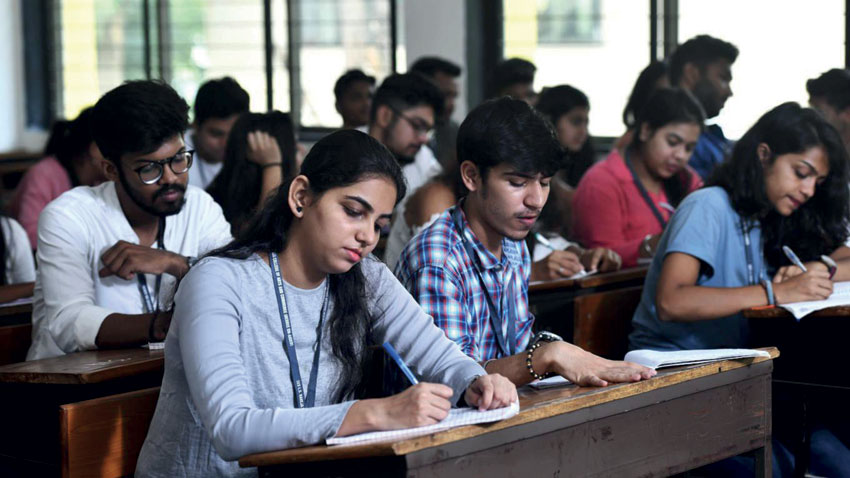
India’s youth employment profile suggests country passing through a difficult phase. Share of youth who are not in employment, education or training has averaged 29.2 percent between 2010 and 2019, the highest in the subcontinent. There is high proportion of unemployed educated youth even as industry complains of a shortage of skilled jobs.
The report emphasises on the broken link between education and employment. “A large proportion of highly educated young men and women, including the technically educated, are overqualified for the job they have”. It is a reflection on the education system and the New Education Policy (NEP) that stress on an extended four-year-undergraduate degree course and high qualifications of PhD. This is a common phenomenon across the country as youth with such unusually high qualifications pine for blue-collar public sector jobs in the hope of job security. About 3700 PhDs applied for the post of a peon in UP police where class 5 was the eligibility criterion,
Its unsavoury comment on the education system and the private sector, which have thrown even the basic labour laws to the wind. The ILO report stresses on 1) promoting job creation; 2) improving employment quality; 3) addressing labour market inequalities; 4) strengthening skills and active labour market policies; and 5) bridging the knowledge deficits on labour market patterns and youth employment. The NEP does not answer these queries.
It flags the challenges of addressing inequalities, improving quality of jobs and fixing asymmetries in the labour market. A State Bank of India study on women’s collectives brings out the gains through aspiring lakhpati didis. However, on income, employment and human capital there is still a distance to cover.
The ILO report calls for giving primacy to labour intensive manufacturing employment to absorb the unskilled labour. A comparison with China’s shortfall in infrastructure funding promises to SE Asia on Belt and Road Initiative (BRI) may be a lesson for India, as per study of Syndey’s Lowy Institute. It is a pointer to the huge gap in funding and long gestation period. Only 35 percent of infra projects seen through completion. The funding is falling through by $ 50 billion. The Lowy report is a caution for India for desisting from investing in infra projects. Poor quality of constructions of bridges and other infra, including too many roads in Maharashtra, Gujarat of Bihar are testimonies for the failures.
Women are often not preferred for jobs as these entail maternity and child care benefits. About 53.3 percent of the female workforce was self employed in 2019. It rose to 62 percent in 2022. Many of them are employed but paid low or no wages.
The weak consumption data in the GDP numbers indicate that over the past decade inflation-adjusted earnings of regular salaried and self-employed persons declined. Possibly, it is the post-demonetisation syndrome that devastated the small and medium entrepreneurs.
An issue that the reports have not discussed is the marginalisation of the public sector companies and gradual disinvestment. A fall out is testified by the electoral bond donations. The Rs 12000 plus crore donations are grim pointers that the private sector functions on the principles of giving donations and in return getting back expensive projects.
These are dependent on the government doles at the cost of PSUs. A real private sector has not yet emerged in this country. This has been the pattern in the licence-permit raj as well and continues in era of liberalisation. Why should a country foster such unethical business model? Much of the failings underlined by the ILO or PLFS are grim reminders of poor consumption and a failing business system.
The nation needs to ponder why it should dip into high debts which has annual repayment of over Rs 10 lakh crore exponentially squeezing the actual budgetary allocation to around Rs 37 lakh crore, far away of from $ 3 trillion target. A policy review is called for the entire financial system, manufacturing, employment and New Education Policy.
The country is on experimentation spree and has yet to stabilise its policies. The high prices are obstructions. Parliament is unnecessarily busy in making laws or redrafting the old ones. No wonder the chief economic advisor, the highest think tank, says the government can’t solve the problem of unemployment. Post poll all national and regional parties and institutions must come together to redraft the sustainable growth path and manufacturing policies, including revival of PSUs for proper quality job creation, a strong ILO suggestion.
Even as the country goes to the one of the most interesting elections being held, economy needs a lot to brighten up for providing a comprehensive solution to the challenges as indicated by the International Labour Organsiation and the official indicators showing a worsening situation regarding jobs and 31 percent shrinkage in foreign direct investments (FDI) infrastructure funding promises to Southeast Asia are falling short by more than $50 billion, according to a new report, with megaprojects undertaken under the Belt and Road Initiative (BRI) stagnating or failing due to poor planning, the global clean energy transition, and political lurches in recipient countries.
The report, released today by Sydney’s Lowy Institute, found that China remains “easily” the region’s largest infrastructure funder, involved in 24 out of the region’s 34 infrastructure megaprojects, which are defined as those costing $1 billion or more. At the same time, “there is a significant gap between China’s promises and its implementation, between what Beijing commits to and what it delivers.”
According to the Lowy report, this shortfall totals more than $50 billion, more than half of which is “allocated to projects that have been cancelled, downsized, or otherwise seem unlikely to proceed.” Currently, only 35 percent of China’s infrastructure projects have been seen through to completion, compared to 64 percent for Japan and 53 percent for the Asian Development Bank (ADB).
Of the 24 megaprojects mentioned above, eight worth about $16 billion have been completed, including high-profile railway projects in Indonesia and Laos. Another eight, worth $35 billion, are on track, though two have been “substantially downsized.” Meanwhile, “five projects worth $21 billion have been cancelled, while another three projects worth $5 billion seem unlikely to proceed.”
The report puts this funding gap down to three factors. The first is China’s “almost exclusive focus on financing ambitious megaprojects especially prone to problems and delays.” Impressive megaprojects have always been a hallmark of Beijing’s BRI, but the greater cost and complexity of these projects means likely that they are more likely to run into political or financial hurdles.
By Shivaji Sarkar
(The content of this article reflects the views of writers and contributors, not necessarily those of the publisher and editor. All disputes are subject to the exclusive jurisdiction of competent courts and forums in Delhi/New Delhi only)


















Leave Your Comment