


PRADEEP KRISHNAN
The elevation of V. D. Satheesan as Chief Minister-designate is far from a routine leadership transition; it exposes the widening gap between the Congress party’s professed commitment to internal democracy and the reality of its decision-making processes. The central question that emerges is stark: is leadership in Kerala determined by elected representatives within the state, or by unelected power centres in Delhi?
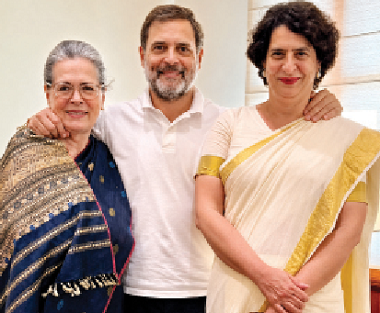
The Congress “high command” culture—long criticised—once again appears decisive, with figures such as Sonia Gandhi, Rahul Gandhi and Priyanka Gandhi casting a long shadow over the outcome. Kerala’s political realities seem to have been subordinated to broader national calculations, with leadership selection shaped centrally rather than emerging organically from the state unit. What distinguishes this episode is the apparent sidelining of a substantial section of the party’s own legislators.
Within the Congress legislative party, K. C. Venugopal was widely seen as commanding significant support, while veteran Ramesh Chennithala remained a formidable contender. Yet both were bypassed, underscoring a shift in the party’s internal calculus where legislative backing is no longer decisive. Instead, coalition dynamics—particularly the influence of the Indian Union Muslim League—appear to have played a determining role.
As the second-largest constituent of the UDF, with a strong legislative presence and influence across key constituencies, the IUML has moved beyond being a coalition partner to an effective arbiter in leadership decisions.
The IUML is also learnt to have issued a clear warning during the leadership deliberations: if K. C. Venugopal were to be named Chief Minister, the UDF would be pushed into the risk of two immediate by-elections. Venugopal would have to vacate his Alappuzha Lok Sabha seat and re-enter the Assembly by contesting from a constituency that would require a sitting Congress MLA to resign. In such a scenario, there were apprehensions within Congress circles that the IUML could shift its stance at a critical moment, potentially destabilising the arrangement. Concerns were also raised about the longer-term implications—particularly the possibility that, in the 2029 Lok Sabha elections, if Rahul Gandhi or Priyanka Gandhi were to contest again from the Muslim-dominated Wayanad constituency, the IUML might not extend full support. These anxieties are believed to have weighed heavily on the Congress high command, ultimately leading the Sonia Gandhi-led leadership to sideline Venugopal and back V. D. Satheesan as a compromise choice. This raises a larger question: has coalition necessity evolved into structural dependence?
Reports of intense behind-the-scenes pressure during the selection process have further reinforced perceptions of a leadership that is reactive rather than authoritative. Visible internal unease—highlighted by Chennithala’s absence from the legislature party meeting—points to deeper fault lines within the party that cannot be easily glossed over.
Satheesan’s political trajectory, marked by sharp criticism of the RSS, the BJP, and organisations such as the Nair Service Society led by G. Sukumaran Nair and the SNDP Yogam under Vellappalli Natesan, has also drawn scrutiny. Critics argue that this assertiveness appears uneven, with caution exercised in addressing certain other constituencies—raising questions about political consistency.
The broader implication is unmistakable. The Congress in Kerala stands at a critical juncture: whether it retains an independent political core or continues as the central pillar of a coalition increasingly shaped by external pressures. Satheesan’s leadership begins under the weight of these unresolved questions. If governance becomes an exercise in balancing competing demands rather than asserting direction, the consequences will extend beyond a single tenure, shaping the future trajectory of the party in the state.
A Party Surrenders, A Coalition Ascends
The selection of V. D. Satheesan as Chief Minister-designate reflects not an organic consensus but the outcome of coalition pressures and centralised control. It underscores a deeper reality: decision-making within the Congress is no longer anchored in its legislative ranks but influenced by a combination of high command authority and coalition compulsions.
The enduring dominance of the party’s central leadership once again raises questions about internal democracy. Kerala’s mandate and leadership choices appear to have been shaped far from the state, reinforcing the perception that real authority lies with a small leadership circle in Delhi.
Despite indications that K. C. Venugopal enjoyed substantial support within the legislative party, and Ramesh Chennithala remained a credible contender, their exclusion highlights how internal arithmetic has been overridden by external considerations. At the centre of this dynamic stands the Indian Union Muslim League, whose legislative strength and electoral influence have enabled it to play a decisive role in shaping outcomes.
This evolution marks a shift from coalition partnership to structural leverage. Leadership within the Congress, at least in Kerala, now appears contingent on broader coalition acceptance. The reported pressures during the selection process and the visible dissent within the party—including Chennithala’s absence—suggest a leadership formed through accommodation rather than consensus.
Satheesan’s political positioning—marked by strong opposition to the RSS, BJP, and organisawtions such as the Nair Service Society and SNDP Yogam—has also drawn attention to what critics describe as selective assertiveness. Whether this reflects political pragmatism or compulsion remains an open question.
What emerges is a larger transformation within the UDF. The Congress, once the dominant force, now appears increasingly shaped by forces it must accommodate. If this trajectory persists, governance risks becoming an exercise in negotiation rather than direction, with long-term implications for the party’s autonomy and credibility.

From Political Party to Political Instrument
The installation of V. D. Satheesan signals a deeper shift in the Congress’s internal dynamics. Far from a straightforward democratic transition, it reflects a leadership choice shaped by constraints—both from the party’s central command and its coalition dependencies.
The decision did not emerge from within the state’s legislative ranks but was influenced by leadership at the national level, reinforcing concerns about centralised control. Within the legislature party, the perceived support for leaders like K. C. Venugopal and the experience of Ramesh Chennithala were ultimately secondary to broader political considerations.
At the core of this shift lies the growing influence of the Indian Union Muslim League. With a strong legislative presence and electoral leverage, it has become a central factor in determining leadership outcomes. This signals a transition from coalition partnership to dependency, where internal decisions are shaped by external acceptance.
The nature of Satheesan’s elevation—widely seen as a compromise candidate—highlights the balancing act within the party. The sidelining of senior leaders and visible dissent point to internal divisions that could affect governance.
Satheesan’s political approach, particularly his confrontational stance towards the RSS, BJP, and organisations such as the Nair Service Society and SNDP Yogam, continues to define his public image. At the same time, critics question whether similar assertiveness is applied uniformly across all political and social actors.
Ultimately, this moment represents more than a leadership change. It reflects a reconfiguration of power within Kerala’s political landscape, where the Congress risks evolving from a decision-making centre into a vehicle shaped by competing pressures. The consequences of this shift will become clearer in governance, where the balance between autonomy and accommodation will be tested.
Muslim League’s Expanding Polit-ical Leverage

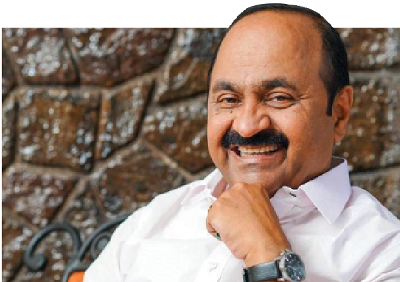
Without the backing of a majority of MLAs, KPCC working presi-dents, MPs, or internal groups, V. D. Satheesan is set to be sworn in as the 13th Chief Minister of Kerala on Monday, May 18. The decisive factor behind this ascent, however, is widely seen as the steadfast support of the Indian Union Muslim League (IUML).
The party that stood rock solid with Satheesan, like a fortress, is the Muslim League. Its ability to exert such influence—effectively overriding internal Congress mechanisms—stems from a sharp rise in its vote share over the past decade. The League’s growth is striking: 1,496,864 votes in 2016, 1,723,593 in 2021, and 2,378,053 in 2026.
This translates to an extraordi-nary 58% increase over ten years, consolidating a base of over 2.3 million votes. These are widely viewed as stable, unlikely to di-minish in the near future. Nota-bly, a party that once limited its contests to Malabar now fields candidates across Kerala. Even in 2021, when the Congress suffered a major defeat amid a Left wave, the League added three lakh votes. In 2026, it expanded fur-ther by approximately seven lakh votes. Given this trajectory, it would be surprising if a Congress party long associated with minor-ity appeasement did not yield to such influence.
During the final round of discus-sions over the Chief Minister’s post, Sonia Gandhi is said to have directly contacted IUML president Sadiq Ali Thangal, without con-sulting other constituent parties. No other community in Kerala has consolidated comparable po-litical leverage; while others spoke of secularism, the League focused on community consolida-tion. As their preferred repre-sentative, Satheesan now assumes leadership of the state. Those who consistently foregrounded religion in political discourse is expected to secure at least five cabinet berths.
The League’s political clout is also reflected in its reported ability to influence electoral outcomes—such as persuading SDPI to with-draw a candidate to affect con-tests involving BJP leader K. Surendran. Its leaders have open-ly confronted figures like Mathew Kuzhalnadan, MLA designate for criticism, raising questions about the space for dissent within the Congress. Satheesan himself, who once stated that Jamaat-e-Islami has no theocratic agenda, now takes office with the backing of these aligned forces.
Meanwhile, traditional communi-ty organisations such as the Nair Service Society (NSS) and the Sree Narayana Dharma Paripalana Yogam (SNDP) appear to have lost their political relevance. Con-sequently, Satheesan faces no compulsion to engage with lead-ers like Sukumaran Nair or Vellappally Natesan. Even as sec-tions of the media portray his rise as independent of community backing, critics argue that it rests significantly on the support of Kerala’s most influential commu-nity-based political party.
In that sense, this moment marks not just a leadership transition, but a shift in the balance of polit-ical power—one shaped by those who wield decisive influence within the Congress from above.
The BJP repeatedly accused the Congress of accepting support from “rabidly communal forces” for electoral gains. According to BJP leaders, the Congress leader-ship remained silent about ex-tremist Islamist organizations while selectively targeting Hindu social organizations. This became a major ideological talking point during the campaign.
(The content of this article reflects the views of writer and contributor, not necessarily those of the publisher and editor. All disputes are subject to the exclusive jurisdiction of competent courts and forums in Delhi/New Delhi only)




















Leave Your Comment