


As participants in the social contract, citizens in a democracy entrust governments to provide services that they cannot individually secure. However, government accountability is not inherently guaranteed by this social contract. Effective leadership becomes crucial in this complex scenario. Prime Minister Narendra Modi stands as a tall example of strong, effective leadership that can deliver on its promises.
As Indians are witnessing for the last few months PM Modi has started his “ Modi ki Guarantee” mantra for the people of the country. ‘Modi Ki Guarantee’ denotes Prime Minister Narendra Modi’s commitment to the aspirations of the common man. It echoes the resolution of his government to serve the last man standing. It allows people to witness a political phenomenon, hitherto missing, where promises carry meaning and are executed meaningfully.
The expanse of these guarantees extends to the most fundamental of needs. People have been a witness to the reality of most people in our country still being deprived of the basic necessities of life even as we celebrate Independence year after year. Past efforts have fallen short of building a nation, equally abundant and statistically inspiring. However, the summer of 2014 set in motion a volley of changes that gave people hope and enlivened in them the idea of daring to dream beyond the basics.
As we begin, we must appreciate the tremendous transformation of India, from being a net importer of food grains in the ‘60s to one of the largest cereal exporters today. In recent years, significant progress has been made in improving access to food and expanding the security net for the underprivileged. Speaking at a rally in Ratlam, Madhya Pradesh, the PM said, “During Covid-19, the biggest concern of the poor was what they would feed their children…then I decided that I will not let any poor sleep hungry, hence the BJP government started the Pradhan Mantri Garib Kalyan Anna Yojana.” The scheme guarantees free rations to 80 crore Indians and has been extended for the next five years. Besides, the annadatas of the country, the farmers have been rightfully supported via PM KISAN, a scheme that benefits over 11 crore farmers today.
Also, as studies indicate, 13.5 crore people were lifted out of poverty under the on-going government of PM Modi—something which once relegated to the rhetoric of previous governments and slogans like 'Garibi Hatao'. The Prime Minister’s concern for the underprivileged stems from years in public life, traveling through the length and breadth of the country. As a result, in the words of the PM himself, his government began its work with a spirit of service with doorstep delivery of services to the poor as its topmost priority.
India is one of the fastest growing economies of the world and with PM Narendra Modi’s idea of ‘Sabka Saath, Sabka Vikas, Sabka Vishwas, Sabka Prayas,’ it has been widening its positive influence in the world affairs. A leader, a visionary, a statesman, Narendra Modi’s led BJP government is gearing up for its third term in office and the last 10 years of his active leadership have turned out to be a guiding light in moulding different domains of the Indian society.
From Swachh Bharat Mission, Jan Dhan Yojana, Ujjwala Yojana to Ayushman Bharat Pradhan Mantri Jan Arogya Yojana, Startup India, to name a few, his historic decisions and policymaking ideas have weaved India into a newer outlook in front of the world- a strong developing nation. He has brought newer concepts to limelight along with the notable schemes which have seeped into the deeper levels of the Indian societal structure- financial, healthcare, social security.
Aiming to bring financial inclusion of all households, Pradhan Mantri Jan Dhan Yojana launched in 2014 turned out to be a great success, with about 44.05 crore bank accounts being opened so far. This level of impact is not just limited to one scheme, it amplified the mission of helping the people, especially the poor to other schemes as well. Under Swachh Bharat Mission, 10.9 crore toilets were built whereas under PM Awas Yojana, over 3 crore urban and rural houses were constructed. The schemes in different domains aided in improving the livelihood of people, thereby helping them to link with basic amenities, better facilities, skills and opportunities. In order to expand the level of insurance penetration in the country, PM launched Pradhan Mantri Jeevan Jyoti Bima Yojana, Pradhan Mantri Suraksha Bima Yojana in 2015 and ever since, it has been instrumental in making insurance cover accessible to common man. Another significant scheme, Ujjwala Yojana which was launched in 2016 has played a key role in providing free LPG connections to millions of people without consumers going through the hassle of paying deposits to fuel retailers. Later, Ujjwala 2.0 was launched to encompass more people into the radius of the scheme. Along with a deposit free LPG connection, it aimed to provide free refill and hotplate to the beneficiaries.
The flagship schemes have helped in solving different socio- economic problems that have characterised the Indian society. For example, the idea of alleviating poverty and generating employment opportunities was met through Skill India scheme which has created an empowered workforce by providing industry relevant skills for free. The schemes have aided in improving the quality of life of the citizens. Ayushman Bharat Pradhan Mantri Jan Arogya Yojana, a national public health insurance fund of government of India witnessed the registration of more than 22 crore people, thus moving a step closer to provide free insurance to low- income groups which was the overall objective of the program. Dedication, creative concepts, new blueprints have helped in making the PM’s vision of India a reality. Under Jal Jeevan Mission, 6.29 crore of tap water connections were made while under PM SVANidhi scheme, 31.9 lakh street vendors got loans. Another scheme, PM Garib Kalyan Yojana launched during 1st wave of covid and extended later, provided more than 80 crore people free foodgrains, thereby staying true to its name and providing food security to the people. These ten years of his remarkable leadership also witnessed flagship schemes centring women. Aiming to make women socially and financially self- reliant, several schemes ranging from Sukanya Samriddhi Yojana, a part of Beti Bachao Beti Padhao campaign to Poshan Abhiyaan were launched.
Let us delve into some of these schemes which have touched the lives of the common man and changed their life forever. The second term of Prime Minister Narendra Modi's administration is almost up. He has now served as prime minister for a total of ten years. It's ample time to evaluate the successes and failures of an in office head of state. So, how do we evaluate PM Modi's term thus far?
Of course, the list of accomplishments, the majority of which are measurable, is one clear method. For instance, the figures attained in flagship programmes are very impressive. By providing 42 crore bank accounts to the unbanked as part of the Jan Dhan Yojana, financial inclusion will reach every Indian home. Financing the unfunded via the Mudra Yojana, which entails loan sanctioning of Rs. 29 crore and disbursals of Rs. 15 lakh crore, thereby initiating a revolution in entrepreneurship. 25 billion real-time transactions using UPI in 2020 will digitise the undigitized, making India the world's largest digital payments ecosystem.
Beti Bachao, Beti Padhao: Caring for the Girl Child
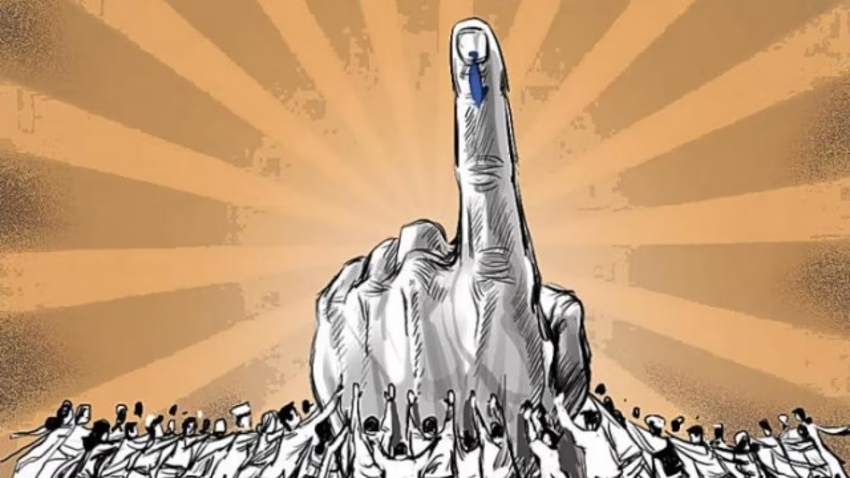
Beti Bachao Beti Padhao (BBBP) was launched by the Prime Minister on 22nd January, 2015 at Panipat, Haryana. BBBP addresses the declining Child Sex Ratio (CSR) and related issues of women empowerment over a life-cycle continuum. It is a tri-ministerial effort of Ministries of Women and Child Development, Health and Family Welfare and Human Resource Development.
The key elements of the scheme include Enforcement of PC and PNDT Act, nation-wide awareness and advocacy campaign and multi-sectoral action in select 100 districts (low on CSR) in the first phase. There is a strong emphasis on mindset change through training, sensitization, awareness raising and community mobilization on ground.
The NDA Government is trying to bring about a transformational shift in the way our society looks at the girl child. PM Modi in his Mann Ki Baat lauded the Sarpanch from Bibipur in Haryana who started a ‘Selfie With Daughter’ initiative. PM also urged people to share their selfies with daughters and it soon became a world-wide hit. People from across India and the world shared their selfies with daughters and this became a proud occasion for all those who have daughters.
Leveraging the Power of JAM: Jan Dhan, Aadhar and Mobile

67 years after Independence, India still had a large part of the population who had no access to banking services. This meant, they had neither any avenues for Savings, nor any opportunity to get institutional credit. PM Modi launched the Pradhan Mantri Jan Dhan Yojana on 28th August to address this fundamental issue. Within a matter of months, this scheme has radically transformed lives and futures of millions of Indians. In just over a year, 19.72 crore bank accounts were opened. 16.8 crore Rupay cards have been issued so far. There have been deposits worth Rs 28699.65 crores. A record 1,25,697 Bank Mitras (Bank Correspondents) have also been deployed. It also set the Guinness World Record for most bank accounts opened in one week -1,80,96,130. All this was possible because of PM Modi’s thrust and his power of galvanizing masses and the government machinery. This enormous task was taken up in mission mode and achieved with an exemplary partnership and participation of the government and public.
Empowering Farmers for a Prosperous India

Farmers have always been the back-bone of our country and the NDA Government is striving to strengthen this back-bone of the country through innovative and solid measures. Pradhan Mantri Krishi Sinchai Yojana gave a boost to productivity by ensuring irrigation facilities. The Vision was to ensure access to some means of protective Irrigation to all agricultural farms. Farmers are being educated about modern irrigation methods to give 'Per Drop More Crop'.
Paramparagat Krishi Vikas Yojana has been launched to motivate groups of farmers to take up organic farming. A special scheme has also been launched in North-Eastern Region for promotion of organic farming and export of organic produce.
Soil Health cards have been introduced to enhance productivity of specific crops in a sustainable manner andshall be issued to all 14 crore holdings in the country. About 248 lakh samples are to be analyzed in 3 years’ cycle.
A new urea policy has been announced to enhance domestic production and energy efficiency and revival of fertilizer plants in Gorakhpur, Barauni and Talcher done to enhance self-sufficiency.
Ayushman Bharat and PM-JAY
Ayushman Bharat, a flagship scheme of Government of India, was launched as recommended by the National Health Policy 2017, to achieve the vision of Universal Health Coverage (UHC). This initiative has been designed to meet Sustainable Development Goals (SDGs) and its underlining commitment, which is to "leave no one behind."
Ayushman Bharat is an attempt to move from sectoral and segmented approach of health service delivery to a comprehensive need-based health care service. This scheme aims to undertake path breaking interventions to holistically address the healthcare system (covering prevention, promotion and ambulatory care) at the primary, secondary and tertiary level.
An important component under Ayushman Bharat is the Pradhan Mantri Jan Arogya Yojna or PM-JAY as it is popularly known. This scheme was launched on 23rd September, 2018 in Ranchi, Jharkhand by the Hon’ble Prime Minister of India, Shri Narendra Modi.
Ayushman Bharat PM-JAY is the largest health assurance scheme in the world which aims at providing a health cover of Rs. 5 lakhs per family per year for secondary and tertiary care hospitalization to over 12 crores poor and vulnerable families (approximately 55 crore beneficiaries) that form the bottom 40per cent of the Indian population. The households included are based on the deprivation and occupational criteria of Socio-Economic Caste Census 2011 (SECC 2011) for rural and urban areas respectively. PM-JAY was earlier known as the National Health Protection Scheme (NHPS) before being rechristened. It subsumed the then existing Rashtriya Swasthya Bima Yojana (RSBY) which had been launched in 2008. The coverage mentioned under PM-JAY, therefore, also includes families that were covered in RSBY but are not present in the SECC 2011 database. PM-JAY is fully funded by the Government and cost of implementation is shared between the Central and State Governments.
Beyond these astounding figures, there is one more method to evaluate Modi's success or failure: the shifts in the makeup of our country. Which changes are some of these?
First, Modi has radically changed the understanding of economic policymaking that central governments formerly held. Prior to Modi, macroeconomics and its glitz were the main focus, with microeconomics being left to the sidelines or, at most, the purview of state governments. Because of this, the nation was still having difficulty achieving its goals of having all of its villages electrified, leaving alone homes, ensuring that every hamlet had adequate sanitation, and ensuring that healthcare was accessible to everyone even after more than 66 years of independence (in 2014, before Modi took office). Modi has made this imbalance right. Thus, making sure that every home has access to tap water is now just as important as developing a framework for privatisation policies or, with the new agricultural legislation, establishing a new paradigm for the agriculture industry. To his credit, Modi has accomplished remarkable strides in these areas.
Second, Modi has permanently altered the belief that central governments should only provide the "second best" results. The citizens of this nation will have had enough of being followers or laggards. We now anticipate India to be leading that race. Be that in Ukraine or Covid vaccines or any matter in the world, we are there and that’s because of the leadership of PM Modi.
Third, Modi has reversed the 70 years of ingrained character that saw us capitulate in the face of a formidable foe. China was forced to retreat from Doklam and Pangong Lake, which used to have its way with India through the One Belt One Road plan and its fights in the South China Sea. Everyone has understood that this India of 2024 is not the India they knew before 2014, from climate change negotiations to free trade agreements, and from massive multinational corporations used to bulldozing their way to international think tanks claiming to sway Indian discourse.
PM’s leadership and his service over these ten years has played a vital role in promoting the welfare of the poor people, empowering women, aiding the farmers through agri- friendly schemes, creating job opportunities for the youth, upskilling people and thereby ameliorating the Indian economy at large. These reforms have moved way beyond the statistics and the positive impact of them could be seen on the smiling faces of people.
By NILABH KRISHNA
(The content of this article reflects the views of writers and contributors, not necessarily those of the publisher and editor. All disputes are subject to the exclusive jurisdiction of competent courts and forums in Delhi/New Delhi only)














Leave Your Comment