


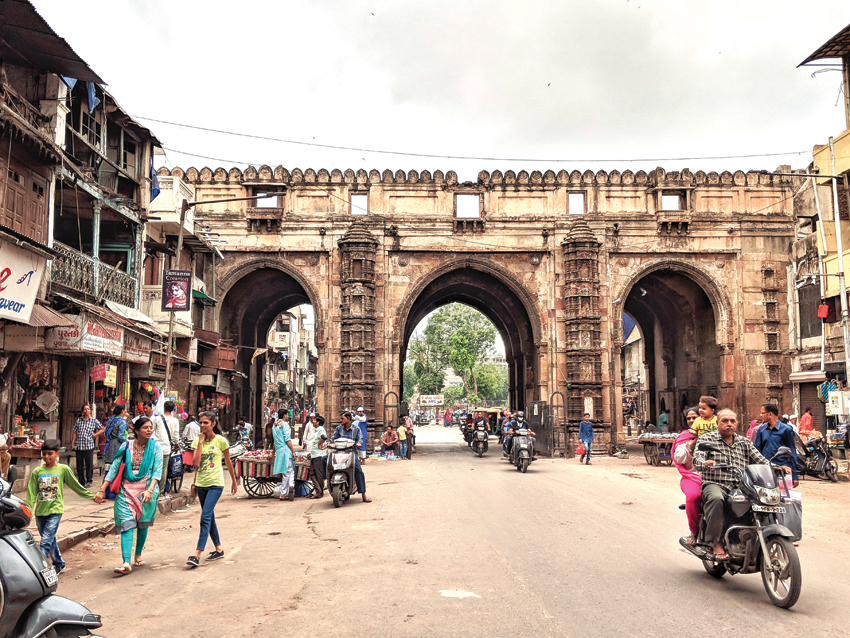
As Ahmedabad prepares to host the 2030 Commonwealth Games—one of the largest global sporting events ever allotted to an Indian city—it finds itself at the center of a debate that goes far beyond infrastructure, logistics, and global prestige. The discussion now resurfacing is deeply civilizational: Should Ahmedabad be rechristened as Karnavati, restoring a name that predates centuries of conquest and cultural displacement? Names are not merely labels; they are carriers of memory, power, and identity. Ahmedabad, as a name, emerged in the 14th century under Sultan Ahmed Shah, symbolizing a period of Islamic rule in the region. Yet this 600-year-old identity sits atop a far older foundation. Long before the advent of Sultanate rule, the region flourished as Karnavati—associated with indigenous Hindu rulers like Karna of the Solanki dynasty—and stood as a vital center of Hindu and Jain civilization. Temples, stepwells, learning centers, and thriving trade networks shaped its cultural landscape for centuries before conquest altered its political narrative. The question, therefore, is not whether Ahmedabad’s current name forms part of its identity, but whether that identity should continue to overshadow a much longer and richer civilizational heritage. In an India that is increasingly confident about reclaiming and reasserting its historical narrative, the idea of restoring Karnavati is not an act of negation, but of correction. Critics often frame renaming as “erasing history.” In truth, restoring Karnavati would erase nothing. The Sultanate period, Mughal influence, and colonial layers would remain integral chapters of the city’s story. Restoration does not mean denial; it means recalibration. It means acknowledging that the civilizational roots of the land extend far beyond the era of conquest and deserve equal, if not greater, recognition. Across India, names such as Prayagraj, Ayodhya, and Kashi have been reclaimed not out of hostility, but out of historical honesty. These changes reflect a broader effort to align public geography with cultural memory. Karnavati fits squarely within this tradition. The name reflects continuity—of faith, architecture, art, and indigenous governance—that conquest could disrupt but never extinguish.
In this perspective, it is apt to mention here that the timing of this debate is also significant. The Commonwealth Games will place Ahmedabad on a global stage, inviting athletes, dignitaries, and visitors from across the world. The city they encounter will speak not only through stadiums and skylines, but through its name. Should India present a city defined by the legacy of its conquerors, or one that proudly asserts its ancient identity and civilizational resilience? Restoring Karnavati would send a powerful message: that modern India is not burdened by its past, but confident enough to reclaim it. It would signal a nation comfortable honouring its indigenous roots while remaining open, pluralistic, and forward-looking. Far from being exclusionary, such a step would affirm cultural self-respect. Perhaps the debate itself reflects India’s democratic maturity—its willingness to question inherited narratives and re-examine history with clarity rather than fear. As 2030 approaches, the choice before the nation is symbolic but significant. When the world arrives for the Commonwealth Games, it should step into a city that carries its own civilizational memory with pride. Perhaps it is time—indeed, long overdue—that Karnavati rises once again.

By Deepak Kumar Rath














Leave Your Comment