


The United States has long maintained its dominance over much of the world, successfully exerting influence on various sectors—economically, politically, socially, and culturally. However, in recent years, America’s internal situation across economic, social, and cultural spheres has been deteriorating. As economic disparity and social fragmentation continue to escalate, some are beginning to question whether Western civilization, and particularly the American Dream, is facing a decline.
Economic Downturn and Rising Debt
The American Dream, once a symbol of opportunity and prosperity, is now under threat. With the U.S. national debt surpassing $35 trillion, while the country's GDP stands at approximately $25 trillion, America has taken on more debt than its economy can support. This debt burden has reached a point where the U.S. government must continuously borrow to cover basic expenses, turning to the U.S. Congress each year for approval to raise the debt ceiling. This is the reality for what is still considered the world’s most powerful country.
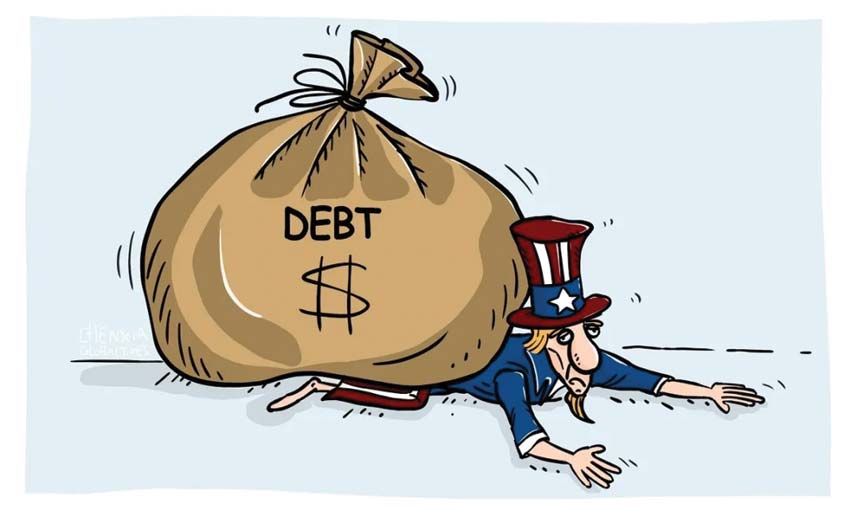
This financial predicament is not new. When Adam Smith, the father of capitalism, published The Wealth of Nations in 1776, capitalism was still in its infancy. His core principle argued that entrepreneurs, driven by their own profits, would not only become wealthy themselves but also enrich their nations. Throughout the 19th and 20th centuries, America adhered to this principle, accumulating wealth for its elite. However, this individualism led to a growing divide between the wealthy and the poor, with Americans increasingly prioritizing personal gain over societal well-being.
The Decline of Manufacturing and Industry
In the 1940s, the U.S. contributed to 50% of the world’s manufacturing output. Today, that number has fallen to less than 17%. The monopolies once held by American industries have now shifted to other countries. In an attempt to attract skilled workers, American companies initially covered employee healthcare costs. However, labor costs in the U.S. have soared, while workers in developing countries were willing to work for much less.

Simultaneously, U.S. corporate tax rates rose to over 35%, while other countries maintained rates closer to 20-25%. This discrepancy caused production costs to spike in the U.S., prompting many manufacturing units to shut down. In 1979, 20% of American workers were employed in manufacturing; today, that number has fallen to less than 10%. What was once a workforce of 20 million manufacturing workers has shrunk to just 12 million.
Agriculture has faced a similar decline. When America’s first president took office, nine out of ten workers were employed in agriculture, primarily as small farmers. Today, only 2% of the American workforce is involved in agriculture, highlighting the massive contraction in both industrial and agricultural employment.
The Erosion of Key Industries
From the 1950s onward, several industries that were once the pride of American manufacturing—steel, textiles, and consumer electronics—have nearly vanished. Automotive manufacturing, once dominated by American companies, has largely moved overseas. Japanese car companies, for example, have established plants in the U.S., reducing job opportunities for American workers in this sector. Over half of the smartphones used in the U.S. are now imported, rather than manufactured domestically.
Stagnant Wages and Economic Inequality
The Bureau of Labor Statistics' Monthly Labor Review (December 2016) revealed a stagnation in real wages. In 1947, the real hourly wage in the U.S. was $5.35, rising to $9.26 by 1973. However, since then, it has remained nearly flat, standing at $9.07 in 2015. Between 1947 and 1973, wages grew by 73%, while productivity increased by 95%. Yet from 1973 to 2015, while productivity grew by 109%, real wages fell by 3%.

The job market has also seen a shift, with well-paying manufacturing jobs being replaced by low-wage service sector jobs. Since 1979, more than 40% of manufacturing jobs have been lost, forcing many workers into low-paying positions in industries like retail and hospitality. Advances in technology have boosted productivity but have failed to improve wage growth, further exacerbating income inequality.
Outsourcing and the Service Sector
As manufacturing jobs disappeared, new opportunities arose in high-tech, information-based service industries like information technology (IT). However, outsourcing has now started to affect even these sectors, with jobs being sent overseas to countries where labor is cheaper. This trend suggests that America may see a decline not only in manufacturing but also in service-sector employment in the coming years.
Growing Poverty and Social Disparities
These economic shifts have contributed to rising poverty levels in the U.S. According to data from 2015, 13.5% of American families (or approximately 43.1 million people) lived below the poverty line. The U.S. Department of Agriculture determined that for a family of four, an annual income of $24,300 or less qualifies as living in poverty.

Poverty has far-reaching consequences. Children from impoverished families often lack access to quality education and basic amenities, leading many to turn to crime. Poor living conditions, inadequate housing, and limited access to healthcare are common among low-income communities.
Crime and Homelessness:
A Social Crisis
The social consequences of poverty are evident in America's soaring crime rates. Around 2.2 million Americans, many from low-income backgrounds, are currently incarcerated, with an additional 5 million on parole or probation. Furthermore, approximately 1 million former inmates are no longer on parole but could be returned to prison at any time.
Beyond crime, homelessness is another major issue plaguing the U.S. Between 2 and 3 million people in America are homeless, with 5 million citizens relying on welfare programs, and 8 million receiving benefits from Social Security and disability programs.
It is estimated that between 30 and 35 million Americans belong to the permanent lower class, making up about 10% of the country’s total population of 325 million. One in five American children is considered poor. Despite extensive welfare spending, the U.S. social safety net is still seen as inadequate compared to other developed nations. Millions of Americans do not have access to primary care doctors, and only one in four people can secure a same-day appointment with a physician.
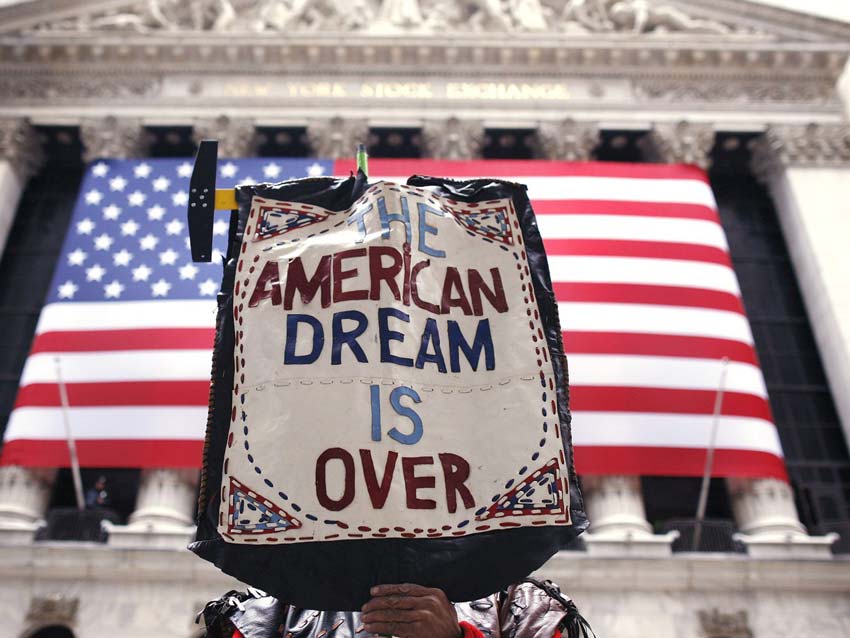
Given these troubling trends, many economists are now questioning the very foundation of the capitalist model that has underpinned American economic growth for centuries. The promise of the American Dream—that anyone can achieve success through hard work and perseverance—seems increasingly out of reach for millions of Americans. The nation’s economic and social crises raise the question: Is the end of the American Dream approaching?
As income inequality deepens, industries falter, and social safety nets weaken, America’s future looks uncertain. The U.S., once the beacon of opportunity and prosperity, now faces mounting challenges that threaten its position as a global leader. While the American Dream may not be entirely dead, it is undoubtedly under siege from forces both internal and external.
Uday India Bureau














Leave Your Comment