


Our societies need to define the process through which performing arts—such as theater, music, dance, and opera—are organized, formalized, and supported by official structures and institutions. This can involve the establishment of various organizations, policies, and systems that facilitate the development, dissemination, and sustainability of these art forms. Institutionalization can occur through government support, non-governmental organizations, private patrons, educational institutions, and cultural organizations.
There are national and regional performing arts councils, theaters, and cultural institutions are established to support and promote performing arts. Examples include state-run or sponsored theaters (e.g., the Royal National Theatre in the UK), Kalakshetra Foundation (institution for the promotion of Bharatanatyam and Carnatic music), National Centre for the Performing Arts (promotes classical music, dance, theater, and western music) and Sangeet Natak Academy (the national academy for music, dance, and drama) in India, ballet companies, and opera houses. Governments often provide funding for performing arts through ministries of culture or arts councils. Grants, subsidies, and sponsorships help maintain performance venues and support artists. National policies on cultural preservation or promotion can play a crucial role, such as UNESCO's Convention on the Protection and Promotion of the Diversity of Cultural Expressions.
The performing arts institutions preserve and promote the country's rich cultural heritage, while also offering rigorous academic and practical training in a wide variety of disciplines. These institutions are crucial for students who seek professional careers in music, dance, theater, and related fields, blending both modern and traditional pedagogical approaches.
The establishment of formal institutions of learning, such as music conservatories, theater schools, and dance academies, helps professionalize the performing arts. Universities and vocational programs provide structured training for performers, directors, and technical personnel.
Institutionalization can lead to the regular organization of cultural festivals, competitions, and awards that promote various performing arts on national and international levels. Examples include the Edinburgh Festival, the Venice Biennale, and international film and theater festivals.
The Kala Kalp Sanskrutik Sansthan, an art and cultural foundation that targets to train 10,000 Indian
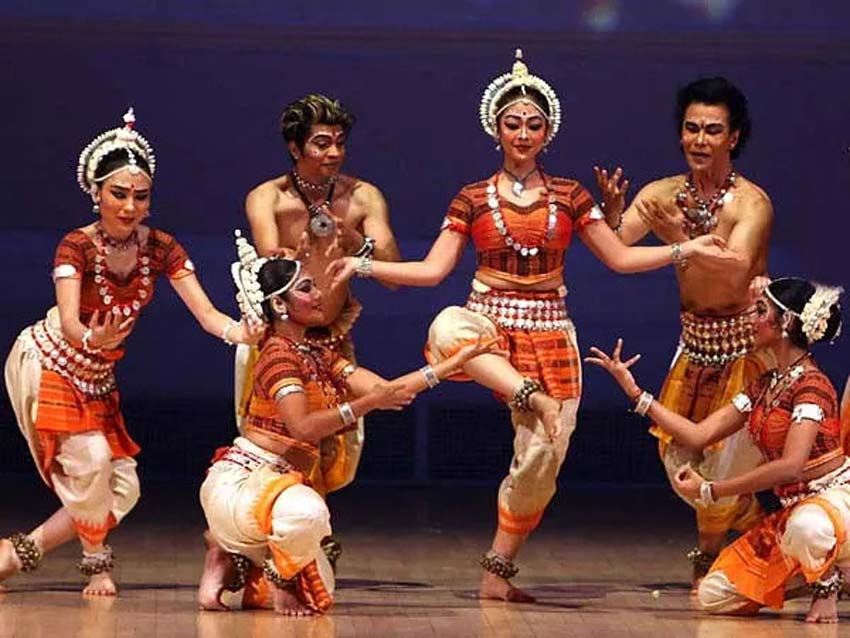
youths in performing arts by the end of 2030, outlined its execution plan in a recently concluded event in New Delhi. The wannabe performing artists will be trained from a diversified region in a wide range of artistic expressions encompassing Indian performing arts, including classical dance forms like Bharatanatyam, Kathak, and Odissi, classical music traditions such as Hindustani and Carnatic music, theater, folk dances, and contemporary interpretations of these art forms. The trained youths will be aligned to all possible opportunities sponsored by art endowment councils and foundations under various performing arts grants schemes, schemes for the award of senior/junior fellowships, repertory grants, and multiple other schemes for financial assistance for artists. These artists will be trained at workshops, boot camps, live events, and other work-based placements leading to certifications affiliated with recognized awarding bodies and institutions. The intensive training aims to hone a promising performer's skills through intensive work in applied lessons, solo and ensemble performance, repertoire study, and recitals.
‘’Training in these arts involves rigorous practice and dedication, often under the guidance of experienced gurus or teachers who pass down centuries-old techniques and knowledge,’’ says Dr Atasi Misra.
‘’Students not only learn the technical aspects of the art, such as rhythm, movement, and expression, but also the underlying cultural and spiritual philosophies that give these art forms their depth and meaning,’’ she adds.
‘’This holistic approach ensures that learners develop a deep respect for the traditions they are studying while also gaining the skills needed to perform at a high level,’’ says Sneha, a leading member of Kala Kalp Sanskrutik Sansthan.
Smt Gopika Varma, India's leading Mohiniyattam dancer and trainer and winner of the Sangeet Natak Academy Award, says, ‘’Apart from preserving cultural traditions, training in Indian performing arts also helps individuals build important life skills such as discipline, patience, and perseverance.’’
‘’Whether pursued as a professional career or as a passionate hobby, the training in Indian performing arts offers a profound and transformative experience that connects individuals to the rich tapestry of India's cultural heritage,’’ she adds.
Performing arts as a serious academic discipline within the humanities encompasses the study, practice, and analysis of various art forms, including theater, dance, music, and performance art. These disciplines are increasingly recognized for their intellectual rigor, cultural significance, and role in shaping human experience and expression. Performing arts provide valuable insights into different cultures and historical periods. For example, studying classical Greek tragedies, Renaissance theater, or traditional dances offers a window into the values, beliefs, and social dynamics of those times. Performances often reflect and challenge societal norms. By studying how performance art reacts to and influences political movements, identity struggles, or cultural shifts, scholars can explore the evolving nature of societies.
Like literature and visual art, performing arts can be analyzed through various critical lenses, such as semiotics, postcolonialism, feminism, and psychoanalysis. Scholars study performances not just for entertainment but for their ability to communicate complex ideas, power structures, and identity formations. Performing arts intersect with psychology, sociology, anthropology, and philosophy. They contribute to discussions about the human condition, identity, communication, and social interaction.
The study of how performances are created—the techniques, methodologies, and innovations—adds to our understanding of human creativity. Academic research in performing arts often involves practice-based approaches, where scholars combine theoretical study with performance-making. Performance often pushes boundaries, questioning established norms of gender, race, and politics. This form of expression is a site for experimentation and social commentary, leading to new ways of thinking about art and society.
Performing arts research explores how knowledge is embodied. In acting, dance, and music, performers use their bodies to convey emotion, meaning, and narrative. This experiential learning bridges intellectual and physical understanding, adding a dimension unique to performing arts within the humanities. Studying how actors, dancers, and musicians interpret texts and compositions deepens our understanding of human expression and communication. The performer is a mediator of meaning, making the body an essential part of scholarly inquiry.
The study of performing arts includes non-Western forms, such as Japanese Noh theater, Indian classical dance, and African drumming traditions. This global perspective broadens the scope of academic inquiry and encourages cross-cultural dialogue. In today’s interconnected world, performances often blend multiple traditions, creating hybrid forms. Studying these intersections highlights the fluid nature of culture and identity in a globalized context.
Modern technology has transformed performing arts, with new media, virtual reality, and digital platforms becoming central to the performance and its study. Analyzing these trends expands the academic understanding of how technology reshapes human interaction and creativity. The performing arts contribute to the digital humanities by integrating performance analysis with tools like motion capture, virtual environments, and multimedia installations.
Performing arts interact with other disciplines in the humanities, such as literature, history, and philosophy. This interdisciplinary nature contributes to broader discussions about meaning, culture, and human expression. Performance often raises fundamental questions about ethics, existence, and the human condition, making it a vital part of philosophical inquiry within the humanities. By combining practice, theory, and interdisciplinary research, the performing arts are essential to the humanities' exploration of human life and culture. They are recognized for both their intellectual depth and their contribution to understanding society, history, and creativity.
Performing arts touches a diverse range of disciplines. However, integration of this into any such discipline will have its own academic challenges. Hiren Raval, director of C3S Business School, says, ‘’Integrating performing arts with business schools as an academic discipline represents a novel approach that bridges the gap between the creative and commercial worlds.’’ ‘’This fusion would focus on equipping artists and performers with business skills while helping business students appreciate the value of creativity, innovation, and leadership through the arts,’’ says Dr Aida Mehrad, head of academics at C3S Business School in Barcelona, Spain. ‘’It also creates a holistic academic model that acknowledges the economic realities of the performing arts industry.’’
Well, the institutionalization of performing arts is a double-edged sword: it can ensure sustainability and widespread access, but it can also impose constraints on artistic freedom. Nonetheless, it plays a critical role in shaping the cultural landscape of societies worldwide.
‘’Business schools could offer specialized courses or majors focusing on arts entrepreneurship, preparing students to launch and manage arts organizations, theater companies, music production houses, or dance studios,’’ says Dr Atasi Misra, the founder and chief mentor of Kala Kalp Sanskrutik Sansthan. ‘’ Many performing artists operate as freelancers or small business owners, managing their own careers, productions, or companies. Integrating entrepreneurship courses into performing arts programs can teach students essential skills like business planning, marketing, fundraising, and project management.’’
‘’Integrating performing arts with information technology (IT) creates new opportunities in both academics and industrial practice, fostering innovation, enhancing creativity, and expanding the possibilities for human-computer interaction. Universities and performing arts schools use motion capture (mocap) technology to study human movement, particularly in dance and theater,’’ says Professor Mani Tahriri from the IT faculty of C3S Business School in Spain. ‘’For example, dancers' movements can be tracked using sensors, and the data can be used to analyze motion, create new choreographic styles, or enhance the performance of animated characters.’’ In the film and video game industries, motion capture is widely used to bring digital characters to life, as seen in movies like Avatar and video games like Assassin’s Creed. This technology captures the movements of actors and dancers, which are then applied to digital avatars in 3D environments.
‘’Virtual and augmented reality platforms are being incorporated into theater education to create immersive environments for performance,’’ says Dr Marc Sanso, head of academics at Aspire Business School, Barcelona, Spain. ‘’Students can explore virtual sets, interact with digital objects, or experiment with mixed-reality performances that blend live actors with computer-generated elements.’’
‘’VR and AR are used in interactive performances and installations where audiences can participate in the narrative,’’ says says Prof Philip Mayer of Aspire Business School, Barcelona, Spain. ‘’For example, immersive theater experiences like Sleep No More integrate digital technology, allowing viewers to explore and interact with the virtual aspects of the performance.’’ Museums and cultural institutions use AR to enhance live performances with historical or contextual information overlaid in real-time.
‘’Researchers are using AI and machine learning algorithms to analyze musical patterns and even compose music,’’ says Eduardo Ortiz, C3S Business School, Barcelona, Spain. ‘’This technology helps music students experiment with new compositions, analyze complex structures, or collaborate with AI systems to create innovative pieces.’’ AI-driven music tools, such as OpenAI’s MuseNet or Sony’s Flow Machines, assist composers in creating new music. AI is also used in live performances where machine learning systems respond to real-time inputs from musicians, creating dynamic, evolving soundscapes.
Performing arts programs are integrating wearable technology, such as smart costumes and haptic feedback devices, to study how technology can enhance performance. For example, wearable sensors can track the physicality of dancers or actors and provide real-time feedback to adjust performances. In the entertainment and fashion industries, wearable technology is used to create interactive costumes that light up, change color, or react to the performer’s movement. Wearable devices like Mi.Mu gloves allow musicians and dancers to control sound and visuals with their movements, bridging the gap between physical performance and digital production.
‘’Students and researchers explore how IT can create interactive art installations where performance and audience interaction are mediated by technology, says says Dr Daba Chowdhury, a faculty at Canterbury Christ Church University, UK. ‘’For example, digital projections and motion sensors are used to allow audiences to manipulate visual elements or soundscapes in real time.’’ Interactive installations in museums, exhibitions, and public spaces often use motion-sensing technology (like Microsoft Kinect or Leap Motion) to let visitors engage with digital art. Performances can adapt in real-time based on audience participation, leading to personalized and dynamic experiences.
‘’Stage design programs use 3D projection mapping to create immersive environments where digital imagery is projected onto physical surfaces, transforming traditional stage sets into dynamic and interactive spaces. 3D projection mapping is widely used in live concerts, theater productions, and corporate events,’’ says says Dr. Fernando Velasquez Villalba, a senior faculty at C3 Business School, Spain. ‘’Companies like Moment Factory create large-scale visual experiences where digital images are projected onto buildings, concert stages, or performance sets, transforming them into visually striking displays.’’
‘’Digital tools like DanceForms and LifeForms are used in dance education to help choreographers visualize and experiment with new movement sequences, ‘’ says Dr. Francisco Rosique Gill, a senior visiting faculty at C3S Business School, Barcelona. ‘’These software tools allow dancers to simulate their choreography in a 3D environment before performing it live.’’ Choreographers in film and television use digital choreography software to pre-visualize dance sequences and stunts. These tools also assist in coordinating complex camera movements and special effects with the performers’ actions.‘’In music and theater education, students use digital audio workstations (DAWs) like Pro Tools and Ableton Live to compose, arrange, and manipulate sound for live performances or digital productions,’’ says Dr Atasi Misra. ‘’In the film and gaming industries, sound designers use advanced digital processing tools to create soundscapes that interact with performers and environments.’’ For example, in video games, soundtracks can change dynamically based on the player’s actions, creating a more immersive experience.
Robotics is being explored in the performing arts, where robots are used as performers or interactive elements in the show. For example, students and researchers may use robots to explore new forms of movement and interaction with human performers. In commercial performances, robots are increasingly being integrated into live shows and exhibitions. For instance, robotic arms have been used to control lighting, sound, or even perform dance routines in live events.
Universities are integrating multimedia technologies into performing arts curricula, enabling students to experiment with digital storytelling tools like video, animation, and interactive media to create hybrid performances. In the entertainment industry, multimedia performances that combine live acting, digital projections, and real-time animations are becoming more common. Companies like Cirque du Soleil integrate digital media with traditional performance art to create visually stunning productions.
Researchers and students experiment with data visualization in performance art, where real-time data (from audience reactions, environmental conditions, etc.) is integrated into live performances, influencing the direction or content of the show. Data-driven performances have been used in interactive art installations and public events where performers or systems react to live data inputs. For example, an artist might use social media feeds or environmental data to shape a performance in real time, creating a unique, context-sensitive experience.
‘’Online platforms for global collaboration allow performers and artists from different locations to work together in real time, using cloud-based tools to co-create performances, ‘’ says Dr. Maria Fernanda Dugarte, dean and director of Institutional Affairs at C3S Business School in Barcelona, Spain. ‘’This method enables cross-cultural exchanges and innovative approaches to global performance projects.’’ In the entertainment and event industries, cloud-based platforms enable real-time collaboration on large-scale performances across geographies. Artists, directors, and technicians can collaborate remotely, sharing resources and syncing performances virtually.
The integration of performing arts and information technology fosters a vibrant intersection of creativity, innovation, and technical expertise. By blending artistic expression with cutting-edge technology, both academic institutions and industries are expanding the possibilities for storytelling, performance, and human-computer interaction. This fusion enhances the learning experience and pushes the boundaries of what can be achieved in live performance, multimedia production, and digital creativity.
Institutionalized performing arts are more likely to receive stable funding, leading to longevity and continuity in artistic endeavors. Public institutions often make performances more accessible to a wider audience through subsidies and education programs. National institutions use performing arts to project soft power and enhance cultural exchanges between countries.
Institutionalization can sometimes stifle creativity by promoting traditional or commercialized forms of art over experimental or avant-garde work. The process can lead to heavy bureaucratic oversight, making it difficult for independent artists or new art forms to gain recognition or support. In some cases, institutionalization leads to the commercialization of performing arts, potentially prioritizing profit over artistic integrity.
(The content of this article reflects the views of writers and contributors, not necessarily those of the publisher and editor. All disputes are subject to the exclusive jurisdiction of competent courts and forums in Delhi/New Delhi only)

By Sarat C. Das















Leave Your Comment