


Several unresolved questions are being raised regarding the ongoing trade deal between India and the United States. Officially, this agreement is being presented as one that will enhance “partnership and economic cooperation,” but there are concerns about its confidential aspects (Non-Disclosure Agreement – NDA) and its potential impact.
Based on the latest reports and historical case studies, it is clear that India will have to carefully evaluate both the benefits and the risks of this deal.
Historical Context
Economic and trade relations between India and the United States have been evolving for decades. After economic liberalization in 1991, India began encouraging foreign investment and trade. The United States viewed India as an important partner in technology, services, and defense—and now also as a large and growing market.

“Every coin has two sides.”
India currently imports goods worth USD 42 billion annually from the United States. According to the details of the deal that have emerged so far, India’s annual imports from the US could rise to USD 100 billion—meaning an increase of more than 100% in purchases each year.
India’s export surplus with the US would either become zero or turn negative.
Nevertheless, since the White House has shared some important information about the India–US deal on its website, this is an attempt to understand the agreement based on that information.
Under the framework of the agreement, India will eliminate or reduce tariffs on all US industrial goods and many US food and agricultural products. These include dried distillers grains (DDGs), red sorghum for animal feed, nuts, fresh and processed fruits, soybean oil, wine, spirits, and several other products.
As I said, every coin has two sides. On the positive side, nuts will become cheaper in the country, and India will move from fat-based foods toward more nutritious foods.
Currently, per capita nut consumption in India is about 20 grams per year, which needs to increase. The Government of India has focused on the nut industry and producers in the 2026 budget, indicating that the domestic nut market—currently around USD 2 billion—could grow to USD 20 billion by 2030. This could encourage Indian farmers to shift toward nut cultivation.
Yes, soybean farmers may feel disappointed. The US will supply soybean oil to India along with DDGs.
This also has both advantages and disadvantages.
As the saying goes, “What you don’t know can hurt you.”
But here we must understand that soybean cultivation—like sunflower—is declining, and for the past four years, farmers have not been earning profits from soybean cultivation, prompting them to shift to other crops.
The import of DDGs will benefit animal feed importers, livestock farmers, and poultry farmers, as these products will be imported cheaply from the US. Yes, the Indian animal feed industry may face losses. However, Indian livestock farmers will benefit because they will get feed at lower prices, reducing costs. The dairy industry will benefit as well.
As far as I understand, the government may also see an advantage here—farmers earning better incomes from animal husbandry. In 2016, when easier rules were introduced to encourage greater investment by US companies in India, the benefits were clearly visible in the stock market and in increased investment awareness.
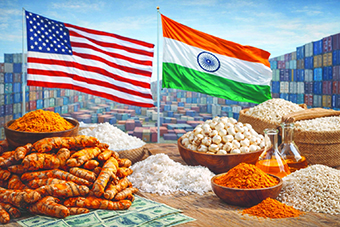
This deal will benefit farmers of turmeric, makhana, and rice, and the US market will no longer act as a barrier to their expansion. NDA and Confidential Clauses: Benefits and Risks If NDAs (Non-Disclosure Agreements) are part of this deal, extreme caution will be required. The purpose of an NDA is to protect trade strategies and sensitive data. However, such clauses also carry risks. It is possible that these clauses are intended to ensure that US companies’ export and import strategies do not become public.
They may also have been considered necessary to protect the deal from political pressure and prevent it from becoming a political controversy.
Must avoid the Bangladesh Model
Recently, Bangladesh entered into a “confidential trade deal” with the United States. This deal was finalized quickly after the India–US agreement.
The US set a tariff of 18% for India, while Bangladesh finalized its deal.
Bangladesh was supposed to sign the deal on 9 February, but it was finalized earlier.
Neither parliament, nor the media, nor industry stakeholders were given complete information, and access to information has been restricted.
India must avoid deals of this nature between Bangladesh and the United States.
Accepting US Standards and Certification, Free entry for US products and vehicles, Reduced or zero import inspections
In India’s case, we must keep in mind: “Forewarned is forearmed.” Potential Impact on Indian Industries and Farmers Textile and Garment Sector
1) India’s textile exports to the US may increase
2) Free market access for US companies could make local competition more difficult
Agriculture Sector
i) US agricultural products may enter India without restrictions
ii) Crop prices and market rates for farmers could be affected
iii) Support prices and domestic production could be put at risk
Small industries may find it difficult to compete with cheaper US products.
In this deal, it seems the government may be working along these lines: “Keep your friends close, and your enemies closer.”

Suresh Manchanda
(The content of this article reflects the views of writer and contributor, not necessarily those of the publisher and editor. All disputes are subject to the exclusive jurisdiction of competent courts and forums in Delhi/New Delhi only)




















Leave Your Comment