


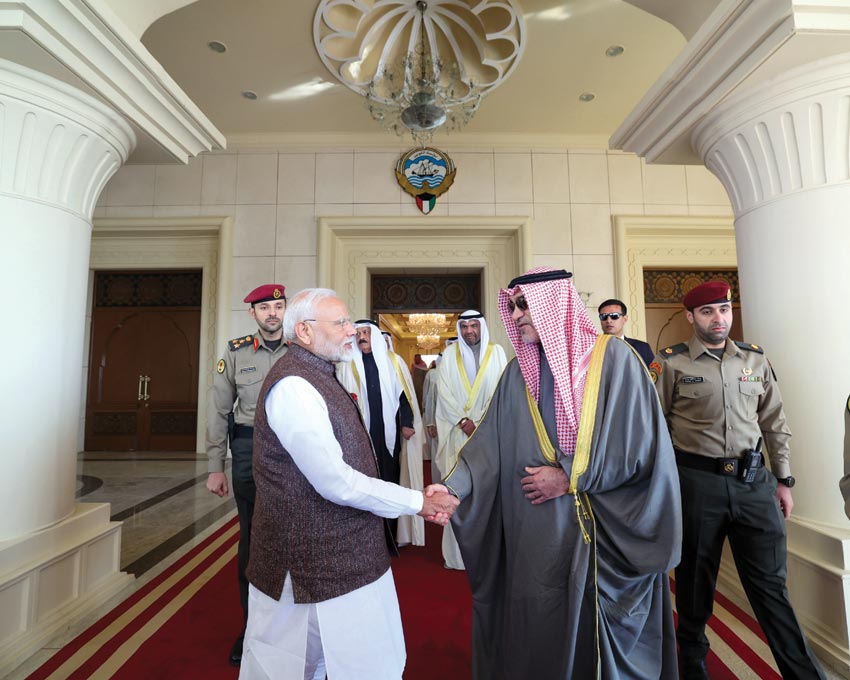
Prime Minister Narendra Modi’s recent visit to Kuwait, the first by an Indian Prime Minister in 43 years, marked a historic milestone in fostering India’s relationship with the Gulf nation. Conferred with Kuwait’s highest civilian award, PM Modi’s visit underscored not just diplomatic ties but also India’s growing influence as a soft power on the global stage. Through his words and actions, PM Modi highlighted the multifaceted dimensions of India’s soft power—a unique blend of cultural heritage, diaspora contributions, and civilisational ethos—and articulated a vision for strengthening India’s presence in the Gulf and beyond.
Rekindling Historical and Cultural Ties
India’s relationship with Kuwait is deeply rooted in history, with centuries of trade, cultural exchange, and people-to-people connections forming the bedrock of ties. PM Modi’s speech during his visit celebrated this shared legacy. By invoking historical ties, he reminded the world that India’s interactions with the Gulf region have always been mutually enriching, characterized by the exchange of ideas, goods, and cultures.
This narrative aligns with India’s broader soft power strategy—relying on shared history to strengthen partnerships. By positioning India as a custodian of civilisational values that transcend time, PM Modi’s approach promotes the idea of India as a natural partner in today’s interconnected world.

The Role of the Indian Diaspora
PM Modi paid rich tributes to the 1 million-strong Indian diaspora in Kuwait, acknowledging their significant contributions to the Gulf nation’s economy and society. The Indian diaspora, often referred to as “India’s cultural ambassadors,” exemplifies the country’s ethos of hard work, adaptability, and multiculturalism. Their presence has not only bolstered India’s image abroad but has also created strong bridges between India and host nations.
In Kuwait, the Indian diaspora has become an integral part of the fabric of society, contributing across sectors like healthcare, education, and technology. PM Modi’s recognition of their efforts reinforces India’s commitment to its citizens abroad and underscores the country’s influence as a people-centric soft power.
Civilisational Ethos: The Foundation of India’s Soft Power
PM Modi’s emphasis on India’s civilisational ethos forms a cornerstone of the nation’s soft power. India’s philosophy of “VasudhaivaKutumbakam” (the world is one family) resonates globally, especially in regions like the Gulf, where cultural and religious diversity coexists. PM Modi highlighted how India’s inclusivity and its deep-rooted traditions of mutual respect and harmony make it a global beacon for peaceful coexistence.
India’s spiritual and philosophical traditions, from yoga to Ayurveda, have gained immense popularity worldwide, including in the Gulf. PM Modi’s advocacy for these traditions has played a pivotal role in their global adoption, reinforcing India’s image as a wellspring of holistic well-being.
Cultural Diplomacy Through Cinema and Cuisine
Highlighting India’s cultural exports, PM Modi mentioned the role of Indian cinema and cuisine in shaping global perceptions of the country. Bollywood, with its captivating storytelling and vibrant music, has captured hearts worldwide, including in the Gulf. Indian films, often dubbed into Arabic, serve as a cultural bridge, bringing Indian traditions, values, and narratives closer to Gulf audiences. Similarly, Indian cuisine’s popularity in the Gulf underscores its universal appeal. The aromatic spices and rich flavors of Indian dishes have found their way into everyday life in Kuwait and other Gulf nations. PM Modi’s acknowledgment of these cultural elements reinforces their role as informal ambassadors of India’s heritage.
Tourism: A Gateway to India’s Soft Power
Tourism forms another vital pillar of India’s soft power strategy. PM Modi’s emphasis on India’s tourism sector during his visit was a call to explore the country’s diverse landscapes, rich history, and spiritual experiences. India’s iconic sites, from the Taj Mahal to the backwaters of Kerala, attract millions of tourists annually, creating an enduring impression of the nation’s grandeur and cultural depth.
The government’s initiatives, such as the “Dekho Apna Desh” campaign and the promotion of heritage tourism, aim to position India as a must-visit destination. By inviting Gulf citizens to experience India’s unique offerings, PM Modi highlighted tourism as a gateway to building stronger cultural and economic ties.
India’s Soft Power Goals: A Vision for the Future
PM Modi’s visit to Kuwait epitomized India’s broader soft power goals. These include:
Conclusion
PM Modi’s historic visit to Kuwait was not just a diplomatic event but a masterstroke in soft power diplomacy. By celebrating shared histories, honoring the diaspora, and promoting India’s cultural and civilisational strengths, he painted a compelling vision of India’s role on the global stage.
India’s soft power—rooted in its ancient heritage and carried forward by its vibrant culture and dynamic diaspora—continues to be a key driver of its foreign policy. As PM Modi articulated in Kuwait, India’s soft power is not merely about influence; it is about building bridges, fostering understanding, and creating a shared vision for a harmonious and prosperous world.
Uday India Bureau














Leave Your Comment