


India’s remarkable ascent in the global consumption parity rankings is not just a statistical achievement — it’s a reflection of something deeper. To truly understand this phenomenon, one must look beyond conventional economic lenses and delve into the fabric of Indian society. Dismissing this progress by pointing solely to income disparities would be not only simplistic but also self-defeating.
As per the Press Information Bureau’s release dated 5 July 2025, India has been ranked 4th globally in terms of income equality by the World Bank, with a Gini Index score of 25.5 for 2022–23. This marks a notable improvement from 28.8 in 2011–12, showcasing a steady decline in consumption-based inequality over the past decade.
India now outperforms major economies including China (35.7), the United States (41.8), and all G7 and G20 nations in this regard. Only smaller countries like the Slovak Republic (24.1), Slovenia (24.3), and Belarus (24.4) rank higher — making India's achievement particularly striking, given its vast population and socio-economic diversity.
With this progress, India has entered the “moderately low inequality” category (Gini scores between 25–30) and stands on the brink of joining the exclusive group of “low inequality” nations (scores below 25). The World Bank’s rankings are based on consumption expenditure surveys, a metric that captures how resources are actually used at the household level, offering a more grounded perspective than income data alone.
This rise signals a quiet revolution — one driven by cultural resilience, grassroots welfare, and a uniquely Indian model of shared growth. For the world, India’s story offers a powerful reminder: economic equity is not merely about equal incomes — it’s about enabling equitable consumption and dignity for all.
Beyond numbers: How India Sustains the Unsustainable.
India is sustaining the largest population despite high population density. This is supported by Indian culture built on values and knowledge acquired over a period of millennia. It has made people amiable to share their resources, however scarce. However, under exploitative invaders the same high population density faced significant challenges. British rulers not only plundered wealth but also destroyed the strong ecological and educational infrastructure. The prosperous country once, got the tag of ‘Hindu growth rate’ without raising any objection to the plundering and genocide suffered for a very long time.
Naysayers discount this achievement quoting India's low ranking in income disparity index. It may look like a mystery but understanding the Indian culture makes it simple. Let’s explore:
In Indian philosophy the focus is on wealth creation not looting others. The scriptures are full of stories which encourage the readers to keep a positive mindset and practice basic traits like satya, ahinsa, austerity etc. let’s understand it in modern context. The sad part is that Modern economics does not include non business interventions in the GDP calculations.
Opportunities at the bottom of pyramid ( OBP)
Management guru C.K. Prahalad promoted the concept of the "bottom of the pyramid" (BOP) referring to the poorest segment of the global population, living on less than $2.50 a day. This group represents a significant and often overlooked as a market opportunity for businesses. Developing affordable products and services for them, companies can both generate profits and contribute to poverty reduction. His book highlighted several companies that have successfully tapped into the market of low-income consumers. These included Hindustan Unilever (HUL), CavinKare, Parle, PepsiCo, and Dabur. He also discussed the strategies employed, such as offering products in smaller, more affordable packs and focusing on high-volume, low-margin business models. The results are phenomenal, now the poorest of poor use shampoo, surf, coconut oil etc due to affordable sachets made available.
From corporates to public administration.
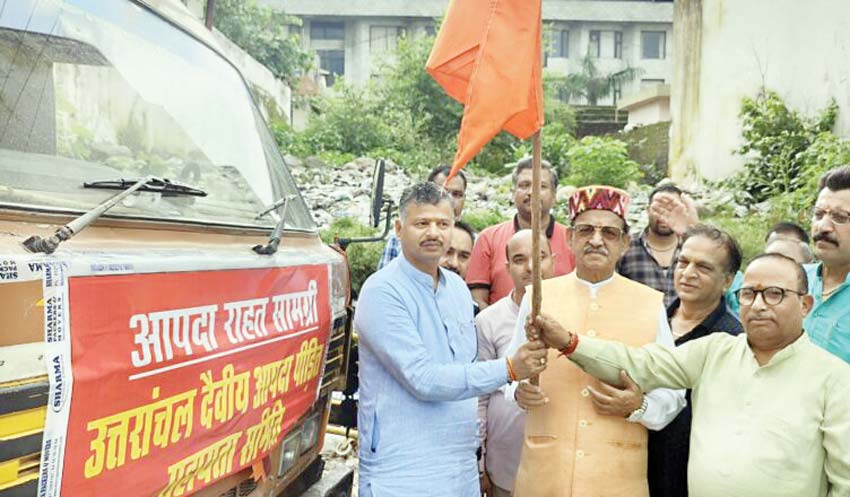
The Indian government under the present leadership upholding Indian ethos relaunched schemes like Mahatma Gandhi NAREGA which provided inimical employment guarantee. Taking a leaf from it, more than 27 new schemes were launched covering women, students, entrepreneurs and other segments of the society. These interventions have led India to a competitive advantage. As of March 2025, India had a total of 120 crore telephone subscribers along with Pradhan Mantri Jan Dhan Yojana Reached 55 crore beneficiaries with Jan Dhan accounts. Empowered with UPI mobile interface In March 2025, (Unified Payments Interface) UPI transactions reached a record high of ₹24.77 lakh crore, approximately $289.26 billion USD. A 13.5% increase in transaction volume compared to the previous month, with 183 crore transactions, exceeding ₹1 lakh crore for the first time in March. It has opened new horizons of growth, employment etc.
Indian philosophy of ‘Vasudhaiva Kutumbakam’ ( the whole world is a family), ‘serve Bhavanatu sukhina' ( everybody should be joyful, blessed, or well-to-do) and ‘Atithi Devo Bhav’ ( guest is god) has led this transformation. We represent a country which has become an exporter of food grains despite importing the same upto late seventies.
India’s Rise in Consumption Parity: A Cultural Legacy with Global Lessons.
India’s impressive leap in global consumption parity is more than an economic trend — it reflects a civilizational ethos where less is more. Rooted in the Upanishadic values of santosh (contentment), daan (giving), tap (endurance), and swadhyay (self-learning), this mindset has long shaped India’s approach to equity and shared prosperity.
Mahatma Gandhi captured this spirit when he said, “The world has enough for everyone's needs, but not enough for everyone's greed.” His promotion of Khadi, Swadeshi, and Panchayati Raj laid the groundwork for a more decentralized, sustainable model of development — a model that continues to evolve.
From citizens voluntarily surrendering gas subsidies to protect forests and empower the poor, to India’s leadership in combating AIDS in Africa and managing COVID-19, real-world examples show that India’s philosophy of equitable consumption has global relevance.
India’s COVID-19 Response: A Bold Gamble Guided by Deep Cultural Values
When the world expected devastation in India, the country defied odds through decisive leadership rooted in its age-old philosophy of resilience, collective welfare, and self-discipline. The focus was clear: save lives first, economy later.
Early Action, Bold Measures
India imposed one of the world’s earliest and strictest lockdowns in March 2020—before the virus had widely spread. This bought critical time to build capacity and prepare.
Scaling Healthcare Rapidly
A massive public-private effort led to the rapid creation of temporary hospitals, oxygen plants, and testing labs. The PM CARES Fund mobilized resources, while industries retooled operations to produce medical equipment. Industrial oxygen was diverted for medical use after due precautions.
Tech-Driven Vaccination Campaign
The CoWIN platform enabled one of the largest vaccine drives globally. India developed and mass-produced Covaxin and Covishield, administering over 2 billion doses by mid-2022. Despite GDP strain, phased reopening and public health protocols led to a strong rebound in 2021–22 with double-digit growth.
Digital Tools and Telemedicine
Apps like Aarogya Setu, real-time dashboards, and digital vaccine certificates helped monitor the crisis. Remote healthcare and telemedicine expanded services to rural areas.
Welfare at Scale
India launched one of the world’s largest relief programs: free food grains, cash transfers, and gas cylinders reached over 80 crore citizens. Support to MSMEs and farmers included loans and credit guarantees, delivered efficiently via direct transfers.
Global Vaccine Cooperation
Even amid domestic demand, India launched Vaccine Maitri, supplying affordable vaccines to over 70 countries—especially in the Global South—positioning itself as a partner in global health equity.
Community-Driven Response
From temples to techies, civil society stepped up. Local governance ensured last-mile delivery, while volunteers fed migrants and supported quarantine centers.
The Trade-Off
India paid a price—GDP shrank 7.3% in 2020, and job losses hit the informal sector hardest. But the human cost was contained, and the country emerged with strengthened global credibility and a model of people-first crisis management. The economy bounced back to double digit growth later.
India’s Silent Strength: Supporting Africa in the Fight Against Epidemics
While managing its own health challenges, India has quietly played a pivotal role in Africa’s fight against HIV/AIDS and other epidemics. As a major supplier of affordable antiretroviral drugs, India made life-saving treatment accessible to millions across the continent.
But India's impact goes beyond medicine. By sharing low-cost innovations, healthcare expertise, and political will, India has shown that meaningful global aid isn't just about money — it’s about intent, solidarity, and smart solutions. A developing nation helping others thrive: that’s a model the world can learn from.
What’s Next for Viksit Bharat: Tackling Compulsive Begging for a Cleaner, Stronger Nation
As India marches toward its 2047 vision of becoming a developed nation, it's time to address challenges that threaten its urban integrity and global image — starting with compulsive begging.
Despite nationwide access to free food, shelters, and financial inclusion, street begging persists — often driven by addiction, habit, or exploitation, not poverty. In major cities, it fuels organized rackets involving child trafficking, drug abuse, and theft.Beyond crime, compulsive begging erodes public order, deters tourism, and reinforces dependency, undermining India’s social progress. Clean, safe, and dignified public spaces are vital to any developed society.
With basic survival needs secured for most, the next moral and strategic step is clear: eliminate street-level begging through strict enforcement, rehabilitation programs, and protection of vulnerable groups.
A Viksit Bharat cannot coexist with institutionalized neglect. The government has enough resources to take care of the helpless and restrain the habitual beggars. What people need is dignity — not rewarding dependency — is how a truly developed nation rises.
● A simple DNA match between beggars and children could expose thousands of abductions.
● The project will help the administration to understand what loopholes are there? Few of the old beggars at Har ki Podi, in Haridwar told the author that they neither have the aadhar card nor get any subsidy.
● Bharat Jain, whose net worth is an astonishing ₹7.5 crore, has been begging for over 40 years. According to The Economic Times, his daily income ranges between ₹2,000 and ₹2,500, amounting to ₹60,000 to ₹75,000 monthly. ( The Mint 12 Dec 2024)
● As per the last census data India has over 4,00,000 beggars but it is far from true. During COVID the holy city of Mathura where the author's family ran a food stall for beggars in Bhuteshwar area was feeding 200 to 300 beggars per day. It was said that the holy city alone had around 80000 beggars.
(“Begging In India: Complete Case Study Of $1.5 Billion Industry”. Laveena Chandnani April 17, 2019 marketingmind.in)
Towards a Trustworthy India: Building Infrastructure for a Fraud-Free Future
As India advances toward a digital and global leadership role, it must urgently strengthen systems to combat fraud and cybercrime. Innovation and entrepreneurship are creating immense wealth—but scams, identity theft, and digital fraud are eroding trust at home and abroad.
From IT Hub to Cybercrime Hotspot
What began as small-scale call center scams has grown into organized cybercrime networks. Exploiting digital loopholes and weak enforcement, these operations now damage India's global reputation, strain diplomatic ties, and undermine confidence in Indian tech.
Trust is the backbone needed to be a superpower
Fraud isn't just a law-and-order issue—it's a national security and governance challenge. Without trust and digital safety, economic growth becomes unstable. A secure financial and digital ecosystem is the bedrock of a Viksit Bharat.
The Way Forward
India must invest in fraud detection infrastructure, strict regulation, global cooperation, and stronger digital literacy. The cost of reform is far lower than the money already lost—and far smaller than what was spent fighting COVID.
If India wants to lead the world, it must prove it can innovate with integrity and grow with accountability.
Conclusion
India's improved ranking in consumption parity is a testament to the nation's steady economic progress and growing purchasing power among its citizens. This achievement reflects positive strides in income distribution, affordability, and inclusive growth. As India continues to rise on the global economic stage, such milestones reinforce its commitment to sustainable development and a better quality of life for all.
The time is ripe for institutions like the United Nations to study and adopt aspects of the Indian experience — not just as policy, but as a people-powered movement toward more compassionate and sustainable development.
By Rakesh Kumar
(The content of this article reflects the views of writers and contributors, not necessarily those of the publisher and editor. All disputes are subject to the exclusive jurisdiction of competent courts and forums in Delhi/New Delhi only)














Leave Your Comment