


India’s defense capabilities have undergone a transformative evolution in recent years, making the country a formidable force on the global stage. With the upcoming Aero India Show in Bengaluru from February 10 to 14, showcasing India’s aerial strength and technological advancements, it is an opportune moment to reflect on the remarkable strides India has made in its military modernization. Under the visionary leadership of Prime Minister Narendra Modi, the government has placed significant emphasis on enhancing self-reliance, or “Aatma Nirbhar Bharat,” in the defense sector. This comprehensive modernization effort encompasses the Indian Army, Navy, and Air Force, solidifying India’s status as a rising global power.
Aatma Nirbhar Bharat in Defense
The cornerstone of India’s growing military prowess lies in its pursuit of self-reliance. The Modi government has initiated several reforms and policies to boost indigenous defense production. The Defense Procurement Policy (DPP) has been revamped to prioritize “Make in India” projects, encouraging domestic manufacturing of defense equipment. The establishment of two dedicated defense corridors in Uttar Pradesh and Tamil Nadu is a prime example of fostering an ecosystem for defense innovation and manufacturing.
Key initiatives such as the Innovations for Defence Excellence (iDEX) and the Defence Industrial Production Corridor (DIPC) have also catalyzed collaborations between startups, MSMEs, and established defense manufacturers. The introduction of the Positive Indigenization List, which prohibits the import of certain defense items, has further boosted domestic production.
Modernization of the Indian Army
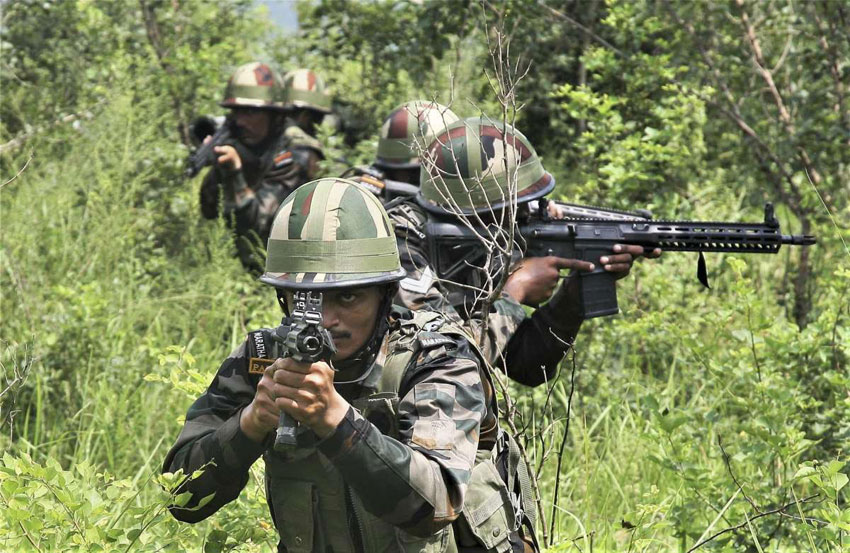
The Indian Army, the backbone of India’s defense forces, has witnessed significant modernization in recent years. The induction of advanced artillery systems, state-of-the-art tanks, and enhanced infantry weapons has strengthened its combat readiness. The K9 Vajra-T, a self-propelled howitzer, and the M777 ultra-light howitzers are among the key additions to the Army’s arsenal. These systems enhance the Army’s firepower and mobility, particularly in mountainous and high-altitude regions like Ladakh and Arunachal Pradesh.
The government has also prioritized equipping soldiers with advanced personal gear, including bulletproof vests, night-vision devices, and communication systems. The induction of the AK-203 assault rifles, manufactured under a joint venture with Russia, marks a significant step in modernizing infantry weapons.
In terms of logistics and mobility, the induction of all-terrain vehicles, improved bridging systems, and enhanced engineering equipment ensures that the Army can respond swiftly to emerging threats.
Strengthening the Indian Navy
As a maritime nation with vast strategic interests, the Indian Navy has been at the forefront of India’s defense modernization. The induction of cutting-edge platforms like the INS Vikrant, India’s first indigenously built aircraft carrier, underscores the Navy’s growing capabilities. This landmark achievement not only enhances India’s blue-water operational reach but also signifies the nation’s shipbuilding prowess.
The induction of stealth frigates like the INS Nilgiri and advanced submarines under the Project 75 (Kalvari-class) initiative has bolstered the Navy’s offensive and defensive capabilities. These platforms are equipped with advanced weapon systems and sensors, enabling them to operate effectively in diverse maritime environments.
The Modi government has also emphasized strengthening coastal and maritime security. The induction of offshore patrol vessels, fast attack craft, and surveillance systems ensures robust monitoring of India’s extensive coastline and exclusive economic zone (EEZ). Moreover, the Navy’s strategic focus on enhancing interoperability with friendly nations through joint exercises like Malabar and Varuna has elevated India’s maritime standing globally.
Advancements in the Indian Air Force
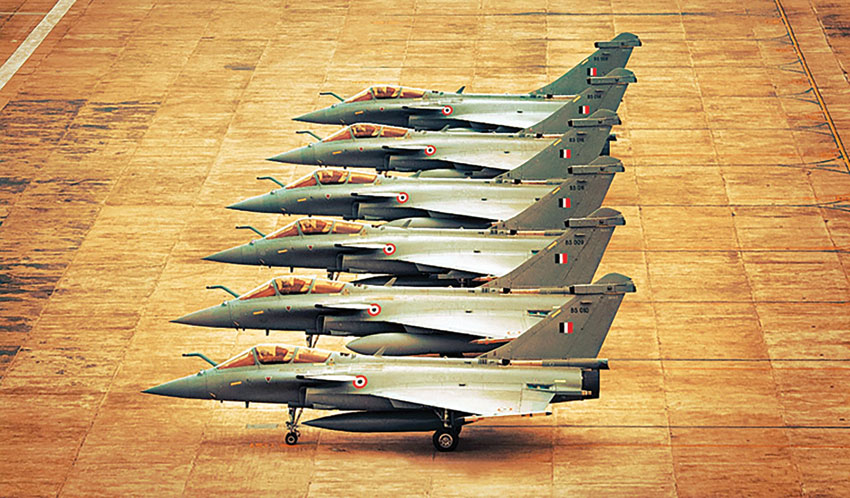
The Indian Air Force (IAF) has undergone a remarkable transformation, emerging as a modern and highly capable force. The induction of the Rafale fighter jets has been a game-changer, providing the IAF with unmatched air superiority and strike capabilities. Equipped with advanced avionics, weapons systems, and electronic warfare capabilities, the Rafales have significantly enhanced the IAF’s operational prowess.
In addition to the Rafales, the induction of the indigenously developed Light Combat Aircraft (LCA) Tejas showcases India’s growing expertise in aerospace engineering. The Tejas is a versatile multirole fighter designed to meet the IAF’s diverse operational requirements. The development of the Advanced Medium Combat Aircraft (AMCA), a fifth-generation stealth fighter, further highlights India’s ambitions in the aerospace domain.
The IAF’s transport and surveillance capabilities have also been augmented with the acquisition of platforms like the C-17 Globemaster, Chinook heavy-lift helicopters, and Apache attack helicopters. These assets enhance the IAF’s strategic airlift capabilities and provide critical support in both combat and humanitarian missions.

Technological Advancements and Strategic Initiatives
The Modi government has prioritized the integration of cutting-edge technologies into India’s defense forces. The development and deployment of advanced missile systems like the Agni and BrahMos series have significantly enhanced India’s strategic deterrence. The induction of the S-400 Triumf air defense system has fortified India’s ability to counter aerial threats effectively.
In the realm of cyber and space warfare, India has made substantial progress. The establishment of the Defence Cyber Agency and the Defence Space Agency underscores India’s focus on emerging domains of warfare. The successful demonstration of an anti-satellite (ASAT) missile capability during Mission Shakti highlights India’s ability to safeguard its space assets.
Furthermore, the government’s emphasis on artificial intelligence (AI), robotics, and unmanned systems has paved the way for the development of advanced drones and autonomous platforms.
The Upcoming Aero Show in Bengaluru
The upcoming Aero India show in Bengaluru is set to showcase India’s growing prominence in the global aerospace and defense sectors. Scheduled to be held at the Yelahanka Air Force Station, this prestigious event will bring together industry leaders, policymakers, and defense experts from across the world. It serves as a platform to highlight India’s advancements in aviation technology, indigenous manufacturing capabilities, and strategic partnerships. From cutting-edge fighter jets and unmanned aerial systems to state-of-the-art defense equipment, the exhibition will underline India’s commitment to achieving self-reliance in defense production under the ‘Atmanirbhar Bharat’ initiative. With live demonstrations, business networking opportunities, and discussions on future trends, the Aero Show is poised to reinforce India’s position as a hub for innovation and collaboration in the aerospace domain.
A Force to Reckon With
India, with its vast and diverse terrain, geopolitical complexities, and rich cultural heritage, has always been at the crossroads of global power dynamics. Over the past few decades, the country has not only emerged as an economic powerhouse but also as a formidable military force. Its growing military prowess is a result of visionary leadership, strategic reforms, modernization of defense infrastructure, and an unwavering commitment to safeguarding national sovereignty.
The Narendra Modi-led government has significantly contributed to India’s defense sector through the ‘Atmanirbhar Bharat’ initiative. The aim is to reduce dependence on foreign arms and develop indigenous capabilities. This vision has been brought to life through the Defence Production and Export Promotion Policy (DPEPP), which has boosted domestic manufacturing and led to the establishment of multiple defense corridors in states like Uttar Pradesh and Tamil Nadu. India’s defense exports have seen an unprecedented surge, reaching nearly ₹14,000 crore in 2023. Indigenous systems like the BrahMos missile, Tejas fighter aircraft, and Pinaka rocket launchers are now sought after globally. Collaborative ventures with private players and foreign entities have catalyzed technological advancements, as exemplified by the AK-203 rifle manufacturing plant in Amethi, reflecting India’s focus on joint ventures.
India’s defense forces have witnessed transformative advancements in technology. The development of the Agni series of intercontinental ballistic missiles (ICBM), with ranges exceeding 5,000 km, has cemented India’s position among global strategic powers. The BrahMos supersonic missile, a joint venture with Russia, has evolved into a universal platform deployed across land, air, and sea. Moreover, India’s robust Ballistic Missile Defense (BMD) system is designed to intercept incoming missiles at various altitudes, showcasing its technological sophistication and preparedness. In the realm of indigenous aircraft, the Tejas Light Combat Aircraft (LCA) stands as a testament to India’s growing aeronautical capabilities, with several countries showing interest in its procurement. The Advanced Medium Combat Aircraft (AMCA), currently under development, is poised to elevate India’s aerial prowess further.
The Indian Navy has also made significant strides in enhancing its maritime capabilities. The commissioning of INS Vikrant, India’s first indigenous aircraft carrier, marks a monumental achievement in naval strength. Additionally, the Arihant-class submarines, forming part of India’s nuclear triad, play a crucial role in strategic deterrence. In space-based capabilities, India’s Anti-Satellite (ASAT) weapon test in 2019 established its position as a space power capable of neutralizing threats in orbit. The Indian Regional Navigation Satellite System (IRNSS), or NavIC, provides critical navigation capabilities for defense operations.
The Indian military has also invested heavily in infrastructure to support its operational capabilities. Accelerated construction of roads, tunnels, and bridges in sensitive areas like Ladakh and Arunachal Pradesh ensures swift troop and logistics mobilization. Modernization programs have led to the procurement of advanced platforms such as the Rafale fighter jets, Apache and Chinook helicopters, and S-400 missile systems, bolstering India’s strike capabilities. Recognizing the importance of modern warfare, India has enhanced its cyber defense mechanisms and electronic warfare systems to counter emerging threats.
India’s growing military prowess is complemented by its strategic global partnerships. The Quad Group, comprising India, the US, Japan, and Australia, focuses on ensuring a free and open Indo-Pacific region. Enhanced cooperation with countries like France, Israel, and the US has facilitated access to cutting-edge technology and joint exercises. India conducts extensive joint military exercises, such as Malabar, Yudh Abhyas, and Vajra Prahar, to enhance interoperability with global forces.
Visionary leadership has been pivotal in India’s military rise. Reforms such as the appointment of the Chief of Defence Staff (CDS) and the establishment of integrated theater commands aim to improve synergy among the three services. Additionally, the Agnipath Scheme has revolutionized recruitment by infusing a younger, tech-savvy workforce into the armed forces.
While India’s military advancements are commendable, challenges persist. Balancing defense spending with developmental priorities remains a significant hurdle. Dependence on foreign technologies underscores the need for greater self-reliance, while the volatile neighborhood, with threats from China and Pakistan, necessitates constant vigilance. To address these challenges, India must prioritize research and development in defense technologies, strengthen public-private partnerships in the defense sector, and foster strategic diplomacy to counter regional and global threats.
India’s journey from a regional power to a global military force underscores its resilience, strategic vision, and commitment to self-reliance. With continued investments in technology, infrastructure, and partnerships, India is poised to play a pivotal role in shaping the global security architecture. As the world watches, India stands tall—a symbol of strength, innovation, and determination.

By NILABH KRISHNA
(The content of this article reflects the views of writers and contributors, not necessarily those of the publisher and editor. All disputes are subject to the exclusive jurisdiction of competent courts and forums in Delhi/New Delhi only)















Leave Your Comment