


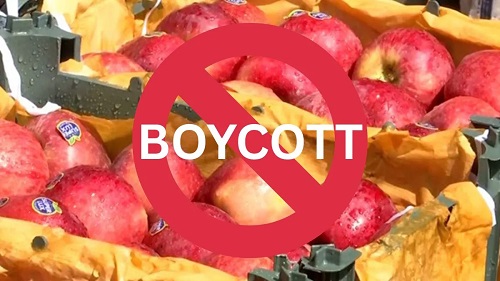
In a decisive economic move echoing simmering geopolitical tensions, Indian fruit traders have embarked on a nationwide boycott of Turkish goods, primarily targeting apples, following Turkey's recent vocal support for Pakistan. The decision has sparked protests across multiple Indian cities, with traders vehemently declaring an end to commercial relations with Turkey, citing concerns over national security.
Shadab Khan, a prominent local fruit trader, encapsulated the sentiment driving this boycott: "Turkey supplied drones to Pakistan, which were used in attacks against India. That’s why we’ve decided to stop selling Turkish fruits." The sentiment reflects a broader outcry against Turkey's military cooperation with Pakistan, perceived by Indian traders as a direct threat to national interests.
India annually imports goods worth over Rs 1,200 crore from Turkey, a substantial portion of which includes apples and other fruits. Despite previously ordered shipments continuing to arrive, vendors in major fruit markets have pledged to halt placing new orders for Turkish produce indefinitely.
Noor Mohammed, another trader, emphasized the collective stance taken by the trading community: "We have decided to sever all business ties with Turkey. We don’t want any country benefiting from trade with India and then using that money against us. From now on, we will not import anything from Turkey."
Economic Boycott Gains Momentum
The Swadeshi Jagran Manch (SJM), a nationalist organization, has thrown its weight behind the traders' boycott, advocating for broader economic sanctions against Turkey. In a strongly-worded statement, the SJM accused Turkey of aligning with regimes hostile to India's sovereignty, particularly highlighting its growing military ties with Pakistan.
According to the SJM, "Turkey’s defence cooperation with Pakistan is not just a business arrangement but an ideological alignment that destabilises South Asia." The organization underscored Turkey's status as a NATO member and criticized its strategic choices, which it perceives as detrimental to regional stability.
Call for National Solidarity
The SJM also invoked India's past humanitarian aid to Turkey during the devastating earthquake of February 2023, underlining India's historical commitment to international cooperation. However, the organization stressed that current actions must align with the principle of 'Nation First,' urging citizens to boycott Turkish products, travel, and cultural exports as a show of solidarity with national interests.
"Our trade, investment, and diplomacy must be guided by the principle of ‘Nation First.’ Let us choose self-reliance over strategic dependency on countries that empower our adversaries," the SJM asserted, calling for a united stance to safeguard India's strategic autonomy and security.
The unfolding boycott underscores the complex interplay between economics and geopolitics, highlighting India's proactive response to perceived threats, and the evolving dynamics of international relations in South Asia. As tensions persist, the ramifications of this economic decision are poised to shape bilateral relations and regional stability in the coming months.




















Leave Your Comment