


Gaavo Vishwasya Matarah, Gaavah Sarvasukhpradah
(The cow is the mother of the world and the giver of all well-being.)
In India, this was never merely a religious expression. It reflected a civilisational understanding of the relationship between cattle, agriculture, nutrition and rural prosperity. For thousands of years, the cow occupied a central place in the Indian village economy. It provided milk, supported agriculture and formed part of an integrated farming system in which livestock and land sustained one another. Yet, in the rush towards modernisation, India gradually began to look at its own cattle through the eyes of others. Western breeds came to be associated with modernity and productivity, while indigenous breeds were often dismissed as traditional and less productive. Today, as the global dairy industry confronts a new set of economic and environmental challenges, that assumption deserves a fresh examination.
For decades, dairy productivity was measured primarily by one figure: litres of milk produced per day. High-yielding breeds such as Holsteins consequently became central to intensive dairy systems across the world. Their ability to produce large quantities of milk under suitable management is undeniable. But the economics of dairy farming involves far more than output. Feed, healthcare, breeding, housing, energy and labour determine whether high production actually translates into higher returns. For millions of farmers, particularly those operating on a small scale, the most productive animal on paper is not necessarily the most profitable animal on the farm.
This broader understanding brings India's indigenous cattle breeds back into focus. Gir, Sahiwal, Rathi, Kankrej and Tharparkar represent valuable genetic resources developed over generations in the Indian subcontinent. Most belong to the Bos indicus, or Zebu, group, and possess characteristics suited to tropical production systems. Their importance lies not simply in their traditional status but in the genetic characteristics they carry and the possibilities that emerge when those characteristics are combined with modern livestock science.
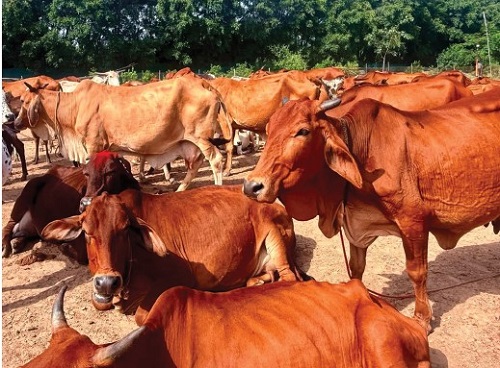
The strongest demonstration of that potential comes from a country that is not India. Brazil offers a remarkable example of how Indian cattle genetics can be transformed into a modern commercial asset. Indian Zebu cattle were introduced into Brazil over the years, where breeders recognised their value for livestock production and incorporated them into systematic breeding programmes. Instead of treating Indian genetics as an outdated alternative to modern cattle, Brazil used them as a foundation for developing animals suited to its own requirements.
The development of the Girolando, a cross between Gir and Holstein genetics, is perhaps the best-known example. It represents a practical application of modern breeding: combining the productive characteristics of Holstein cattle with desirable traits associated with Gir genetics. Brazil demonstrated that indigenous Indian cattle did not have to compete with modern dairy science; their genetics could become part of it.
The results have been striking. A Brazilian Girolando cow named Eva reportedly produced 343 litres of milk over three days during a dairy competition in Delfim Moreira, Minas Gerais. While such records are exceptional and should not be treated as representative of ordinary farm production, they illustrate the productive possibilities that can emerge when Indian-origin genetics are subjected to systematic selection, breeding and professional management.
The Brazilian experience should make India pause. If another country could recognise the potential of Indian cattle genetics, develop them through modern science and build commercially valuable animals around them, why should India continue to view its indigenous breeds primarily as objects of preservation?
The answer should not be a simplistic rejection of exotic cattle. Specialised breeds have made an enormous contribution to global dairy production, and in the right production systems they can be highly effective. The real lesson is that breed value is contextual. An animal's economic worth depends on the conditions under which it is raised, the resources available to the farmer and the total cost of maintaining its productivity.
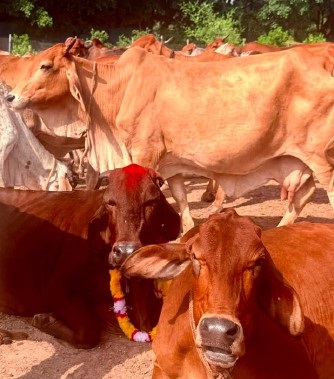
This is precisely why India's indigenous breeds need to be evaluated through science rather than sentiment. Their genetic characteristics should be systematically studied, documented and improved. Genomic technologies can help identify useful traits, while selective breeding, artificial insemination and modern reproductive technologies can accelerate genetic progress. The objective should be neither to preserve indigenous cattle unchanged nor to replace them indiscriminately, but to develop their most valuable characteristics for contemporary dairy production.
Yet no breeding programme can succeed without the infrastructure surrounding it. Better genetics must be matched by quality fodder, balanced nutrition, veterinary care, disease prevention and efficient reproductive services. Equally important is the market. Farmers need reliable milk procurement, processing facilities and remunerative prices. The success of indigenous cattle must ultimately be measured by what they do for the farmer's income, not simply by how impressive their genetic profile appears on paper.
There is another dimension to their economic value that deserves greater attention. The Indian agricultural tradition did not treat cattle as isolated milk-producing units. Livestock formed part of a larger farm ecosystem. Cow dung could return nutrients to agricultural land and contribute to biogas production. Crop residues could support livestock, while livestock waste could be integrated back into the agricultural cycle. What was once understood as an ordinary feature of village agriculture is now discussed in the language of sustainability and the circular economy.
The point is not to romanticise the past or claim that every traditional practice is automatically superior. It is to recognise that India's older farming systems contained principles that modern agriculture is rediscovering: the value of recycling resources, integrating crop and livestock production and reducing waste. Scientific evaluation can determine where those principles remain economically useful and how they can be adapted to modern farming.
For small and marginal farmers, this integrated approach can be especially valuable. Dairy can provide a regular source of income, while livestock can contribute to the wider agricultural system. The economic contribution of a cow should therefore be assessed not only through the milk it produces but through its overall role in the farm economy.
This broader definition of productivity is becoming increasingly important worldwide. The dairy industry's future cannot be judged solely by maximum milk output. Production costs, animal health, productive longevity, reproductive performance and the ability to fit into a sustainable farming system all matter. Once these factors are considered, the simplistic assumption that the highest-yielding animal is always the most economically valuable begins to fall apart.
India also has a potential opportunity beyond its domestic dairy market. Large parts of Asia, Africa and Latin America operate in environments where livestock systems face conditions similar to those found across India. If indigenous Indian genetics are properly documented, improved and commercially developed, India could emerge as an important global source of tropical livestock genetics and breeding expertise.
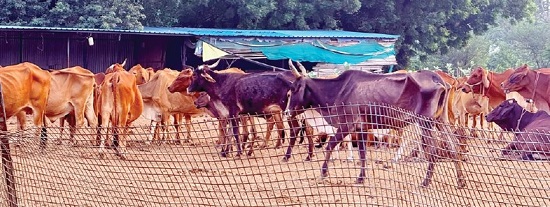
This would give a new economic meaning to India's cattle heritage. The country would not merely be conserving old breeds; it would be developing a strategic genetic resource for future livestock systems. In a world increasingly concerned with sustainable food production, the value of genetic diversity itself is likely to grow.
That opportunity, however, requires a careful balance between conservation and commercialisation. Conservation without genetic improvement can leave breeds economically marginal. Commercialisation without conservation can narrow genetic diversity and undermine the very resource being developed. India therefore needs breeding programmes that protect valuable genetic lines while using modern science to improve commercially relevant characteristics.
The farmer must remain at the centre of this process. There is little value in creating superior genetics if farmers cannot access quality breeding services, affordable veterinary care, reliable fodder and organised markets. A genuine indigenous dairy revolution will occur only when scientific advances translate into better farm economics.
The debate should therefore not become an ideological contest between Indian and foreign breeds. India should use every useful genetic resource available to it. What it must reject is the outdated assumption that imported automatically means superior while indigenous automatically means backward. Breed selection should be determined by science, economics and local requirements. In some systems, specialised exotic breeds may remain the appropriate choice; in others, indigenous breeds or scientifically developed crossbreeds may offer greater value.
There is a striking irony in the story. India gave the world cattle genetics that another country recognised, developed and turned into an important component of a modern livestock economy. Brazil's experience shows that Indian genetics can acquire new value when combined with scientific breeding. India now has the opportunity to apply that lesson to its own livestock sector.
The civilisational reverence for the cow and modern science need not exist in separate worlds. India's traditional understanding recognised cattle as part of a larger system of food, agriculture and rural welfare. Modern science can now examine that relationship through genetics, economics and environmental analysis. The two perspectives can meet without either being diminished.
India's indigenous cattle should neither be romanticised nor dismissed. They should be studied rigorously, conserved intelligently, improved scientifically and connected to markets that reward farmers for maintaining and developing them. The objective is not to prove that every indigenous cow is superior to every exotic breed, but to recognise that India's cattle heritage contains valuable genetic capital whose full economic potential remains underdeveloped. As the global dairy industry moves beyond the narrow obsession with maximum milk output towards efficiency, sustainability and total farm value, India has an opportunity to turn this genetic wealth into a competitive advantage. For thousands of years, the Indian cow was understood as more than a source of milk. The task before modern India is to demonstrate, through science and economics, why that broader understanding still matters—and why the indigenous cow could have a significant place in the dairy economy of tomorrow.
(The content of this article reflects the views of writer and contributor, not necessarily those of the publisher and editor. All disputes are subject to the exclusive jurisdiction of competent courts and forums in Delhi/New Delhi only)






















Leave Your Comment