


In a significant step toward enhancing public safety and disaster response, the Department of Telecommunications (DoT), in collaboration with the Ministry of Home Affairs (MHA) and the National Disaster Management Authority (NDMA), has rolled out an advanced public alerting framework across the country. The initiative aims to ensure timely and accurate communication with citizens during emergencies and critical situations.
As part of this nationwide exercise, mobile phones across India buzzed with loud alerts and notifications on Saturday, drawing attention to the testing of the Emergency Alert System. While the sudden alerts may have caused momentary concern among users, authorities clarified that this was a planned drill designed to evaluate the system’s efficiency and reach.
The new framework is a key component of India’s efforts to build a more responsive and resilient communication infrastructure. In times of natural disasters or emergencies, delays in information dissemination can have serious consequences. By enabling real-time alerts, the system is expected to bridge this gap and empower citizens with timely warnings.
At the heart of this initiative lies India’s homegrown Cell Broadcast System, a technology designed to send instant, geo-targeted alerts directly to mobile devices. Unlike traditional SMS services, cell broadcasting allows messages to be delivered simultaneously to multiple users within a specific geographic area, ensuring faster and more reliable communication during crises.
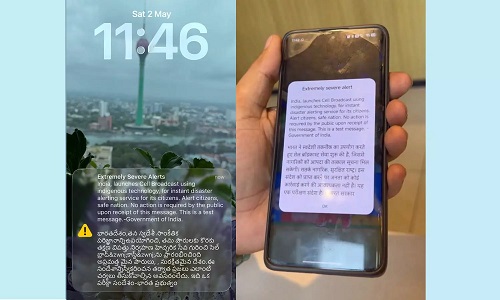
During the test, many citizens received messages in English, Hindi, and regional languages—provided their devices had the test channel enabled. The alerts clearly indicated that they were part of a mock drill and did not require any action from the public.
Ahead of the exercise, the NDMA had already informed citizens through text messages about the scheduled testing on May 2. This pre-notification was aimed at minimizing confusion and preventing panic when the alerts were triggered.
The message displayed during the alert read:
"India launches Cell Broadcast using indigenous technology, for instant disaster alerting service for its citizens. Alert citizens, safe nation."
It further reassured users: "No action is required by the public upon receipt of this message. This is a test message. – Government of India."
Authorities have emphasized that these alerts are purely for testing purposes and should not be a cause for concern. The DoT has also noted that users may receive the alert multiple times during the testing phase.
Citizens are advised to simply ignore these notifications and continue with their normal activities. No response or action is required from the public.
The successful rollout and testing of this system mark a crucial milestone in India’s disaster management strategy. By leveraging indigenous technology and coordinated efforts among key agencies, the country is moving toward a more robust emergency response mechanism.
As climate-related disasters and unforeseen emergencies become increasingly frequent, such proactive measures could play a vital role in safeguarding lives and ensuring that critical information reaches every citizen—when it matters the most.





















Leave Your Comment