


India has conveyed its condolences to Iran following the death of Iran’s Supreme Leader Ayatollah Ali Khamenei, who reportedly died hours after joint air strikes carried out by the United States and Israel in Tehran on Sunday.
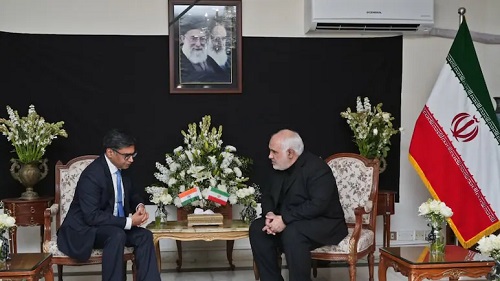
In a diplomatic gesture, India’s Foreign Secretary Vikram Misri met the Iranian Ambassador in New Delhi on Thursday and signed the condolence book in honour of Khamenei. The move marks a carefully calibrated response from New Delhi amid rising tensions in West Asia.
The development comes shortly after Iran announced that it would open the strategically vital Strait of Hormuz to all ships except those belonging to the United States, Israel and the European Union. Iranian authorities warned that vessels from these regions or their allies entering the waterway could face military action.
India had initially maintained a cautious silence over the air strikes that resulted in Khamenei’s death, despite strong demands from Opposition parties for an official condemnation. New Delhi’s restrained reaction reflected a broader international trend, as most major global powers avoided issuing formal condolences. Among key nations, only Russia and China publicly expressed sympathy over the Iranian leader’s death.
Later, Prime Minister Narendra Modi voiced concern over the escalating situation in the region, reiterating India’s long-standing position that disputes must be resolved through dialogue and diplomacy. “India has always called for dialogue and diplomacy to find a solution to such disputes,” the Prime Minister said while referring to the growing instability in the Middle East.
Iran’s powerful military arm, the Islamic Revolutionary Guard Corps, also announced that the Strait of Hormuz would remain closed to vessels from the United States, Israel, Europe and their Western allies. According to the statement, any such ships spotted in the crucial waterway “will certainly be hit,” raising concerns about global energy supplies and maritime security.
India’s measured reaction has drawn criticism from Opposition leaders who highlighted the historically close ties between New Delhi and Tehran. India once imported nearly 13 percent of its crude oil from Iran and maintained significant bilateral trade. However, economic ties declined sharply after the United States imposed sanctions on Iran following its withdrawal from the nuclear agreement in 2018.
Congress Parliamentary Party chairperson Sonia Gandhi earlier criticised the government’s stance, arguing that the absence of a strong statement defending sovereignty and international law raises questions about India’s foreign policy direction. She emphasised that India’s long-held civilisational ideal of Vasudhaiva Kutumbakam—“the world is one family”—requires a consistent commitment to justice, restraint and dialogue.
The evolving diplomatic situation underscores the delicate balance India is attempting to maintain as tensions escalate in the Middle East, while safeguarding its strategic interests and longstanding relationships in the region.



















Leave Your Comment