


The Enduring Partnership and a Promising Era Ahead
The enduring India-Mauritius relationship is anchored in historical, cultural, economic, and strategic ties. India-Mauritius relations remain central to New Delhi’s Indian Ocean and Africa outreach. As a pivotal partner in India’s outreach to the Indian Ocean Region (IOR), Mauritius holds a crucial place in New Delhi’s geopolitical calculus. Prime Minister Narendra Modi’s visit in March 2025 comes at a defining moment, with intensifying great power rivalries in the IOR and China’s expanding economic and military footprint directly challenging India’s strategic space.
India’s renewed engagement with Mauritius is not merely about reinforcing traditional bonds; it reflects a calibrated move to deepen economic collaboration, enhance defence cooperation, and elevate diplomatic engagements. By leveraging strategic investments, trade partnerships, and security collaborations, India is consolidating its position as Mauritius’ principal development partner. The visit also signals an assertive push in maritime security and financial cooperation, critical to countering external strategic encroachments in the region.
As Mauritius emerges as a key node in India's Indo-Pacific strategy, the trajectory of this partnership will shape regional stability and strategic alignments. If India successfully translates its commitments into concrete, long-term frameworks, Mauritius’ role within a de facto strategic confederation could become more pronounced, reshaping the Indian Ocean’s military and economic balance for the years ahead.
Strategic and Economic Significance of Mauritius for India
Economic & Financial Nexus: Mauritius has historically been a major gateway for Foreign Direct Investment (FDI) into India, accounting for nearly 25% of India’s total FDI inflows since 2000, amounting to approximately $177 billion. The Double Taxation Avoidance Agreement (DTAA) initially facilitated large-scale investments, although amendments in recent years have adjusted its scope. Additionally, Mauritius serves as India’s conduit for economic outreach in Africa, providing access to the African Continental Free Trade Area (AfCFTA).
Maritime & Strategic Security Importance: Mauritius’ strategic location in the southwest Indian Ocean enhances India's maritime security and power projection capabilities. India has actively supported Mauritius' sovereignty over the Chagos Archipelago and has developed Agaléga Island for maritime surveillance. Infrastructure developments, including an extended airstrip and docking facilities, have significantly boosted India's intelligence and security operations in the region. The inclusion of Mauritius in India's Information Fusion Centre for the Indian Ocean Region (IFC-IOR) ensures real-time intelligence sharing, counter-piracy coordination, and enhanced naval cooperation.
Key Areas of Cooperation Between India and Mauritius
Trade & Investment Collaboration: India remains Mauritius' largest trading partner, with bilateral trade reaching $851.13 million in FY 2023-24. Key exports from India include petroleum products, pharmaceuticals, and textiles, while Mauritius exports vanilla, medical devices, and aluminium alloys. The Comprehensive Economic Cooperation and Partnership Agreement (CECPA) signed in 2021 has further expanded trade opportunities, allowing Mauritius preferential access to Indian markets and vice versa.
Infrastructure & Developmental Aid: India has played a pivotal role in the infrastructural development of Mauritius, extending financial and technical assistance to strengthen the island nation’s socio-economic framework. Over the years, India has financed more than 20-plus key infrastructure projects, underscoring its commitment to Mauritius’ long-term sustained growth. One of the most significant projects is the Metro Express Project, aimed at modernising urban transportation and easing congestion, thereby improving connectivity and economic efficiency. Additionally, India has supported the Social Housing Scheme, addressing critical housing shortages by providing affordable housing solutions for low-income families. Another crucial initiative is the establishment of the Civil Services College, backed by a $4.75 million Indian investment, which seeks to enhance governance by training government officials and fostering administrative efficiency. Furthermore, India has extended a $500 million Line of Credit, enabling Mauritius to undertake broader infrastructure development projects, including roads, ports, and public sector reforms. These initiatives reflect India’s strategic vision of fostering a resilient, self-sustaining Mauritius while strengthening bilateral ties through sustainable infrastructure partnerships.
Defence & Maritime Cooperation: India has played a crucial role in strengthening Mauritius’ defence and maritime security capabilities, recognising the island nation’s strategic significance in the Indian Ocean Region (IOR). Over the years, India has supplied Mauritius with naval patrol vessels, surveillance aircraft, and technical expertise, ensuring the country’s ability to safeguard its territorial waters against emerging security threats. A key aspect of this cooperation is the deployment of Indian defence personnel, who provide training, capacity-building, and intelligence-sharing support, enhancing Mauritius’ operational readiness.
A major milestone in Indo-Mauritian defence collaboration is the expansion of the Indian-built military facilities on Agaléga Island, which serves as a crucial asset for maritime domain awareness and surveillance. This development bolsters India's ability to monitor strategic sea lanes and counter external security threats. Additionally, both nations regularly engage in joint naval exercises, aimed at strengthening interoperability between their maritime forces while addressing security concerns such as drug trafficking, illegal fishing, and piracy.
Given the increasing presence of Chinese investments and naval activities in the Indian Ocean, India’s sustained defence partnership with Mauritius remains a strategic necessity. By reinforcing Mauritius’ maritime security apparatus, India not only strengthens its bilateral ties but also ensures stability in the region, securing its own strategic and economic interests in the broader Indo-Pacific framework.
Disaster Relief & Humanitarian Assistance: India has emerged as a reliable first responder in times of crisis for Mauritius, consistently extending humanitarian aid and disaster relief to mitigate the impact of natural and man-made calamities. A notable demonstration of this commitment was during the COVID-19 pandemic, when India supplied essential medical aid, including vaccines under the Vaccine Maitri initiative, as well as pharmaceuticals and protective equipment. This assistance played a critical role in strengthening Mauritius' public health response and underscored India’s role as a dependable healthcare partner.
India also played a significant role in environmental disaster response, particularly during the 2020 Wakashio oil spill, one of Mauritius' worst ecological crises. India swiftly deployed technical experts and emergency response teams, providing specialised equipment and support for environmental recovery efforts to contain the spill and mitigate its long-term damage to marine biodiversity. This proactive intervention reinforced India's commitment to the ecological security of the Indian Ocean Region (IOR).
Beyond crisis response, India has supported Mauritius in capacity-building for disaster preparedness, ensuring that the island nation is better equipped to handle future emergencies. By providing logistical support, financial assistance, and technical expertise, India has solidified its reputation as a dependable and strategic humanitarian partner in the region, strengthening bilateral ties through disaster resilience cooperation.
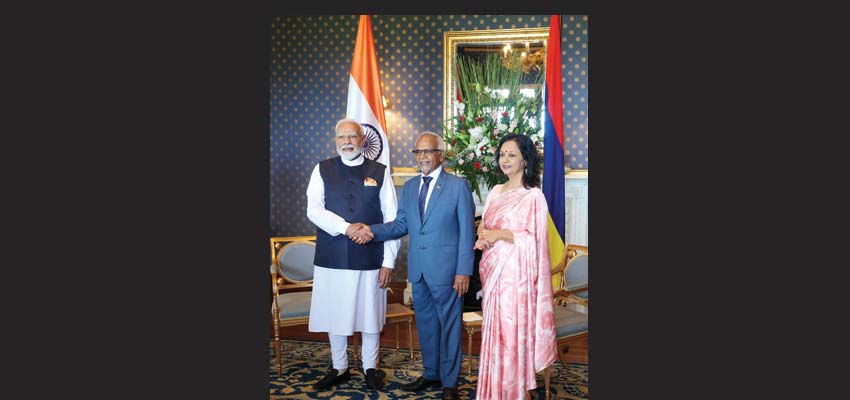
Why Modi’s Visit Becomes Crucial: Exploring Multidimensional and Multisectoral Partnerships
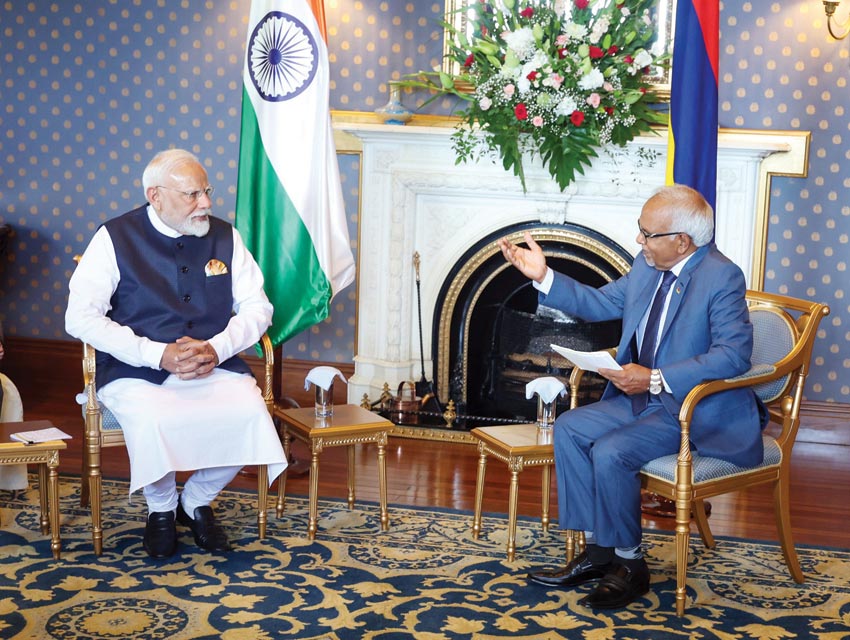
Prime Minister Narendra Modi’s visit to Mauritius in March 2025 comes at a time when regional and global dynamics are undergoing significant shifts. As strategic competition in the Indian Ocean Region (IOR) intensifies, and as both countries navigate economic and geopolitical challenges, this visit assumes critical importance. It is expected to reinforce India’s commitment to Mauritius while expanding cooperation across multiple sectors.
One of the primary objectives of this visit is reaffirming India’s commitment to maritime security, particularly in response to China’s expanding presence in the IOR. Given the geostrategic location of Mauritius, India aims to enhance defence collaboration, including naval cooperation, intelligence-sharing, and joint surveillance efforts. Strengthening maritime security ties will help counter emerging threats such as illegal fishing, piracy, and transnational crimes, ensuring stability in the region.
Economically, the visit will focus on expanding Indo-Mauritian trade and investment partnerships. With recent regulatory changes impacting Foreign Direct Investment (FDI) flows from Mauritius to India, Modi’s discussions will aim to identify alternative investment mechanisms beyond the Double Taxation Avoidance Agreement (DTAA). This includes exploring new economic frameworks that sustain Mauritius’ relevance as a financial hub for India-Africa trade.
Infrastructure and defence cooperation will also be a key agenda, particularly concerning the Agaléga Island development project. India has been investing in the expansion of military facilities, naval logistics, and airstrip modernisation on the island, reinforcing its strategic importance. Modi’s visit will ensure the timely execution of these initiatives while strengthening broader Indo-Mauritian defence collaboration, including capacity-building programmes and technology transfers.
Another significant focus will be boosting people-to-people ties, a crucial pillar of bilateral relations. India has been actively promoting scholarships, skill development programmes, and diaspora engagement to strengthen cultural and educational linkages. Given the deep historical and ethnic ties between the two nations, enhancing these initiatives will foster long-term goodwill and cooperation.
Lastly, the visit is expected to involve negotiations on new trade frameworks, particularly concerning the Comprehensive Economic Cooperation and Partnership Agreement (CECPA). Expanding CECPA provisions will help sustain Mauritius’ role as a bridge between India and Africa, ensuring that the island nation remains a preferred gateway for Indian businesses. As India and Mauritius continue to navigate shifting geopolitical realities, Modi’s visit represents a crucial opportunity to consolidate their multidimensional and multisectoral partnership, ensuring strategic alignment, economic resilience, and long-term regional stability.
The Civilisational Foundations to Post-Independence Evolution: India-Mauritius relations are deeply embedded in a shared civilisational and historical trajectory, evolving from early migration and colonial exploitation to a strategic partnership in the 21st century. This bond, which began with the arrival of Indian artisans under French rule, was reinforced under British colonialism, which brought over 500,000 Indian indentured labourers between 1834 and the early 1900s. Over two-thirds of these workers settled permanently, forming the socio-political backbone of modern Mauritius. The visit of Mahatma Gandhi in 1901 played a catalytic role in mobilising the Indian-origin population toward greater social and political participation, shaping the island’s long-term democratic evolution. Today, with nearly 70% of Mauritius’ population tracing its ancestry to India, the relationship is not just diplomatic but also deeply civilisational, shaping cultural, economic, and strategic engagements.
The Shifts in Bilateral Priorities: Following its independence in 1968, Mauritius found in India a dependable development partner. New Delhi's engagement was critical in nation-building efforts, particularly in education, healthcare, and financial sector development. India’s support was not merely symbolic but operational, facilitating expertise, capacity-building, and financial assistance to stabilise Mauritius' economic and governance structures.
However, India’s commitment to Mauritius has not been without shifting geopolitical compulsions. Over the decades, New Delhi has actively backed Mauritius’ sovereignty claims over the Chagos Archipelago, aligning both nations on key regional disputes. This reflects an underlying reality—India’s strategic interest in maintaining its influence in the Indian Ocean Region (IOR) while countering competing geopolitical forces, particularly China’s expanding economic footprint.
Modi-era recalibration of India-Mauritius relations: The Modi era has seen a recalibration of India-Mauritius relations, transitioning from a development-centric engagement to a more comprehensive strategic partnership. The focus has moved beyond traditional areas of cooperation, with infrastructure financing, defence collaboration, and economic frameworks becoming central pillars of engagement. While historical linkages continue to form the bedrock of this relationship, India’s role in defence cooperation, countering external strategic influences, and securing maritime stability has now become equally critical.
The trajectory of India-Mauritius relations, from civilisational connectivity to contemporary strategic imperatives, underscores an evolving yet resilient partnership. While historical ties provide continuity and diplomatic depth, future engagements will be determined by how effectively both nations balance historical goodwill with emerging geopolitical realities.
India and Mauritius Warming-Up Partnership: Is Mauritius Inching Closer into a Strategic Confederation Arrangement?
India and Mauritius are reportedly advancing towards a highly strategic yet discreet arrangement that could evolve into a confederation-style partnership, integrating Mauritius into India’s regional security framework while maintaining an overt focus on economic, trade, and diplomatic cooperation. Publicly, this relationship is anchored in a multidimensional and multisectoral partnership, encompassing economic investments, maritime security, and cultural diplomacy. India has reinforced Mauritius’ role as a key financial hub through the Comprehensive Economic Cooperation and Partnership Agreement (CECPA) (2021) and a $500 million Line of Credit (2015), supporting infrastructure development in critical sectors. Additionally, India has bolstered Mauritius’ maritime security with patrol vessels, surveillance aircraft, and training programmes, ensuring the security of key sea lanes.
However, beyond these visible engagements, the covert reality suggests an unprecedented military-to-military integration, positioning Mauritius as a strategic extension of India’s regional security network. India has developed critical military infrastructure on Agaléga Island, likely facilitating intelligence-gathering operations and exclusive Indian military access to Mauritian territories. Although Mauritius lacks a standing army, its security (paramilitary) forces are increasingly dependent on Indian training and operational guidance, hinting at a potential integration into India’s strategic command structure. Reports suggest deepening intelligence-sharing and surveillance cooperation, with India expanding electronic intelligence (ELINT) capabilities to monitor regional threats, particularly China’s growing presence in the Indian Ocean Region (IOR).
This silent military consolidation ensures India’s de facto oversight of Mauritius’ Exclusive Economic Zone (EEZ), bolstering control over vital trade and energy supply routes. India is also leveraging Mauritius as a logistics hub for naval operations, facilitating refuelling, resupply, and maintenance support for its maritime forces. The rationale behind this less-talked but calculated strategic integration is to counterbalance China’s increasing economic and military footprint in the region, safeguard India’s energy security and trade routes, and strengthen its Indo-Pacific power projection.
While an official declaration of a confederation arrangement remains unlikely, defence agreements are being institutionalised, with Indians most visibly assuming advisory and operational roles within Mauritius’ security framework. Moving forward, Mauritius is set to become an indispensable pillar of India’s strategic governance in the Western Indian Ocean, reinforcing a security architecture that, although subtly executed, is reshaping regional dynamics into this bilateral favour.
Overcoming Challenges in Deepening India-Mauritius Relations
Despite the deep-rooted and multidimensional partnership between India and Mauritius, several challenges persist, influencing the trajectory of their bilateral engagement.
Strategic and Economic Challenges: Mauritius has been actively pursuing a policy of strategic balancing, diversifying its diplomatic and economic partnerships beyond India. This approach involves increased engagement with multiple global players, including China, the European Union, and African nations. While this enhances Mauritius’ global standing, it complicates India’s efforts to maintain its strategic and economic primacy in the country.
China’s growing influence in Mauritius presents both strategic and economic challenges for India. Mauritius' strategic engagement with China, along with Beijing’s expanding footprint in the island nation through investments in infrastructure, financial services, and port development, intensifies competition for India’s long-standing economic presence. Given Mauritius’ strategic significance in the Indian Ocean Region (IOR), it remains a crucial geopolitical battleground where India must carefully navigate its position to counterbalance China’s deepening engagement.
Revisiting Investment and Taxation Predicaments: The evolving financial landscape, shaped by regulatory shifts in India, has impacted Foreign Direct Investment (FDI) flows. Mauritius, once a key conduit for investments into India, has seen a decline in FDI due to amendments in investment regulations and tax treaties. Taxation and compliance challenges persist, especially following revisions to the Double Taxation Avoidance Agreement (DTAA), which have reshaped investment incentives. This has prompted businesses to rethink financial structuring and seek alternative tax-efficient routes. To sustain their economic partnership, India and Mauritius must adopt a proactive and transparent regulatory approach that aligns DTAA amendments with their shared strategic and economic interests. While these changes enhance financial transparency, they also necessitate adaptive investment frameworks to maintain strong bilateral ties.
Conclusion
India-Mauritius relations remain a cornerstone of New Delhi’s Indian Ocean and Africa outreach strategy. While historical, economic, and security ties remain robust, Modi’s visit underscores India’s proactive approach to reinforcing these partnerships in response to emerging global challenges. Strengthening economic collaboration, deepening defence cooperation, and enhancing diplomatic engagements will be crucial in ensuring Mauritius remains a steadfast partner in India's regional aspirations. With India’s sustained commitment, the Indo-Mauritian partnership is set to remain a key pillar in the evolving comprehensive and composite Indo-Pacific security and economic framework.

By Dr Padmalochan Dash
(The content of this article reflects the views of writers and contributors, not necessarily those of the publisher and editor. All disputes are subject to the exclusive jurisdiction of competent courts and forums in Delhi/New Delhi only)




















Leave Your Comment