


A s the 30-year-old Ganges Water Treaty with Bangladesh approaches its expiry in 2026, the Modi government has signaled its intent to renegotiate the terms — and rightly so. The demand is simple: over 30,000 cusecs more water for India during the lean season, when water scarcity becomes a pressing national concern. This marks a significant shift from decades of soft-pedaling in the name of regional harmony. It reflects a larger pattern under Prime Minister Narendra Modi — a recalibration of India’s foreign and strategic posture anchored on the principle of “India First.” No more appeasement, no more perpetual concessions — national interest will no longer be bartered at the altar of diplomacy.
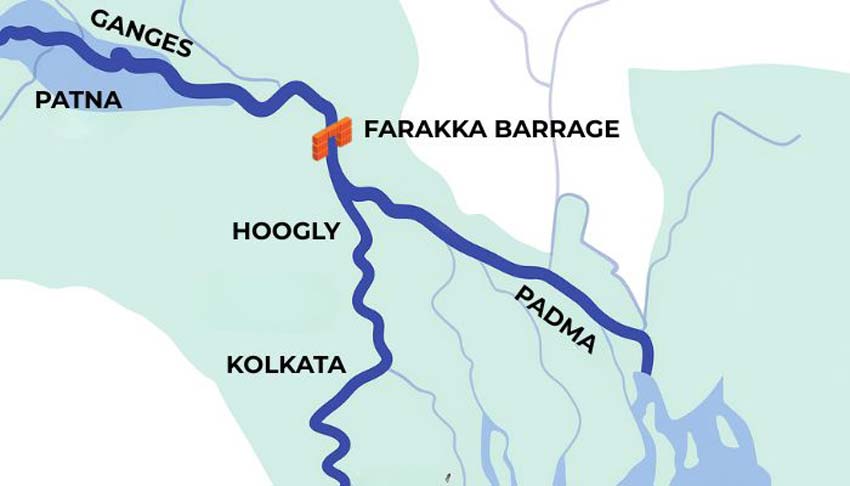
The original 1996 treaty, signed under the United Front government, granted Bangladesh 35,000 cusecs of water during the critical lean season, often at the cost of Indian states like West Bengal and Bihar. The Farakka Barrage, built to maintain the navigability of the Kolkata port, often failed its purpose due to excessive downstream release. Over the years, India’s agrarian economy, particularly in eastern states, has borne the brunt of a one-sided arrangement. Bangladesh, on the other hand, has done little to rein in anti-India propaganda or cross-border infiltration, despite India’s consistent goodwill. The Modi government’s move to renegotiate this outdated arrangement signals the end of such unilateral sacrifices.
This assertive water diplomacy is part of a broader pattern. India’s firm rejection of the Court of Arbitration proceedings initiated by Pakistan over the Kishenganga and Ratle hydroelectric projects in Jammu and Kashmir is another strong example. While Pakistan weaponizes water-sharing under the Indus Waters Treaty (IWT), India has chosen to defend its sovereign right to develop its own territory. Despite World Bank pressure, New Delhi maintained that such issues must be resolved bilaterally and not through third-party interventions — a position long ignored by past governments. The Modi administration has made it clear that no external power, not even multilateral institutions, will dictate India’s developmental roadmap, especially in sensitive border regions like J&K.
Critics may cry foul, accusing the Modi government of being aggressive or risking regional ties. But let us be clear: water is not just a resource; it is a national security asset. With increasing climate unpredictability, monsoon dependency, and rising population pressure, India must prioritize domestic water security. What the Modi government is doing is correcting historical imbalances where India was expected to act like the “elder brother” while being treated with disregard. Today, under Modi, India seeks relationships based on reciprocity, not servility.
This shift must also be seen in the context of India’s emergence as a regional power with growing global clout. Whether it is in defense, trade, technology, or water rights, New Delhi is asserting itself with clarity and confidence. The recent renegotiation pitch with Bangladesh is not an aba ndonment of friendship but a restructuring of it on equal footing. Bangladesh must understand that goodwill cannot be a one-way street — if it desires equitable sharing, it must also support India’s concerns on illegal migration, extremism, and river pollution.
The Modi government’s India First policy is not about isolationism or arrogance. It is about realism, responsibility, and reasserting India's long-ignored national interests. Be it the Kishenganga arbitration or the Ganges Treaty, New Delhi is making it clear that it will no longer accept lopsided deals under the garb of diplomacy.
For decades, India’s generosity was mistaken for weakness. That era is over. Today, India is no longer apologetic about its needs. It is taking firm, calculated steps to protect its people, its resources, and its future. And this is not only necessary — it is long overdue. The upcoming Ganges Treaty renegotiation is a test of India’s resolve, and under Modi’s leadership, the nation is finally speaking from a position
of strength.














Leave Your Comment