


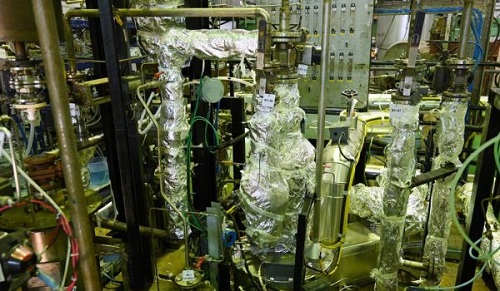
India has achieved a significant milestone in clean energy technology with the inauguration of the world's first Hydrogen Production Facility based on the Copper-Chlorine (Cu-Cl) Thermochemical Cycle using nuclear process heat generated from the Fast Breeder Test Reactor (FBTR) at the Indira Gandhi Centre for Atomic Research (IGCAR), Kalpakkam.
The facility was inaugurated by Secretary, Department of Atomic Energy (DAE), Dr Ajit Kumar Mohanty, marking a major advancement in India's efforts to integrate nuclear energy with next-generation clean fuel technologies.
Speaking on the occasion, Dr Mohanty highlighted the strategic importance of combining nuclear energy with hydrogen production to build a sustainable energy future. He said the integration of nuclear power with emerging clean energy technologies represents a crucial pathway towards achieving long-term energy security and environmental sustainability.
"Nuclear power, with its unique ability to provide reliable carbon-free electricity, is ideally suited to support large-scale hydrogen production while contributing to India's energy security, decarbonisation goals and long-term sustainable development objectives," he said.
The newly commissioned facility has been established as a technology demonstrator to validate hydrogen production using nuclear energy through the Copper-Chlorine thermochemical cycle. The indigenous process has been developed by the Bhabha Atomic Research Centre (BARC), Mumbai, showcasing India's growing capabilities in advanced nuclear and hydrogen technologies.
According to the Department of Atomic Energy, the commissioning of the plant marks the culmination of years of extensive research, process development, engineering design, equipment fabrication, installation, testing and commissioning carried out jointly by BARC and IGCAR.
Unlike conventional hydrogen production methods that rely heavily on fossil fuels, the Cu-Cl thermochemical cycle uses nuclear process heat, offering a low-carbon and energy-efficient pathway for hydrogen generation. The technology is expected to play an important role in supporting India's National Green Hydrogen Mission by enabling the production of clean hydrogen using indigenous nuclear expertise.
The demonstration facility is also expected to pave the way for future commercial-scale hydrogen production integrated with advanced nuclear reactors, strengthening India's position in the global transition towards cleaner and more sustainable energy systems.





















Leave Your Comment